How a Tallahassee Leather Goods Shop Turned Repairs Into Warranty Work
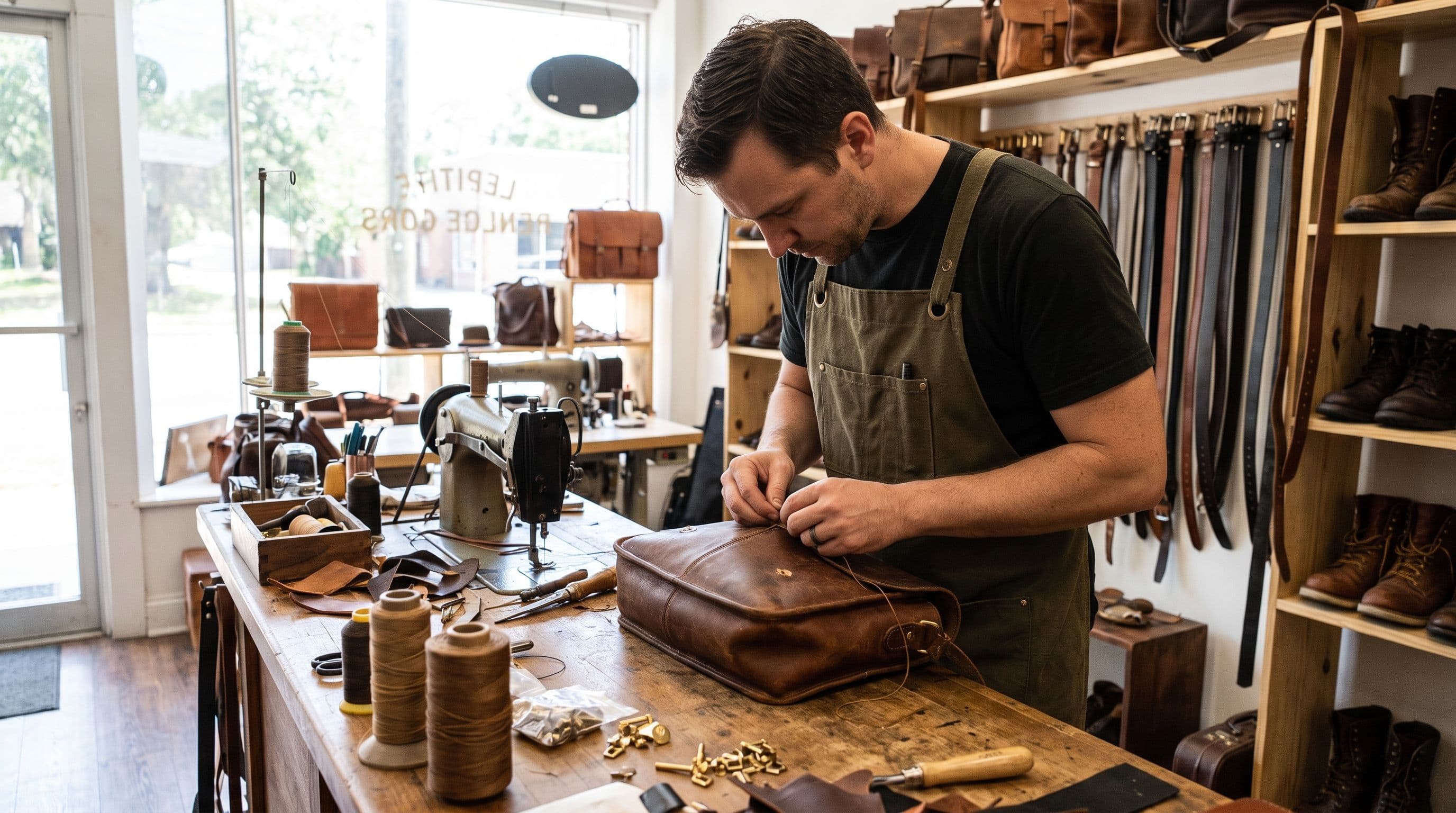
In the back of a small Tallahassee leather shop sat a repair bench the owner treated as a side task. Customers brought in worn bags, cracked belts, and torn straps, but the work was squeezed between regular sales and rarely priced properly.
Then an accessories brand reached out with a different problem. It had warranty claims piling up, no in-house repair team, and a need for reliable turnaround. The shop agreed to handle a batch, and the neglected repair bench suddenly became a potential B2B service with recurring work and predictable revenue.
This article explains how leather shops can make that shift, from pricing repairs and approaching brands to building a workflow that can handle ongoing warranty work.
Why Leather Shops Often Treat Repairs as Secondary
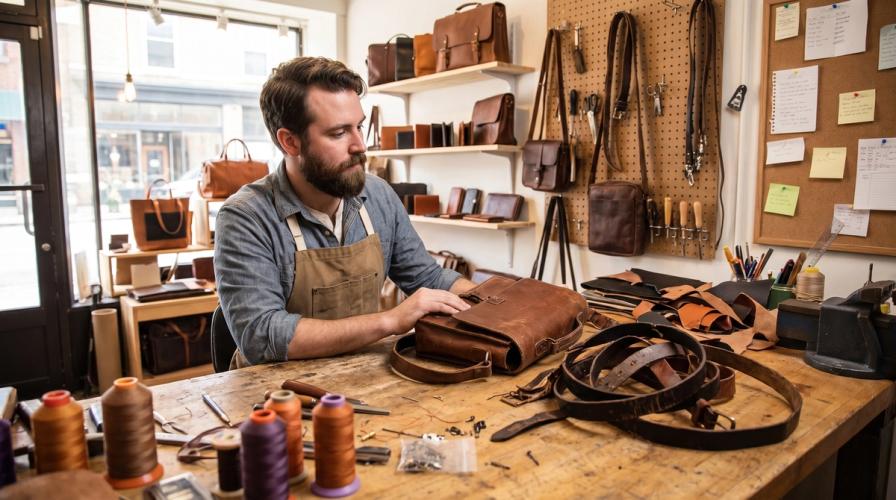
Most leather shops focus on making and selling new products. Repairs often feel less important because they arrive unexpectedly and are harder to price. A broken strap or worn bag gets squeezed between regular sales, making the work feel like an interruption.
This creates a few common problems:
- ●Repairs are often underpriced: A 45-minute fix may be charged like a quick favor because the shop does not track labor time.
- ●Demand is overlooked: Every damaged bag, belt, or wallet represents a customer who wants to keep using it instead of buying new.
- ●Work is treated as one-off: Without a system, shops miss the opportunity to turn steady repair demand into a reliable revenue stream.
The problem is usually not a lack of repair demand. It is the lack of a clear system for measuring, pricing, and organizing the work.
For a deeper breakdown, check out all you need to know about starting a freelance business.
Why Warranty Repair Work Creates a Bigger Opportunity
Leather brands and retailers need to honor warranties, but building an in-house repair team can be expensive. They need skilled workers, tools, space, and enough repair volume to keep the team busy. For many brands, working with an outside repair shop is more practical.
That creates a bigger opportunity for local leather shops:
- ●Recurring work: Brands can send repair batches regularly instead of one customer at a time.
- ●Predictable revenue: Ongoing warranty work makes it easier to forecast income and plan workloads.
- ●Better scheduling: Consistent volume allows shops to schedule labour and repair capacity in advance.
- ●Long-term relationships: The shop becomes part of the brand's after-sales service rather than simply handling walk-in repairs.
The key difference is simple. One-off repairs bring individual transactions, while warranty work can create a steady pipeline. The repair bench becomes a reliable business service instead of an occasional favour.
Turning Repairs Into a Real Service Line
The first step toward a service line is defining what the shop actually offers instead of quoting everything ad hoc. Grouping repairs into clear categories with baseline pricing, expected material costs, and honest turnaround times turns guesswork into a menu. It also lets the owner see, at a glance, which jobs are worth taking in volume and which barely cover their own labour. Below is an example of how a shop might structure its most common leather repairs.
| Repair category | Typical labor | Material cost | Turnaround | Suggested minimum |
|---|---|---|---|---|
| Strap or handle replacement | 45-90 min | Moderate | 3-5 days | Mid-range flat rate |
| Zipper or hardware swap | 30-60 min | Low-moderate | 2-4 days | Low flat rate |
| Stitching and seam repair | 20-60 min | Low | 2-3 days | Low flat rate |
| Edge finishing and reconditioning | 30-75 min | Low | 3-5 days | Mid-range flat rate |
| Structural rebuild | 2-4 hours | Moderate-high | 5-10 days | High flat rate |
Setting a minimum charge protects the shop from the small jobs that eat time without earning it. Even a quick stitch involves setup, inspection, cleanup, and a customer conversation, so a floor price keeps every ticket viable. Once minimums exist, the owner can layer in profitability targets and stop treating the bench as a break-even courtesy.
Just as important, repair operations should be separated from regular retail flow. When fixes compete with sales for the same bench, tools, and attention, both suffer. Carving out a defined repair station, a dedicated block of hours, or even a specific staff member lets the service scale without disrupting the storefront. That separation is what makes the difference between a side task and a genuine line of business.
Read More | Solo Trailer Hauler in Boise Becomes a Go-To Equipment Transport Vendor for Contractors.
What Brands Need From a Repair Partner
Brands need more than skilled repair work. They need a partner who can protect their reputation and handle warranty jobs reliably.
The most important qualities are:
- ●Consistent quality: Every repair should meet the same standard, not just the occasional standout job.
- ●Reliable turnaround: Brands need clear timelines so they can give customers accurate expectations.
- ●Clear communication: Quick updates and early warnings about delays help prevent problems.
- ●Predictable pricing: Stable rates make it easier for brands to budget and manage warranty costs.
- ●Quality control: Repairs should be checked before they are returned to the brand or customer.
- ●Enough capacity: The shop should be able to handle larger batches during busy periods.
Technical skill gets a shop noticed, but reliable systems are what turn a repair shop into a long-term warranty partner.
Want to start a Retail business? Plan it with a trending Retail business plan.
How to Approach Brands for Warranty Work
Finding partners starts with recognizing how many kinds of businesses generate warranty and repair demand. Leather goods brands are the obvious target, but accessories companies, luggage makers, boutiques carrying multiple lines, and independent product makers all field the same worn-item claims and rarely want to fix things themselves. Local retailers who sell leather goods often absorb repair requests they have no way to fulfil, which makes them natural referral sources or direct clients.
A pitch should be short, concrete, and framed around solving the brand's problem rather than describing the shop's history. The most useful version leads with capabilities and proof, then makes the logistics obvious. The table below outlines what an effective first outreach typically includes.
| Pitch element | What to include |
|---|---|
| Repair capabilities | The specific categories you handle well |
| Experience | Years working leather, sample photos, references |
| Turnaround | Realistic per-batch timelines you can guarantee |
| Pricing approach | Per-repair or per-batch structure, not vague quotes |
| Service area | Local pickup, regional shipping, or both |
| Capacity | How many items you can process per week |
The tone should be that of a vendor proposing a working relationship, not a hobbyist asking for a chance. Offering a small trial batch lowers the brand's risk and gives the shop a way to prove reliability before either side commits to volume. That first successful batch, delivered on time and to spec, is usually worth more than any polished sales deck.
Building a Warranty Repair Workflow
As soon as items arrive in batches, informal habits break down. A single repair can live in the owner's head, but 30 items from a brand cannot. That is why a documented workflow, from intake through return, becomes the backbone of the service. Every item needs to be logged, inspected, confirmed against warranty terms, approved, repaired, checked, documented, and returned in a way that can be traced at any moment. Here is a straightforward version of that flow.
| Stage | What happens |
|---|---|
| Intake | Log each item with an ID, photos, and the brand's claim notes |
| Inspection | Assess the actual damage and confirm it matches the claim |
| Warranty confirmation | Verify the repair is covered before starting |
| Approval | Get brand sign-off on any out-of-scope work |
| Repair | Complete the fix to the agreed standard |
| Quality control | Second check against the brand's expectations |
| Documentation | Record what was done for the brand's records |
| Return | Package and ship or hand back with tracking |
Tracking becomes more important with every batch, because a lost or misidentified item damages the brand relationship faster than a slow repair does. A simple numbering system tied to photos and status notes prevents mix-ups and gives the brand the transparency it wants. When volume grows, that same tracking data reveals bottlenecks, so the owner can see exactly where items stall.
The workflow also protects the shop internally. When steps are written down, any trained hand can follow them, which means the service does not collapse the moment the owner takes a day off. Documentation turns a personal skill into a repeatable process, and repeatability is what lets a repair line actually scale beyond one busy person.
Pricing Warranty Repairs Properly
Warranty work should never be priced like a casual walk-in job, because it carries costs a single customer repair does not. Beyond labour and materials, each batch involves inspection time, back-and-forth communication with the brand, careful packaging, shipping, and administrative work to keep records straight. A per-item price that only covers stitching and leather will quietly lose money once those hidden hours are counted. The goal is a rate that reflects the full cost of serving a business client.
The cleanest approach is to build a repeatable per-repair rate for each category, then account for the surrounding work either inside that rate or as clearly stated add-ons. Rush turnaround should carry a premium, since it disrupts scheduling, while steady volume can justify a modest discount because it reduces the cost of chasing new business. The table below shows the layers that should feed into a defensible warranty price.
| Cost component | Why it belongs in the price |
|---|---|
| Labor | The actual hands-on repair time |
| Materials | Leather, thread, hardware, and finishing supplies |
| Inspection and QC | Assessing and re-checking every item |
| Communication | Updates and coordination with the brand |
| Packaging and shipping | Safe return of finished items |
| Administrative time | Logging, tracking, and documentation |
| Rush or volume adjustment | Premiums for speed, discounts for scale |
Pricing this way protects margins while giving the brand exactly what it wants: a predictable, repeatable number it can plan around. When both sides know the cost per repair in advance, invoicing gets simple, and disputes get rare. A margin-safe rate that the shop can defend line by line is what keeps a warranty relationship profitable over the long run.
From One Repair to Recurring B2B Work
Turning one business repair job into recurring B2B work takes a gradual approach. The first batch should be treated as a test to understand the real workload, costs, turnaround time, and profit.
A shop can build from there by:
- ●Testing with a small batch: Measure how long repairs actually take before accepting larger volumes.
- ●Setting clear standards: Document repair quality, turnaround times, and pricing.
- ●Knowing capacity: Understand how many items the shop can handle each week without affecting quality.
- ●Protecting reliability: Avoid accepting more work than the team can realistically complete.
- ●Tracking profitability: Make sure recurring jobs remain worthwhile after labour, materials, and other costs.
The goal is not simply to accept more repairs. It is to create a service that can handle consistent volume, maintain quality, and generate predictable revenue.
Read More | How a Solo Mobile Welder in El Centro Turned a Trusted Local Marketplace Into Harvest Retainers.
Lessons for Other Skilled Trade Businesses
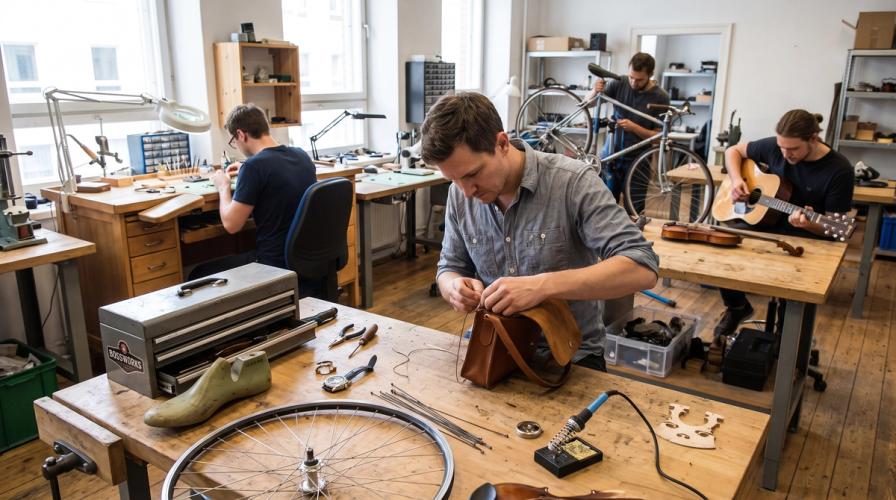
This opportunity is not limited to leather shops. Many skilled trades can turn overlooked repair work into recurring B2B services.
Examples include:
- ●Shoe repair shops: Handle warranty claims for footwear brands.
- ●Watch repair specialists: Provide service work for retailers.
- ●Furniture restorers: Support furniture sellers with repairs and restoration.
- ●Bicycle mechanics: Manage warranty and maintenance work for bike brands.
- ●Electronics repair technicians: Handle repairs for retailers and manufacturers.
- ●Instrument repair shops: Support music stores and instrument sellers.
The common factor is not a new technical skill. It is better structure. By defining services, pricing work properly, and creating repeatable workflows, skilled trades can turn occasional jobs into reliable B2B revenue.
The tools and expertise may stay the same. What changes is how the work is measured, organized, and sold.
Final Thoughts
Repair work does not have to remain a side task squeezed between retail sales. A leather shop can turn that existing skill into a structured B2B service by setting clear prices, creating a reliable workflow, and building the capacity to handle recurring batches.
The opportunity is bigger than taking on more repairs. It is about becoming a dependable partner for brands that need warranty work handled without building their own repair team. For skilled trade businesses, that shift can turn overlooked work into a steady and more predictable source of revenue.
Ready to Get Started?
Starting an equipment transport business is possible with the right planning and a clear understanding of your service area, equipment limits, operating costs, pricing, and contractor needs. A practical plan can help you avoid costly mistakes and build a service that is easier to manage and grow.
BossWorks can help you create a complete business plan tailored to your business, covering startup costs, equipment needs, permits, pricing, operations, customer acquisition, and long-term growth strategies.
Frequently Asked Questions
Because they focus on new sales, underestimate how long repairs take, price them too low, and miss the steady recurring demand behind every worn item.
Building an internal repair team is expensive and hard to keep busy, so brands prefer a skilled local shop that can handle claims reliably and on a schedule.
Warranty pricing must include labour, materials, inspection, communication, packaging, shipping, and admin time, built into a repeatable per-repair rate that protects margin.
Consistent quality, reliable turnaround, clear communication, item tracking, quality control, stable pricing, and enough capacity to handle busy seasons.
Start with a small trial batch, measure turnaround and profitability, set quality standards and capacity limits, then grow volume only as consistency holds.