Solo Trailer Hauler in Boise Becomes a Go-To Equipment Transport Vendor for Contractors
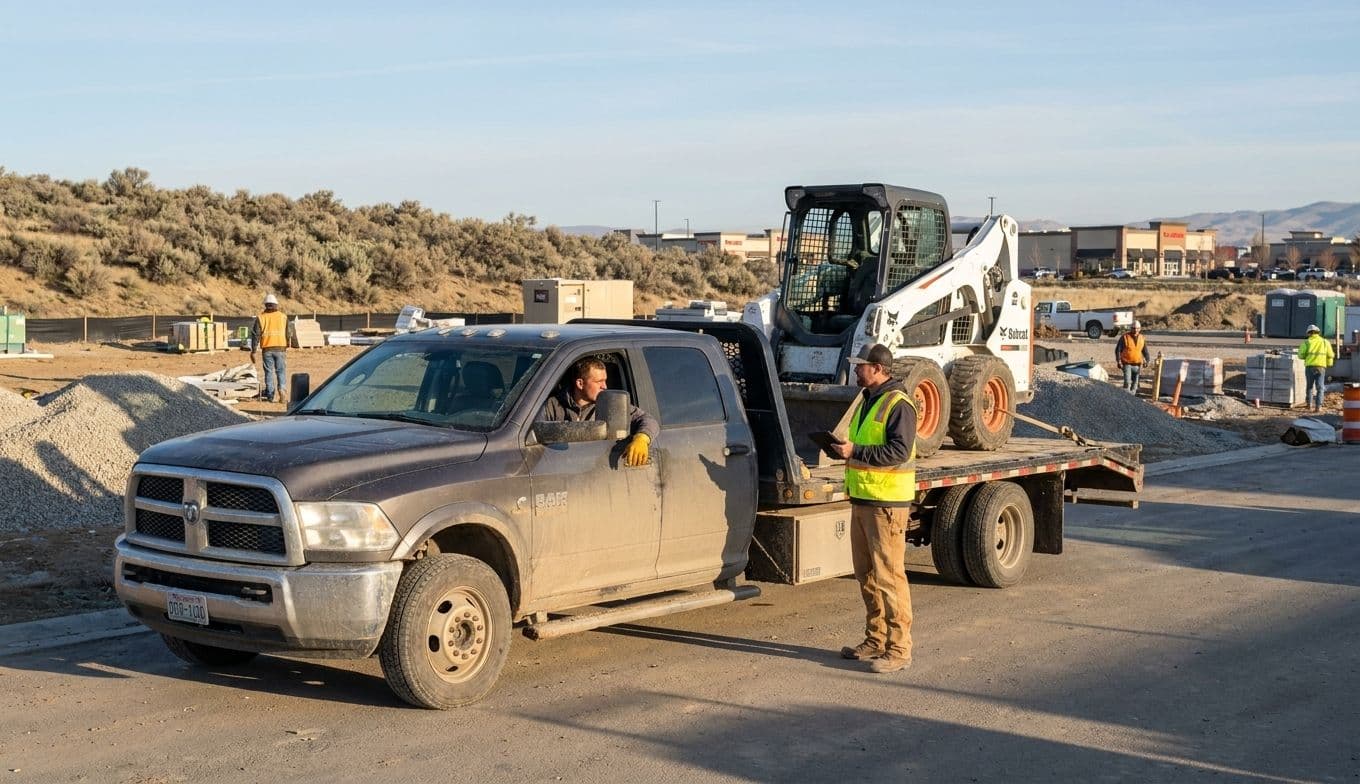
You back the trailer up to a job site off Chinden Boulevard at six in the morning, and the foreman is already standing there checking his phone. He needed a skid steer moved from a subdivision in Meridian two hours ago, and the hauler he usually calls didn't answer. This is the moment that decides whether you become someone he calls next time, or someone he never thinks about again. That gap between "I need this moved now" and "someone showed up and handled it right" is exactly where a solo trailer hauler in Boise can build a real business.
This article is not a story about one lucky break. It is a practical look at how a person with a truck, a trailer, and some discipline can turn occasional hauling jobs into a steady stream of contractor work. Boise's construction and landscaping scene is busy enough that equipment needs to move constantly between sites, yards, and rental counters, and a lot of that movement is handled poorly. That's the opening a dependable hauler can walk through.
For a deeper breakdown, check out all you need to know about starting a freelance business.
Why Contractors Need Reliable Equipment Transport in Boise
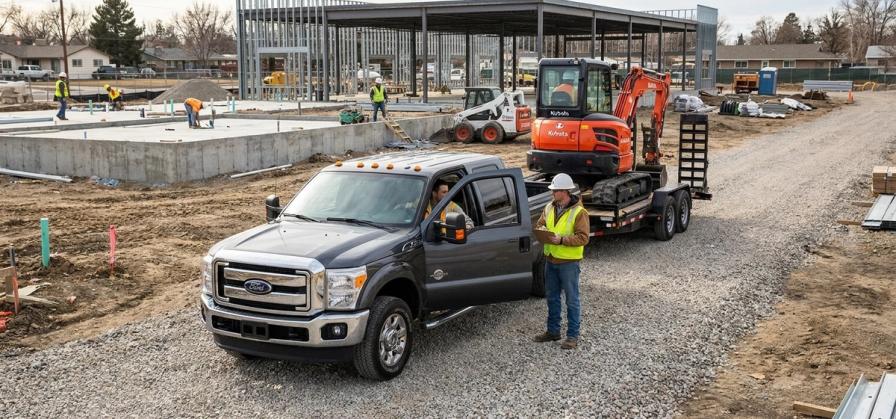
Construction and contracting crews in the Treasure Valley move equipment far more often than most outsiders assume. A landscaping company might need a mini excavator shuttled from a storage yard in Garden City to a backyard job in Eagle on a Tuesday, then picked up again Thursday for a different site. A general contractor might need a skid steer, a compact loader, or a stack of pallet jacks relocated between two active builds without slowing either crew down. These are not exotic requests. They are the routine, unglamorous logistics that keep a job on schedule, and they happen every week across the valley.
The trouble starts when that logistics piece is handled last-minute or by whoever happens to be free. A crew that can't move its own equipment often waits on a rental company's delivery slot, eats the cost of an idle machine sitting in the wrong place, or scrambles to find a hauler at the last minute and pays a premium for the inconvenience.
Common problems contractors face include:
- ●Equipment sitting idle: Crews lose productive hours when machines are stuck at the wrong location.
- ●Tight project schedules: A late delivery can delay several tasks that depend on the equipment.
- ●Last-minute hauling costs: Emergency transport can cost more than a planned equipment move.
- ●Multiple job sites: Contractors may need the same equipment moved between different locations across Boise and the Treasure Valley.
- ●Scheduling problems: Unclear delivery times make it harder for crews to plan labour and job-site work.
Delays cascade quickly on a job site. If the excavator isn't there when the crew arrives, labour hours get wasted standing around, and the whole schedule slides. Contractors remember who caused that slide.
This is why a contractor who has been burned once by a no-show hauler will often stick with whoever shows up on time after that. Dependability in this business is not a nice-to-have; it is the entire value proposition. A solo hauler who answers the phone, confirms details clearly, and shows up when promised is solving a real operational headache, not just offering a ride for a machine. That reliability is worth more to a busy contractor than a slightly lower price from someone unproven.
Want to start a Retail business? Plan it with a trending Retail business plan.
Choosing the Right Equipment Transport Services
Not every hauler needs to move oversized loads to be useful. A single trailer and a properly rated truck can realistically handle skid steers, mini excavators, compact track loaders, tool trailers, generators, scaffolding, pallet materials, and smaller attachments like buckets and forks. These are the machines that get shuffled around Boise-area job sites constantly, and many of them fall within the towing capacity of a well-equipped pickup and a deckover or tilt trailer. Knowing your equipment weight limits and sticking to them is what keeps you safe, legal, and insurable.
A solo equipment hauler can focus on several common types of local transport, including:
- ●Skid steers and mini excavators: Frequently moved between construction, landscaping, and residential projects.
- ●Compact track loaders: Useful for contractors who need equipment transferred between nearby job sites.
- ●Tool trailers and generators: Often require quick transport when crews are starting or finishing a project.
- ●Scaffolding and pallet materials: Smaller loads that can still create logistical problems when contractors lack the right vehicle.
- ●Buckets, forks, and attachments: Smaller equipment that can be transported alongside or separately from the main machine.
The more valuable opportunities tend to be short-distance, local moves rather than long highway runs. A trip from a yard in Nampa to a site in Boise, or between two job sites within the city, is exactly the kind of work a solo operator can turn around multiple times in a single day. Urgent same-day or next-morning requests are also a strong niche, because larger transport companies often can't reposition quickly enough to take them, and contractors are willing to pay a bit more for someone who can.
Defining your service area clearly matters more than it sounds. A hauler who says "I cover the Treasure Valley" without more detail leaves contractors guessing whether a job in Star or Kuna is even worth calling about. Naming specific cities and a rough radius, for example Boise, Meridian, Nampa, Eagle, Star, and Kuna within roughly 30 to 40 miles, gives contractors a fast yes-or-no answer and makes your pricing conversations simpler because everyone understands the baseline distance involved.
Building a Contractor-Friendly Service Model
Contractors are busy people who do not want to negotiate a hauling job over five phone calls. A simple booking process, where a contractor can text or call with the equipment type, pickup location, drop-off location, and needed time, and get a confirmed answer within a short window, removes friction that competitors often leave in place. Sending a quick written confirmation, even a simple text summary, protects both sides and shows you run things professionally rather than casually.
A contractor-friendly booking process should make these details clear from the beginning:
- ●Equipment type: Confirm exactly what machine, trailer, or materials need to be transported.
- ●Pickup location: Get the full address and any site-access instructions.
- ●Drop-off location: Confirm where the equipment needs to go and who will receive it.
- ●Requested time: Agree on the pickup date and preferred arrival window.
- ●Price: Provide the expected hauling charge before confirming the job.
- ●Written confirmation: Send the agreed details by text so both sides have the same information.
Response time is where many independent haulers lose business without realizing it. If a contractor has to wait half a day for a reply, they will call someone else and probably keep calling that person going forward. Setting a personal standard, such as responding to every inquiry within an hour during business hours, and being upfront about availability outside those hours, sets expectations that contractors can plan around. Predictability is the product here as much as the truck is.
It also helps to stop treating every job as a custom negotiation from scratch. Building a small set of repeatable service packages, like a standard local move, a same-day rush move, and a multi-stop route between several sites, makes quoting faster for you and easier for contractors to understand. The table below shows how that might look in practice, without pretending these numbers apply to every market or every trailer setup.
| Service Option | Typical Use Case | What's Included |
|---|---|---|
| Standard Local Move | Planned equipment relocation within the metro area | Pickup, transport, drop-off, basic scheduling window |
| Same-Day Rush Move | Urgent equipment need, breakdown replacement, weather delay | Priority response, faster turnaround, premium handling |
| Multi-Stop Route | Several pieces of equipment moved across multiple sites | Coordinated stops, single trip planning, combined pricing |
| Rental Yard Pickup/Drop | Equipment sourced from or returned to a rental counter | Timed pickup, condition check, drop-off confirmation |
Setting Prices That Make Sense
Pricing equipment transport well means pricing the actual work, not guessing at a round number. Mileage is the obvious starting point, since fuel and time both scale with distance, but it is far from the only factor. Equipment size and weight change how much time loading and securing takes, and heavier or awkward loads justify a higher rate simply because they demand more caution and often a longer strapping and inspection process. Urgency matters too. A same-day request that reshuffles your schedule deserves a different rate than a job booked three days out.
Waiting time is one of the most commonly underpriced factors in this business. If a crew isn't ready when you arrive, or the drop-off site requires you to wait for someone to unlock a gate or direct you to the exact spot, that time has real cost even though the trailer isn't moving. A flat, one-size-fits-all rate structure tends to punish the hauler on the jobs that involve extra waiting, awkward loading, or unusually heavy equipment, which is why most experienced haulers build in variables rather than a single flat number. The framework below is meant as a starting structure to adapt, not a promise of what any specific job will pay.
| Pricing Factor | How It Might Be Applied |
|---|---|
| Base mileage rate | Set per mile beyond a minimum local radius |
| Equipment size/weight tier | Higher tier rate for larger machines needing more securing time |
| Loading/unloading time | Flat add-on if loading exceeds a set number of minutes |
| Urgency/rush fee | Added percentage or flat fee for same-day or after-hours requests |
| Waiting time | Per-15-minute charge once a grace period is exceeded |
How to Win Contractor Accounts
Winning contractor accounts starts with going where the equipment moves already happens. General contractors, landscaping companies, excavation crews, and equipment rental businesses around Boise all deal with transport logistics regularly, and many of them do not have a dependable hauler on speed dial. Introducing yourself directly, ideally in person at a job site or rental counter rather than only by phone, gives contractors a face and a truck to remember instead of just a business card in a stack.
The best places to build contractor relationships include:
- ●General contractors: They regularly coordinate equipment between multiple job sites.
- ●Landscaping companies: These crews often move compact equipment, trailers, and attachments between residential projects.
- ●Excavation crews: Their equipment frequently needs to be transported as projects change locations.
- ●Equipment rental businesses: Rental customers may need delivery or pickup services beyond what the rental company provides.
- ●Construction job sites: Meeting site managers and crew leads can create direct relationships with people who regularly need hauling help.
Referral relationships often grow out of these first contacts naturally. A rental yard that trusts you to handle equipment carefully may start recommending you to customers who need delivery beyond what the yard offers itself. A general contractor who has a good experience with you may mention your name to a subcontractor on the same job. None of this requires a big marketing budget; it requires consistent, careful work that gives people a reason to say your name out loud.
A simple one-page vendor introduction sheet helps make that first contact stick. It should state your service area plainly, the types of equipment you can move, your general response time standard, and a phone number that actually gets answered. Following up without becoming a nuisance is a real skill worth practicing. A short check-in a few weeks after the first contact, asking whether they've had any transport needs come up, reads as helpful rather than pushy, especially if you keep it brief and drop it if there's no response.
Becoming a Go-To Vendor
The jump from occasional hauler to go-to vendor happens through boring consistency, not a single big win. Contractors talk to each other, and a hauler who answers quickly, quotes fairly, and shows up exactly when promised becomes the default choice without much extra effort. Fast quote turnaround matters especially on urgent jobs, because the contractor calling you is often trying to solve a problem right now, and a delayed response just sends them to the next name on their list.
The habits that help turn one-time customers into repeat contractor accounts include:
- ●Quick quote turnaround: Respond to transport requests quickly, especially when contractors have urgent jobs.
- ●Reliable arrival times: Show up when promised and communicate early if something changes.
- ●Fair, clear pricing: Give contractors a straightforward price without unexpected charges.
- ●Clear communication: Confirm pickup, delivery, equipment details, and timing before each job.
- ●Professional service: Handle equipment carefully and leave contractors confident about using you again.
Proper documentation is a quieter but important part of building trust. A simple job confirmation that states pickup time, drop-off time, equipment description, and agreed price protects both parties if there's ever a dispute, and it signals that you run a real business rather than a side hustle. Licensing and insurance are not optional extras here either. Confirming your vehicle registration, trailer weight ratings, and liability coverage are appropriate for the equipment you haul is a basic requirement, and Idaho's Department of Transportation and DMV resources are worth checking directly for current commercial and trailer requirements before taking on heavier loads.
Consistency compounds over time in ways that are easy to underestimate early on. A contractor who never has to think twice about calling you starts routing more of their transport needs your way by default, simply because it removes one more thing they have to manage. That kind of repeat business, built job by job, is far more valuable than any single large contract, because it tends to keep coming even through slower seasons.
Read More | Food Truck Business in Miami: Licenses, Permits and Easy Setup Guide (2026).
Using a Business Plan to Grow the Operation
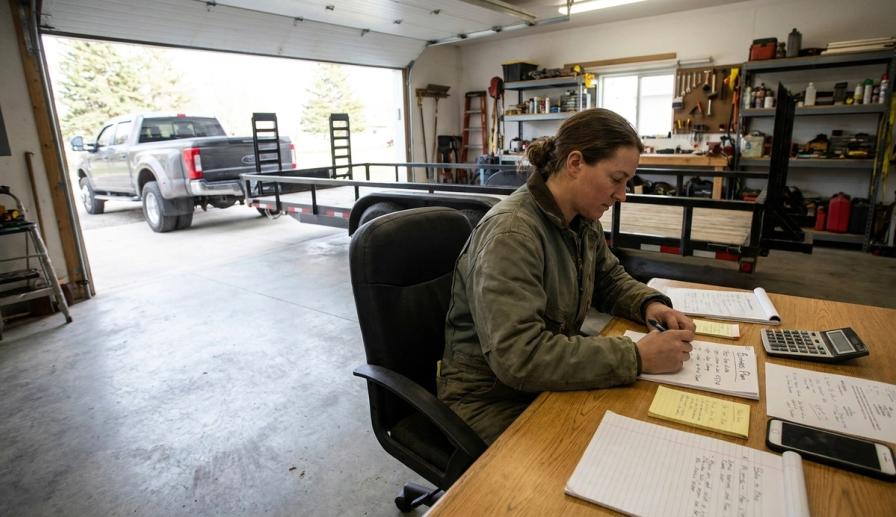
A written business plan sounds like overkill for a one-person, one-trailer operation, but it is really just a way of forcing yourself to answer questions before they become expensive problems. Mapping out your services, your target customers, the equipment and trailer capacity you actually have, your real operating costs including fuel, insurance, and maintenance, your pricing structure, and how you plan to find new contractor accounts turns a vague idea into something you can actually execute against and revisit.
A practical business plan should clearly cover:
- ●Services offered: Define the equipment and materials you can safely and legally transport.
- ●Target customers: Identify the contractor types most likely to need regular hauling services.
- ●Service area: List the cities and approximate distance you are willing to cover.
- ●Equipment capacity: Document your truck, trailer, towing capacity, and load limits.
- ●Operating costs: Account for fuel, insurance, maintenance, registration, and other regular expenses.
- ●Pricing structure: Set a clear approach for calculating rates based on distance, equipment, and urgency.
- ●Customer acquisition: Outline how you will approach contractors, rental businesses, and other potential referral sources.
This structure matters most when you're trying to move from occasional, scattered jobs toward recurring contractor accounts. Without a plan, it's easy to take whatever job comes in and call that growth, even if the pricing barely covers costs or the job falls outside your realistic service area. With a plan, you can look at which types of jobs are actually profitable, which contractor relationships are worth investing follow-up time in, and where you might need a second trailer or a rate increase before you take on more volume. It becomes a working document you adjust, not a report you write once and file away.
Practical Takeaways for Solo Trailer Haulers
The core of this business is simple even though executing it well takes discipline. Contractors need equipment moved reliably and often on short notice, and a solo hauler who communicates clearly, prices thoughtfully, documents jobs properly, and shows up when promised will stand out in a market where inconsistency is common. None of the individual pieces here is complicated, but doing all of them consistently, job after job, is what actually separates a go-to vendor from someone who just happens to own a trailer.
The key areas to focus on are:
- ●Reliable scheduling: Show up at the agreed pickup and delivery times.
- ●Clear communication: Confirm equipment, locations, timing, and job details before each trip.
- ●Thoughtful pricing: Consider distance, equipment type, loading requirements, and urgency when quoting.
- ●Proper documentation: Keep written records of job details, prices, and agreed schedules.
- ●Defined service area: Clearly state which Boise-area cities and surrounding locations you serve.
- ●Contractor relationships: Build connections with general contractors, landscapers, excavation crews, and rental businesses.
- ●Repeat business: Focus on becoming a dependable contact contractors can call whenever equipment needs to move.
If you're seriously considering this path, or already hauling occasionally and wondering how to turn it into something steadier, the next useful step is not another job, it's an hour spent mapping out your own version of the business plan described above. Write down your realistic service area, your equipment limits, your pricing factors, and three contractor types you could approach this month. That single document will do more for your growth than waiting for the next random call to come in.
Read More | AB5 Contractor Law in LA: What Businesses Still Get Wrong in 2026.
Final Thoughts
Becoming a go-to equipment transport vendor does not require a large fleet or a complicated operation. For a solo trailer hauler in Boise, the opportunity comes from solving a simple problem well: getting the right equipment to the right job site at the right time.
The real advantage comes from consistency. Contractors want someone who answers quickly, gives a clear quote, confirms the details, and shows up when promised. When those basics happen on every job, a hauler becomes the person contractors remember and call again.
Building relationships with contractors, landscapers, excavation crews, and rental businesses can turn individual jobs into repeat work and referrals. A simple business plan can also help keep pricing, service areas, equipment limits, and growth goals on track.
In the end, the goal is not just to move more equipment. It is to become a dependable local contact that contractors trust whenever something needs to be transported. That reputation can turn occasional hauling jobs into a steady business over time.
Ready to Get Started?
Starting an equipment transport business is possible with the right planning and a clear understanding of your service area, equipment limits, operating costs, pricing, and contractor needs. A practical plan can help you avoid costly mistakes and build a service that is easier to manage and grow.
That is where BossWorks comes in. We help you create a complete business plan tailored to your business, covering startup costs, equipment needs, permits, pricing, operations, customer acquisition, and long-term growth strategies.
Frequently Asked Questions
Skid steers, mini excavators, compact track loaders, generators, tool trailers, and smaller attachments generally fit within a properly rated pickup and trailer setup.
Name specific cities like Boise, Meridian, Nampa, Eagle, Star, and Kuna within a set mileage radius so contractors can quickly tell if their job qualifies.
Flat pricing usually fails to account for loading time, equipment weight, urgency, and waiting time, so a variable pricing framework tends to work better.
By introducing yourself directly to general contractors, landscapers, and rental yards, then following up briefly and consistently without being pushy.
Consistent fast responses, accurate quotes, proper job documentation, and reliably showing up on time build the trust that leads to repeat work.