Is Your $6 Latte Really Profitable for a Coffee Shop Business in Ogden
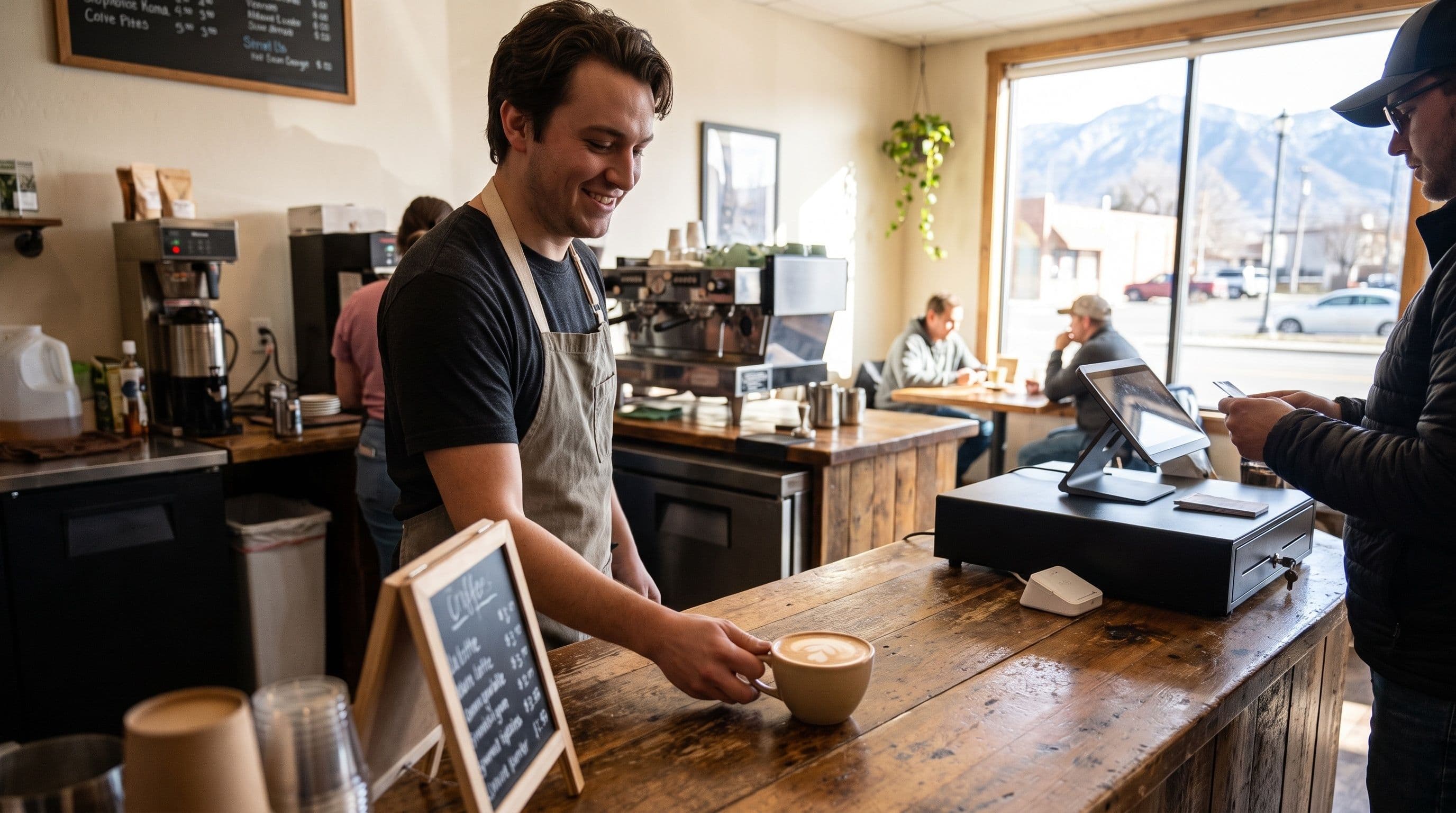
Charging $6 for a latte feels good at the register. The card taps, the drink goes out, and it is easy to think that most of those six dollars are yours.
A selling price is not the same as profit.
If you are running or planning a coffee shop business in Ogden, it is worth looking at what remains after ingredients, labor, rent, fees, waste, and other expenses. A $6 latte can be profitable, but only if the numbers work beyond the menu board.
The examples below use made-up figures to explain the math. They are not Ogden statistics.
What Does a $6 Latte Really Cost?
Start with the costs that go directly into the drink.
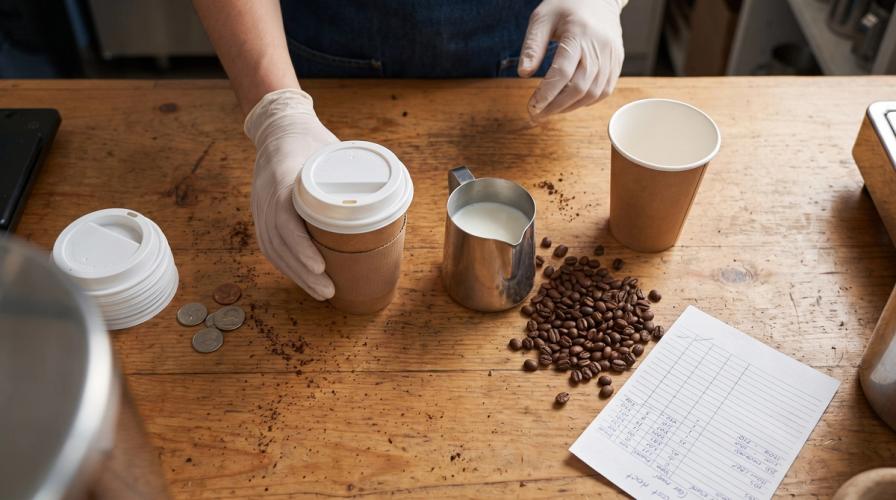
For example, one latte might use:
- ●Espresso beans: $0.60
- ●Milk: $0.40
- ●Cup, lid, and sleeve: $0.45
- ●Labor: $0.90
That puts the basic cost at around $2.35 before rent, utilities, payment fees, and waste.
It sounds pretty good. But your coffee shop still has bills to pay after that latte leaves the counter.
For a deeper breakdown, check out all you need to know about starting a freelance business.
The Costs Hiding Behind Every Cup
Rent, utilities, insurance, software, cleaning supplies, and equipment maintenance do not appear on the receipt. Every drink has to help cover them.
You also have costs such as:
- ●Credit card processing fees
- ●Milk and ingredient waste
- ●Remade drinks
- ●Spoiled inventory
- ●Marketing
- ●Business licenses and other operating expenses
Suppose your shop's fixed costs are $10,000 per month. Whether you sell 100 drinks or 10,000, those bills still exist.
That is why sales volume matters so much. The more reasonable sales you generate, the smaller the share of fixed costs each drink needs to carry.
Read More | Coffee Shop Business in Seattle: Build More Than a Café.
A $6 Latte Can Look Very Different by Sales Channel
The same latte can produce different results depending on where the customer buys it.
Delivery apps can be useful, especially when customers would rather order from home on a cold morning. But commissions can take a noticeable portion of the sale.
For illustration, if a delivery platform takes 25%, that is $1.50 from a $6 latte.
Now add ingredients, labor, overhead, payment fees, and waste. A drink that looked profitable at the counter may have little left or potentially become unprofitable through delivery.
Discounts can create the same problem.
A 20% discount takes $1.20 off a $6 latte before you even start calculating the other costs. Loyalty freebies and buy-one-get-one offers can also reduce the amount you actually keep.
The lesson is not to avoid delivery or promotions. It is to know what they cost.
How to Calculate Your Latte Profit
You do not need complicated financial software to start.
Work through these numbers:
- ●Calculate the direct cost: Beans, milk, packaging, syrups, and other ingredients.
- ●Add labor: Estimate how much staff time goes into preparing and serving the drink.
- ●Allocate overhead: Divide monthly fixed costs across your expected sales.
- ●Include transaction fees: Account for card processing and other payment costs.
- ●Account for waste: Include spilled, spoiled, or remade products.
- ●Add channel costs: Include delivery commissions or discounts when applicable.
What remains is much closer to your actual profit.
Thinking of starting a coffee shop business? Start smart with a proven plan designed to build loyal customers and a steady daily income.
A Simple Example
Here is how a $6 latte could look:
| Cost | In-store | Delivery |
|---|---|---|
| Selling price | $6.00 | $6.00 |
| Ingredients | \-$1.45 | \-$1.45 |
| Labor | \-$0.90 | \-$0.90 |
| Fixed cost share | \-$1.20 | \-$1.20 |
| Card fee | \-$0.18 | \-$0.18 |
| Delivery commission | $0.00 | \-$1.50 |
| **Remaining amount** | **$2.27** | **$0.77** |
This is only an illustration, not a prediction for an Ogden coffee shop. Your actual numbers could look very different.
The important point is that the $6 latte can leave a very different amount depending on how it is sold.
Small Changes Can Protect Your Margin
You do not necessarily need to make dramatic changes to improve the numbers.
Start with the basics:
- ●Track how much milk, coffee, and syrup you actually use.
- ●Reduce food and ingredient waste.
- ●Review slow-selling menu items.
- ●Look for ways to increase the average order with food or add-ons.
- ●Check whether delivery orders are covering their costs.
- ●Review discounts instead of offering them automatically.
- ●Revisit menu prices when your costs increase.
A customer buying a $6 latte and a $4 pastry is different from someone buying only the latte. Increasing the average order value can sometimes be more useful than simply trying to sell more individual drinks.
Read More | Bakery Business in New York: Smart Upselling Techniques That Increase Order Value.
Why Break-Even Matters

A latte can have a positive margin while the overall coffee shop still loses money.
That happens when total sales are not enough to cover the business's fixed expenses.
Your break-even point tells you how much you need to sell before the business starts generating an overall profit. Once you understand that number, daily sales become easier to evaluate.
Instead of asking, "Did we sell a lot of coffee today?" you can ask, "Did today's sales move us far enough past our costs?"
That is a much more useful question.
Ready to Make It Real? Turn your business idea into a clear plan and take the next step with BossWorks
Final Thoughts
So, is a $6 latte profitable for a coffee shop business in Ogden?
It can be, but the $6 price tag does not answer the question.
Your real result depends on ingredients, labor, rent, payment fees, waste, discounts, delivery costs, and how many drinks you sell.
The good news is that you do not have to guess. Track the cost of one latte, understand your overhead, and keep checking the numbers as your business grows.
A profitable coffee shop is not built by hoping every $6 latte works. It is built by knowing where that $6 goes.
Before You Spend, Know What It Takes
A good business idea should not depend on guesswork. Check your startup costs, market potential, licenses, funding options, and pricing before you make a major decision. BossWorks gives you practical answers tailored to your business and city, so you can move forward with more clarity and less uncertainty.
Frequently Asked Questions
It can be, but profit depends on your ingredient, labor, overhead, and other costs.
Their commissions can take a large share of the $6 sale, leaving much less profit.
Subtract ingredients, labor, overhead, fees, waste, and discounts from the selling price.
Higher sales spread fixed costs like rent and insurance across more drinks.
Reduce waste, review pricing, and increase average orders with profitable add-ons.