Pressure Washing Businesses Turning Solar Panel Cleaning Into a Recurring Route in Jacksonville
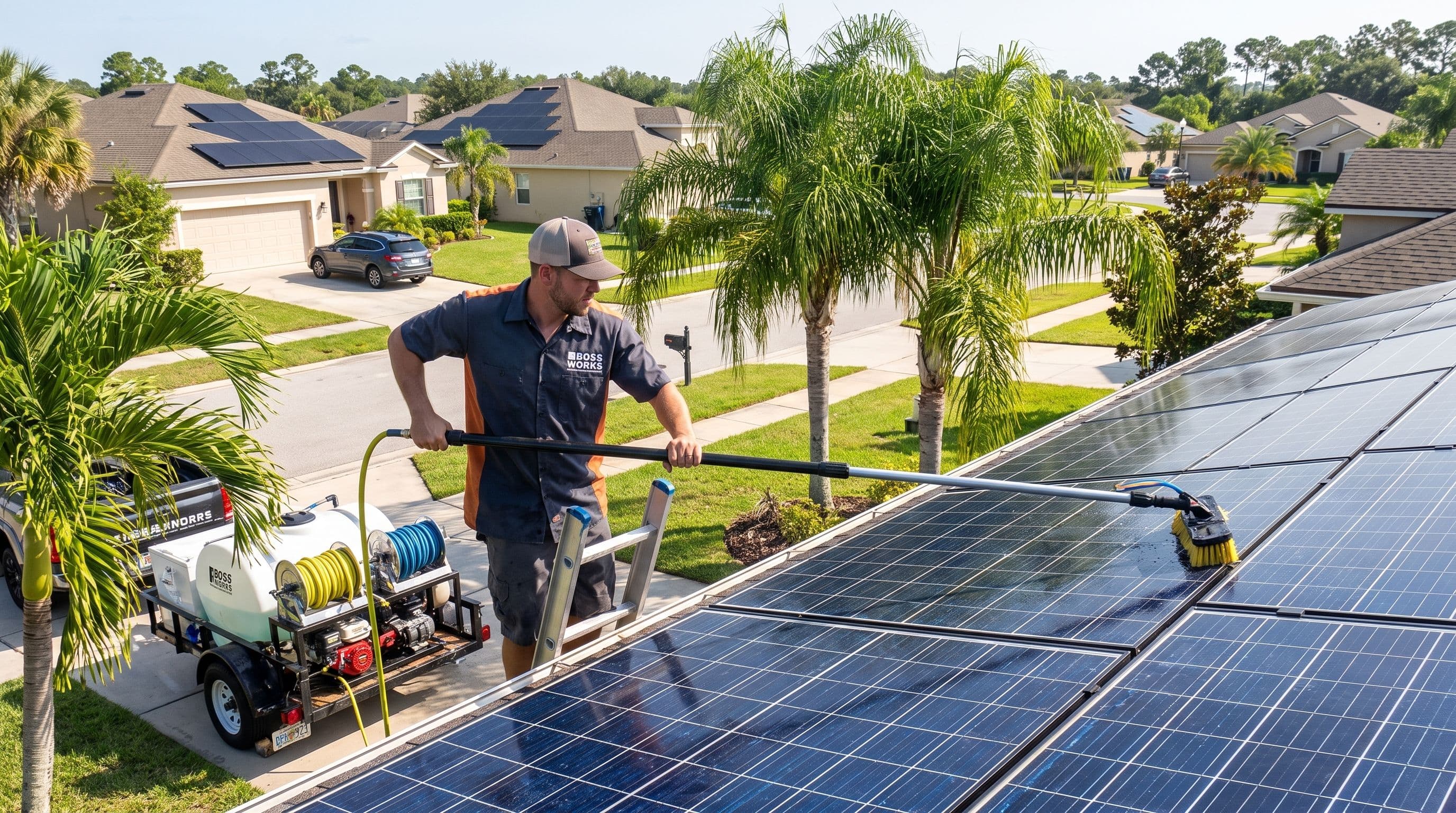
If you already run a pressure washing business in Jacksonville, solar panel cleaning can be a smart service to add. It fits your existing skills, requires relatively little additional equipment, and gives you a chance to build recurring revenue instead of relying only on one-time pressure washing jobs.
This guide covers the basics you need to know before adding solar panel cleaning, including startup costs, pricing, finding your first customers, safety considerations, and ways to turn one-time cleanings into regular service plans. The goal is simple: add a service that works alongside your existing business and can create more predictable income.
Why Does Solar Panel Cleaning Fit a Pressure Washing Business?
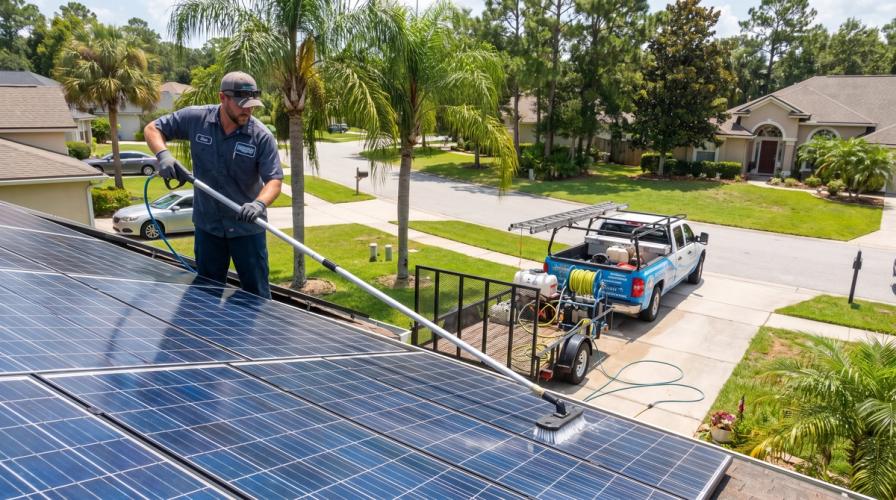
The overlap is straightforward. You already work with homeowners and property managers, handle exterior surfaces, and likely own much of the equipment needed for water handling and access. Solar panel cleaning lets you add another service without completely changing your business model.
Here are the main reasons it makes sense:
- ●You already have many of the basics: Trailers, tanks, hoses, water systems, ladders, and general exterior-cleaning equipment can reduce your additional startup costs.
- ●The customer base overlaps: Homeowners who hire you for house washing, driveways, roofs, or patios may also have solar panels that need maintenance.
- ●Jacksonville creates demand: Pollen, dust, rain, mineral deposits, and coastal air can leave residue on panels and create a visible need for cleaning.
- ●Shallow roof angles can hold more buildup: Florida solar panels may not always get completely cleaned by rainfall, allowing dirt and residue to remain on the surface.
- ●You can sell to existing customers: Your current customer list gives you warm leads, so you can promote solar cleaning without paying to acquire an entirely new audience.
- ●It creates recurring revenue: Customers can schedule panel cleaning twice a year or quarterly, giving you more predictable work.
- ●It can fill slower periods: Recurring solar cleaning jobs can help keep your schedule active when pressure washing demand slows down.
The biggest advantage is that you are adding a complementary service rather than building a completely separate business. With the right pricing, equipment, and safety practices, solar panel cleaning can become a useful second revenue stream for an established pressure washing company.
For a deeper breakdown, check out all you need to know about the home service business
How Do You Build the Actual Offer?
Start with a clear customer, a simple service, and pricing that reflects the job.
- ●Choose your customer: Start with residential homeowners, then consider commercial properties and property managers as you gain experience.
- ●Use your existing customers: Your pressure washing customer list is one of the easiest places to find your first solar cleaning jobs.
- ●Keep the service simple: Focus on removing pollen, dust, salt film, mineral spots, and general buildup.
- ●Avoid unrealistic promises: Explain the cleaning benefits without guaranteeing a specific increase in solar output.
- ●Price by difficulty: Consider panel count, roof height, pitch, access, system size, and how long the panels have gone without cleaning.
- ●Reward recurring customers: Offer a better per-visit rate for customers who book quarterly or twice-yearly service.
- ●Start with essential gear: Buy equipment for your first 10 jobs rather than investing heavily before you know the demand.
This approach keeps the offer easy to understand while giving you room to increase pricing and expand into larger accounts.
What Does It Cost to Start?
If you already own a pressure washing setup, adding solar panel cleaning can be relatively affordable. Most of your major equipment is already covered, so the main expenses are panel-specific tools, safety equipment, insurance, and marketing.
| Startup Category | What It Covers | Estimated Range |
|---|---|---|
| Panel-specific equipment | Water-fed pole, soft brushes, hoses, fittings | $600-$1,500 |
| Purified water system | Deionization or reverse osmosis for spot-free rinsing | $400-$1,800 |
| Safety gear | Harness, stabilizers, ladder upgrades, gloves | $300-$900 |
| Insurance adjustment | Adding solar cleaning to your existing policy | $300-$1,200/year |
| Marketing | Flyers, signage, profile updates, review campaigns | $200-$700 |
| **Estimated initial investment** | Small operator with an existing pressure washing rig | **$1,800-$6,100** |
These are general planning estimates, not quotes. Your actual cost will depend on the equipment you already own, the water system you choose, and your insurance rates.
The biggest variable is usually the purified water setup. Start with the equipment you need for your first few jobs and upgrade as bookings become consistent. Compared with starting a pressure washing business from scratch, this add-on can require far less upfront investment.
How Do You Get the First Customers in Jacksonville?
Your existing pressure washing customers are the best place to start because they already know and trust your work. From there, build local visibility and partnerships that can create a steady flow of solar cleaning jobs.
- ●Existing pressure washing customers: Mention the service during your next visit, add it to invoices, and contact past customers.
- ●Google Business Profile and local SEO: Add solar panel cleaning as a service and regularly post before-and-after photos.
- ●Referrals and reviews: Ask happy customers for reviews and referrals while the job is still fresh.
- ●Solar installer partnerships: Connect with local solar companies that may not provide ongoing cleaning themselves.
- ●Property managers and businesses: Approach commercial properties with larger solar systems and recurring maintenance needs.
- ●Neighbourhood marketing: Use door hangers, local offers, and referrals around homes where you have already completed a job.
| Channel | Speed to First Job | Effort |
|---|---|---|
| Existing pressure washing customers | Fast | Low |
| Google Business Profile and local SEO | Medium | Medium |
| Referrals and review requests | Medium | Low |
| Solar installer partnerships | Slow | Medium |
| Property managers and businesses | Slow | High |
| Neighborhood-based marketing | Medium | Medium |
Focus on neighbourhood clustering as you grow. If you clean one home in a subdivision, market to nearby homes while you are already there. Booking several customers in the same area can make each route more efficient and profitable.
Read More | One Bad Yelp Season Turned a Solo Aquarium Maintenance Tech in Spokane Into a Retainer Vendor.
How Do You Turn One-Time Cleanings Into a Recurring Route?
The goal is to make recurring service part of the offer from the beginning. Instead of treating solar panel cleaning as a one-time job, give customers a simple reason to book their next visit.
- ●Offer a maintenance plan: Recommend quarterly or twice-a-year cleaning based on the customer's needs.
- ●Give recurring customers a better rate: A slightly lower per-visit price can make ongoing service more attractive.
- ●Offer the next appointment immediately: Do not wait months to ask about a second visit.
- ●Build routes by location: Group customers in the same Jacksonville areas or ZIP codes on the same service days.
- ●Reduce drive time: Several nearby jobs can be more profitable than scattered appointments across the city.
- ●Prioritize profitable routes: A busy schedule is not always a profitable one if you spend too much time driving.
- ●Guide new customers toward existing routes: Encourage customers to choose days when you are already working in their area.
The goal is not simply to fill your calendar. It is to build tight, repeatable routes that reduce travel time and give you more paying jobs within the same workday.
Thinking of starting a home service business? Start smart with a proven plan designed for a steady local income.
What Should the Pricing Look Like, and What Can You Earn?
Solar panel cleaning can be priced in several ways. The best option depends on the size of the system, access difficulty, and whether the customer wants one-time or recurring service.
- ●Per-panel pricing: Works well when the number of panels varies significantly between homes.
- ●Flat-rate pricing: Simple for standard residential jobs and easy to quote.
- ●System-size pricing: Useful for larger commercial arrays where counting every panel takes extra time.
- ●Recurring discounts: Offer a modest discount for customers who book regular cleaning.
- ●Access premiums: Charge more for steep roofs, greater heights, difficult access, or heavily neglected panels.
- ●Travel fees: Add a reasonable charge for jobs that fall outside your normal service routes.
| Scenario | Assumptions | Illustrative Revenue |
|---|---|---|
| Small residential clean | 12-16 panels, easy access | $150-$250 per visit |
| Larger residential array | 24-30 panels, moderate access | $250-$400 per visit |
| Recurring plan customer | Twice a year, clustered route | $300-$700 per year |
| Small commercial system | Larger array, scheduled visits | $400-$900 per visit |
These are illustrative planning estimates, not market survey figures. The real opportunity comes from recurring customers and efficient routes. A few hundred dollars from one home becomes much more valuable when you have dozens of nearby customers scheduled throughout the year.
What About Equipment, Safety, and Insurance?
Solar panel cleaning requires a different approach from standard pressure washing. The equipment and process should prioritize gentle cleaning, safe access, and protecting the customer's system.
- ●Use water-fed poles: They allow you to clean from the ground or a stable position and reduce the need to walk on the roof.
- ●Use soft brushes: These can remove dirt and buildup without aggressively scrubbing the panels.
- ●Use purified water: A purified rinse helps prevent mineral spots and residue from being left behind.
- ●Prioritize fall protection: Use proper harnesses, stable ladders, and other safety equipment when the job requires working at height.
- ●Never stand on the panels: Walking on solar panels can cause damage and create unnecessary safety risks.
- ●Check your insurance: Make sure your policy covers solar panel cleaning, work at height, and potential damage to the customer's system.
- ●Avoid high-pressure cleaning: Pressure washing methods suitable for driveways can damage panel coatings, seals, glass, or electrical connections.
- ●Avoid harsh chemicals and hot water: Follow appropriate cleaning practices and manufacturer recommendations.
The key rule is simple: solar panels are not driveways. Use low-pressure methods, soft brushes, purified water, and careful access to protect both the equipment and your business reputation.
What Should You Automate as It Grows?
Once your solar cleaning route starts filling up, automation can handle repetitive tasks and give you more time to focus on the actual work.
- ●Online booking: Let customers choose available appointment times without needing to call.
- ●Appointment reminders: Reduce no-shows with automatic reminders before each visit.
- ●Follow-up messages: Check in with customers after the job and encourage repeat bookings.
- ●Review requests: Automatically ask satisfied customers to leave a review.
- ●Recurring service reminders: Remind customers when their next cleaning is due.
- ●Customer records: Keep contact details, service history, locations, and next service dates in one place.
- ●Route tracking: Organize customers by area so you can build more efficient service days.
The goal is not to automate everything. It is to remove repetitive admin work so you can spend more time completing jobs and building profitable routes.
What Mistakes Should You Avoid?
A few common mistakes can quickly turn a promising add-on into an unprofitable service.
- ●Underpricing difficult jobs: Consider roof height, pitch, access, panel condition, and safety requirements.
- ●Buying too much equipment: Start with the essentials and upgrade when your bookings justify the expense.
- ●Accepting scattered jobs: Excessive driving can eat into your profit and reduce the number of jobs you can complete.
- ●Ignoring safety: Falls and panel damage can create serious costs and liability.
- ●Forgetting past customers: Previous customers are often your easiest source of repeat business.
- ●Making unrealistic claims: Do not guarantee a specific increase in solar output that you cannot verify.
Good pricing, careful scheduling, and consistent follow-up can prevent most of these problems.
So, Is It Worth Adding?
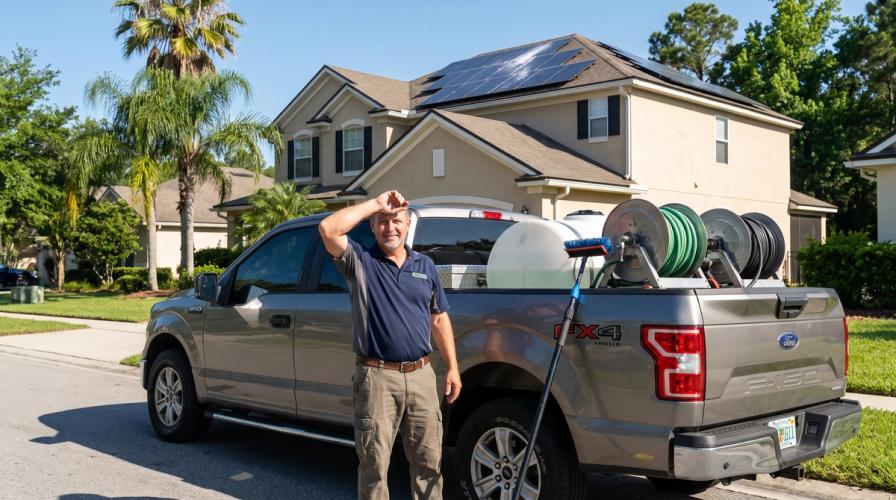
For an existing Jacksonville pressure washing business, solar panel cleaning can be a worthwhile add-on because you already have the customers, vehicle, and much of the basic infrastructure.
- ●Low additional startup cost compared with starting a new business.
- ●Existing customers provide an easy starting point for sales.
- ●Recurring service can create more predictable revenue.
- ●Local demand can support the service throughout the year.
- ●Route-based scheduling can improve profitability.
The main considerations are safety, specialized equipment, proper insurance, and efficient routing. If you are willing to learn the right cleaning process and build the service around recurring, geographically clustered jobs, solar panel cleaning can become a useful second revenue stream rather than just another one-off service.
Read More | Food Truck Business in Miami: Start Small and Grow Fast (2026).
Final thoughts
The smart way to start is small. Offer solar panel cleaning to a handful of your current pressure washing customers, learn the timing and the safe process on jobs you can control, and price each one for its real difficulty. Those first cleans teach you what a good day looks like and where your customers actually live.
From there, build outward one neighbourhood at a time, convert happy customers to twice-a-year or quarterly plans, and stack those recurring visits into tight geographic routes. Do that patiently and the shiny side job becomes what it should be: a dependable, profitable route that makes your whole Jacksonville business steadier.
Ready to Build Your Solar Panel Cleaning Business?
Turning solar panel cleaning into a recurring service can be a practical way to create more predictable revenue. The key is having the right equipment, pricing, safety practices, and customer strategy in place from the start.
BossWorks helps aspiring entrepreneurs plan and build service businesses with more clarity, without the guesswork that can waste time and money.
✓ Understand your startup costs based on your equipment, services, and operating needs
✓ Create service packages that encourage repeat and recurring customers
✓ Build realistic revenue projections and understand your break-even point
✓ Identify hidden costs, safety concerns, and pricing mistakes before they affect your business
✓ Create a practical customer acquisition plan and build profitable recurring routes
Frequently Asked Questions
Not like a driveway. Use low pressure, soft brushes, and purified water to avoid damaging panels, seals, or connections.
About $1,800 to $6,100 for a small operator with an existing setup, depending mainly on equipment, water systems, safety gear, insurance, and marketing.
Twice a year works for many homes, while quarterly cleaning may suit panels exposed to heavier pollen, dust, or salt buildup.
Offer a maintenance plan from the first visit, provide a recurring discount, and group customers by location to reduce driving time.
Make sure your policy covers work at height and accidental damage to solar panels, wiring, and related equipment.