One Bad Yelp Season Turned a Solo Aquarium Maintenance Tech in Spokane Into a Retainer Vendor
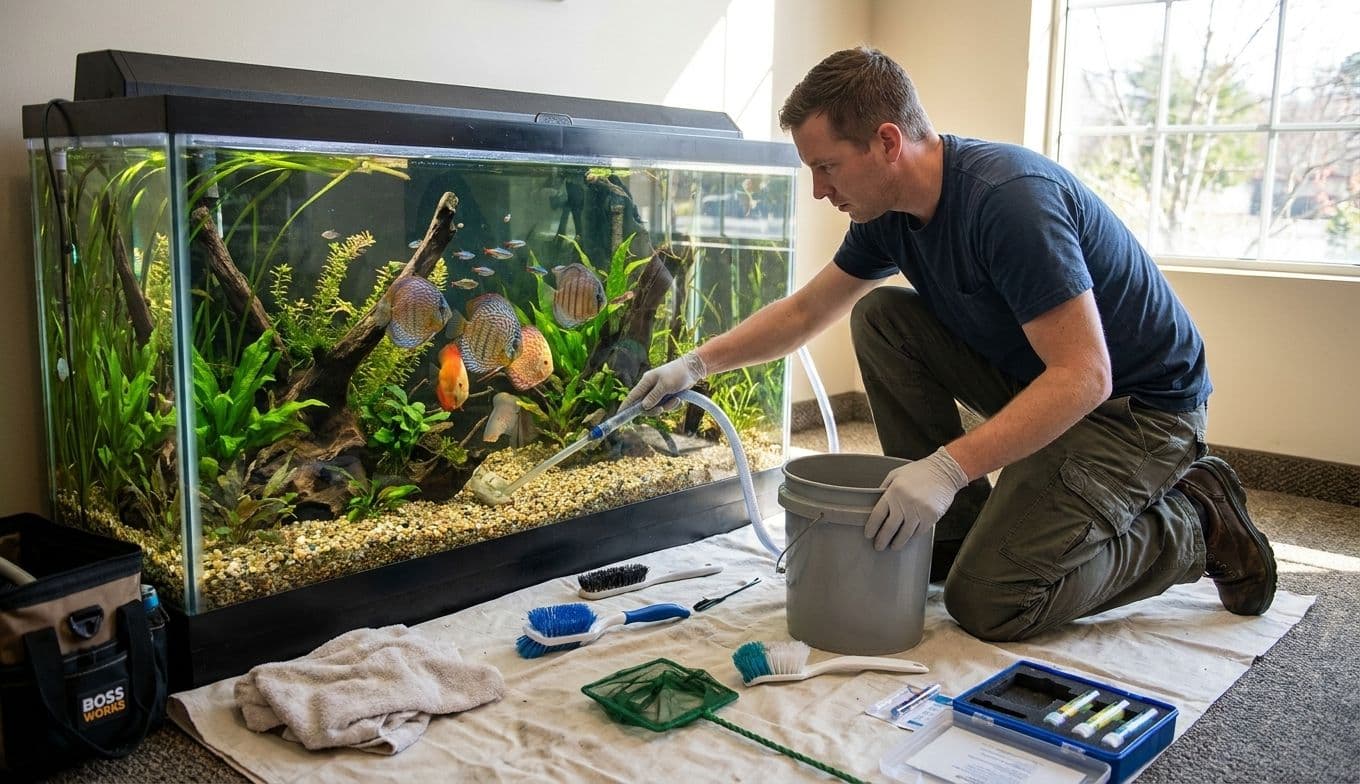
A solo aquarium maintenance technician in Spokane spent two years chasing Yelp leads, and it worked, until it didn't. One slow season with fewer reviews and a lower search ranking cut new inquiries by more than half, according to the technician's own booking log from that period. That gap forced a hard look at the business model itself, and the answer wasn't more marketing. It was fewer one-time jobs and more standing monthly contracts with homes, restaurants, and offices that needed clean tanks every single week, not just when someone remembered to search for a cleaner.
This is a story about a shift that a lot of local service businesses eventually have to make, whether they clean aquariums, pools, gutters, or HVAC systems. It's the move from being found to being kept. And the mechanics of that shift, the pricing, the packaging, the outreach, apply almost exactly the same way whether you're in Spokane or any other mid-sized city with a mix of homes and small commercial clients.
The Problem With One-Time Aquarium Jobs
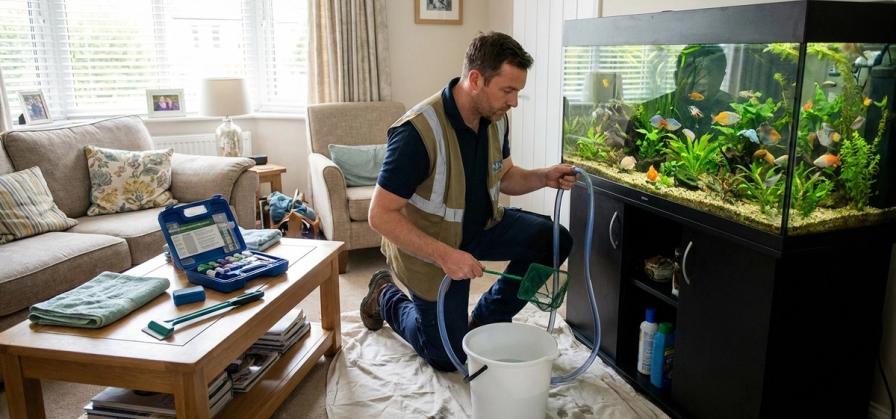
Aquarium maintenance demand can be unpredictable. Customers usually call when they buy a new fish, notice a dirty tank, or need help before an event. This makes monthly income difficult to predict.
- ●Seasonal and inconsistent demand
- ●Heavy dependence on Yelp and new leads
- ●More time spent finding customers
- ●Little guarantee of repeat bookings
A slow Yelp period can make things worse. Fewer calls mean more time spent searching for customers instead of servicing existing ones.
The bigger issue is retention. When aquarium cleaning is sold as a one-time service, customers may simply choose another technician the next time they need help.
One-Time Jobs vs Recurring Maintenance
| Factor | One-Time Jobs | Recurring Maintenance |
|---|---|---|
| Customer bookings | Unpredictable | Scheduled in advance |
| Revenue | Changes month to month | More predictable |
| Customer relationship | Starts over with each job | Builds over time |
| Lead generation | Constantly needed | Less dependent on new leads |
| Business planning | Difficult | Easier to plan routes and workload |
A recurring model gives the technician customers who are already scheduled for regular visits, creating steadier work and stronger long-term relationships.
| One-Time Aquarium Jobs | Recurring Maintenance Contracts |
|---|---|
| New customer search required every time | Customer scheduled each month automatically |
| Revenue unpredictable week to week | Revenue known in advance |
| No loyalty, price shopping common | Built-in trust, less price sensitivity |
| High marketing effort per dollar earned | Marketing effort front-loaded, then steady |
| Tank quality drifts between visits | Tank quality stays consistent |
Read More | LLC to Start a Cleaning Business: Easy Step-by-Step Setup Guide (2026).
Building a Recurring Service Model
The first real change was repackaging basic cleaning into a monthly maintenance plan instead of a single visit priced by the hour. Instead of quoting "one cleaning" for a customer's tank, the technician started quoting a monthly plan that bundled scheduled water changes, glass and gravel cleaning, filter maintenance, and a quick equipment check for heaters, pumps, and lighting. Framing it as a plan rather than a task changed the conversation entirely. Customers weren't deciding whether to hire a cleaner today; they were deciding whether to stop worrying about their tank at all.
That packaging opened the door to commercial clients who had never considered hiring an aquarium service before. Restaurants with a statement tank near the host stand, medical and dental offices with a waiting-room aquarium, hotels with a lobby display, and property managers overseeing shared amenity tanks all have the same underlying need: a tank that always looks good, with zero effort from staff. None of these clients wants to think about ammonia levels or algae; they just want the tank to look right every time a customer or patient walks by, and a recurring contract solves that completely.
Recurring appointments also made the actual workday more efficient, which is easy to overlook when you're focused only on sales. A route built around fixed weekly or biweekly stops means less time driving randomly across Spokane chasing whichever address called last, and more time spent doing billable work in a tight geographic loop. A sample package structure shows how this scales across different customer types.
| Package | Services Included | Frequency | Typical Monthly Price |
|---|---|---|---|
| Home Basic | Water change, glass cleaning, filter check | Monthly | $60-$90 |
| Home Plus | Water change, gravel vacuum, filter maintenance, equipment check | Biweekly | $120-$160 |
| Business Standard | Full cleaning, water testing, equipment check | Weekly | $200-$300 |
| Business Premium | Full cleaning, water testing, equipment check, emergency visits | Weekly | $350-$500 |
For a deeper breakdown, check out all you need to know about the home service business
Finding Better Customers
Better customers, in this context, means accounts that need a clean tank as part of how they present themselves to the public, not just as a hobby. Restaurants, dental and medical offices, hotel lobbies, and property management companies overseeing amenity spaces all fall into that category, and all of them tend to value consistency over the lowest possible price. A restaurant owner isn't going to switch vendors to save 10 dollars a month if it means risking a cloudy or algae-streaked tank in front of paying customers. That stability makes commercial accounts far stickier than residential one-offs, even though the residential side still matters for volume.
Referrals became the second engine once a handful of these commercial accounts were locked in. A property manager who's happy with a clean amenity tank at one building often manages several others, and a single satisfied contact can turn into three or four additional accounts without any additional marketing spend. The technician made a habit of simply asking satisfied customers whether they knew anyone else who might need the same service, a low-effort tactic that outperformed cold outreach by a wide margin because it came with built-in trust.
Visibility beyond Yelp mattered just as much. Building out a complete Google Business Profile with real photos of finished tanks, responding to every review, and showing up at small local business networking events gave the business multiple paths to being found instead of just one fragile listing. None of these channels needed to be dramatic or expensive. They just needed to exist consistently enough that a restaurant owner or office manager searching "aquarium maintenance near me" in Spokane would find a real, active business rather than a dormant profile.
Thinking of starting a home service business? Start smart with a proven plan designed for a steady local income.
Creating Retainer Packages and Making the Business Predictable
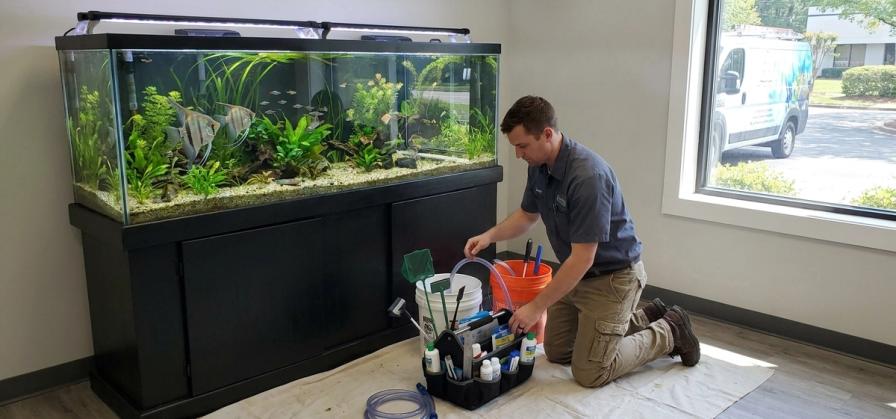
Retainer packages make the service easier to sell and easier for customers to understand. A simple three-tier structure can work well:
- ●Basic: Routine cleaning for smaller home aquariums
- ●Standard: More frequent maintenance and equipment checks
- ●Premium: Commercial maintenance with priority or emergency visits
Clear cancellation terms and simple monthly billing also help customers know exactly what they are paying for.
Aquarium maintenance retainer tiers
| Package | Best For | Includes |
|---|---|---|
| Basic | Small home tanks | Cleaning, water changes, basic checks |
| Standard | Larger home tanks | Regular maintenance, water testing, equipment checks |
| Premium | Commercial tanks | Full maintenance, equipment monitoring, priority visits |
Once customers are on recurring plans, the business becomes easier to manage. The technician can:
- ●Plan routes by neighborhood
- ●Track each aquarium's service history
- ●Order supplies in advance
- ●Predict monthly workload
- ●Reduce wasted driving time
| Revenue Model | Example Monthly Revenue | Predictability |
|---|---|---|
| One-time jobs | $800 to $1,500 | Low |
| Recurring customers | $3,000 to $4,500 | Higher |
| Recurring + new jobs | $3,500+ | Higher with growth |
The biggest advantage is not simply earning more. It is knowing roughly what revenue is coming in before the month begins, instead of starting every month looking for the next customer.
Read More | Food Truck Business in Miami: Start Small and Grow Fast (2026).
Final Thoughts
The lesson from this Spokane aquarium business isn't really about fish tanks. It's about what happens when a service business stops treating every job as a fresh sale and starts treating its best customers as long-term accounts worth investing in. One bad stretch on Yelp exposed how fragile a lead-dependent model really is, but it also pushed the business toward something far more durable: recurring contracts, clearer packages, and a customer base that doesn't disappear the moment a review score dips. Any local service provider staring at an unpredictable booking calendar can borrow the same playbook, because the fix was never about getting more leads. It was about needing fewer of them.
Ready to Build Your Recurring Service Business?
Building a recurring service business is absolutely doable. The key is understanding how to turn one-time customers into long-term clients and creating a service model that brings in more predictable revenue.
BossWorks helps aspiring entrepreneurs plan and build service businesses with more clarity, without the guesswork that can waste time and money.
✓ Understand your startup costs based on your service type, tools, and operating needs
✓ Identify the services and packages that can create recurring customer relationships
✓ Build realistic revenue projections and understand your break-even point
✓ Spot hidden costs, operational challenges, and pricing mistakes before they affect your business
✓ Create a practical plan for finding customers and growing your recurring revenue
Frequently Asked Questions
A basic home schedule typically includes a monthly water change, glass and gravel cleaning, and a filter check. Businesses or larger tanks usually need biweekly or weekly visits to keep water quality and appearance consistent.
Based on the packages outlined above, home plans generally run from $60 to $160 a month depending on frequency and tank complexity, while business plans range from $200 to $500 a month depending on service level and emergency visit coverage.
Recurring contracts create predictable revenue, reduce time spent finding new customers, and build customer loyalty since the client already expects and budgets for the service each month instead of shopping around every time their tank needs attention.
Restaurants with display tanks, medical and dental offices with waiting-room aquariums, hotel lobbies, and property managers overseeing shared amenity tanks are common commercial clients because they need a consistently clean tank for appearance reasons.
Building a complete Google Business Profile, asking satisfied customers for referrals, and attending local business networking events all help reduce dependence on a single review platform and create more stable lead sources.