How to Start a Drone Roof Inspection Business for Insurance Adjusters in Tulsa
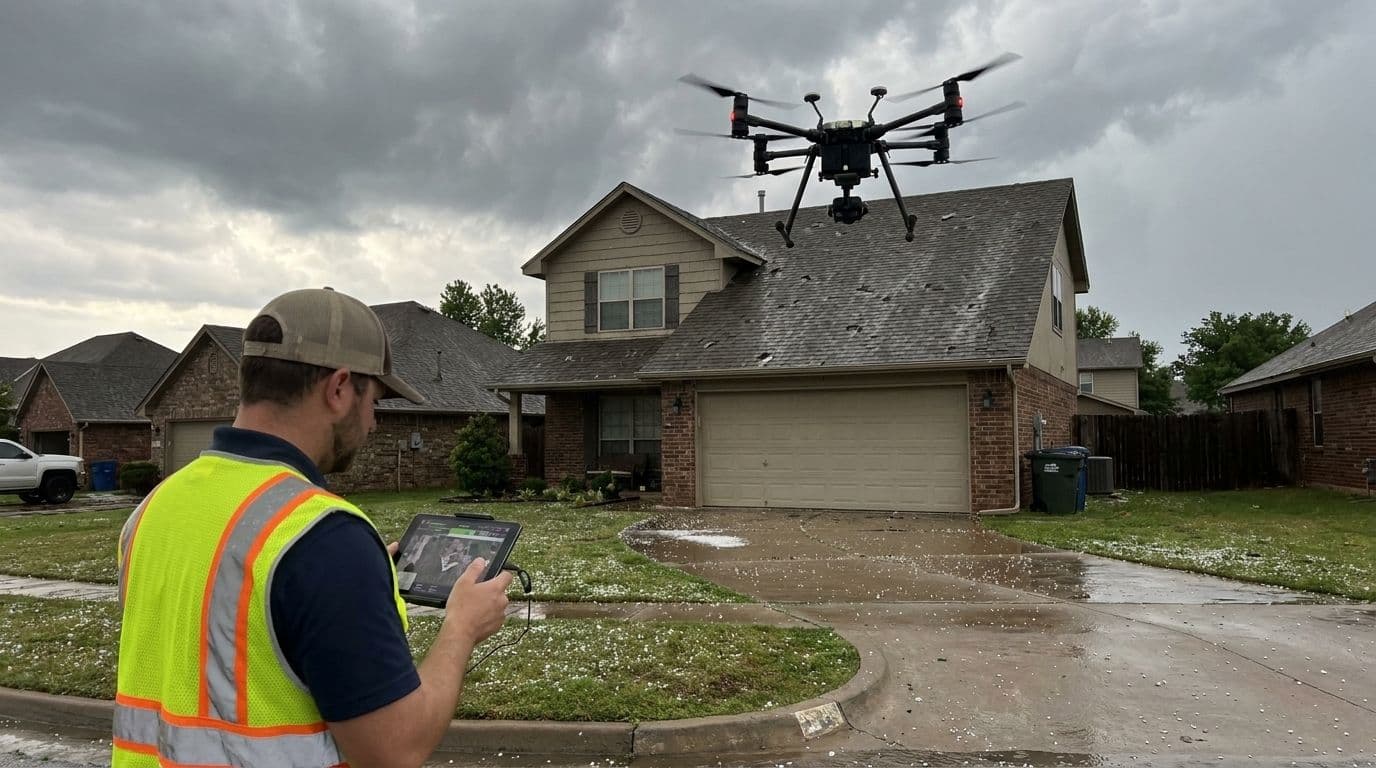
Every spring and early summer, Tulsa gets hit with hail and straight-line wind events that leave thousands of roofs damaged in a matter of hours. Independent adjusters and carrier staff adjusters then face a backlog that ladders and clipboards were never built to handle. Claims pile up, homeowners grow impatient, and every day an adjuster spends climbing onto a steep or wet roof is a day of liability exposure and lost productivity that nobody wants to carry.
That bottleneck is exactly where a drone-certified operator can step in and build a standalone business. Instead of adjusters juggling ladder safety, weather delays, and insurance carrier turnaround demands, a dedicated drone pilot can show up, fly a roof in minutes, and hand over documentation that speeds up claims processing. This guide walks through the licensing, insurance, equipment, and outreach steps needed to launch that kind of business in Tulsa, in the order you would actually tackle them.
Why Insurance Adjusters Need This Service
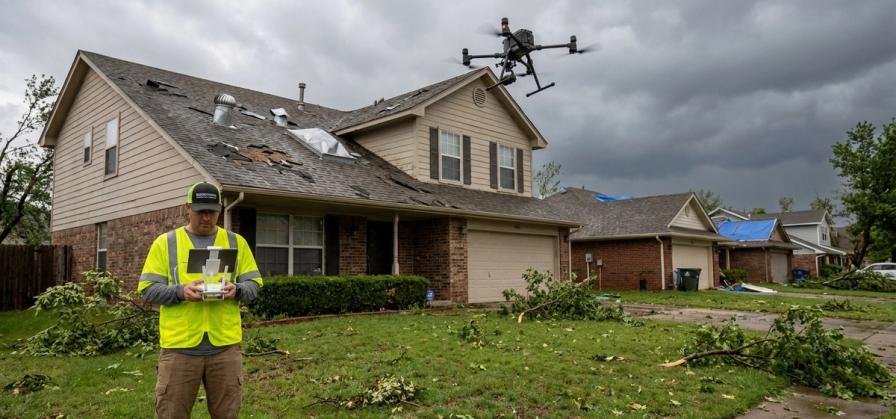
Oklahoma sits inside what meteorologists call Hail Alley, and Tulsa in particular sees a reliable spike in roof claims every year once storm season arrives between March and June. When a single hailstorm rolls through a metro area, independent adjusting firms can receive hundreds of claims within days, and each one requires a physical roof inspection before a payout can move forward.
For a deeper breakdown, check out everything you need to know about content creators.
Why Adjusters Need Drone Inspections
- ●High claim volume: Hundreds of claims can arrive within days after a major hailstorm.
- ●Inspection backlogs: In-house adjusters may struggle to inspect every roof quickly.
- ●Roof safety concerns: Steep, wet, or damaged roofs can be dangerous to walk.
- ●Lower liability risk: Drone inspections reduce the need for adjusters to physically climb compromised roofs.
- ●Faster inspections: A drone can capture roof damage without requiring someone to walk the entire structure.
- ●Quicker claims processing: Annotated reports can help adjusters review damage and move claims forward faster.
- ●More claims handled: Outsourcing inspections allows adjusting firms to process more files without immediately adding staff.
That efficiency gain is the core value proposition a new drone inspection business is selling: not just aerial photos, but faster claims throughput for firms dealing with heavy post-storm volume.
Getting FAA Certified and Insured
Before you can legally fly for hire anywhere in the United States, including Tulsa, you need a Remote Pilot Certificate under FAA Part 107. Earning it means studying the FAA's small unmanned aircraft systems knowledge areas, covering airspace classifications, weather interpretation, drone loading, and emergency procedures, then passing a computer-based exam at an FAA-approved testing centre.
Read More | Photography Businesses in Fargo | How to Build a Brand Clients Recommend.
What You Need for FAA Certification
- ●Part 107 Remote Pilot Certificate
- ●Knowledge of airspace classifications
- ●Understanding of weather conditions
- ●Knowledge of drone loading and operating limits
- ●Understanding of emergency procedures
- ●Passing the FAA-approved knowledge exam
- ●Registration through the FAA's IACRA system
Most first-time applicants spend a few weeks studying with a test prep course before sitting the exam, and once you pass, you register with the FAA's IACRA system to receive your certificate.
Certification alone will not satisfy an adjusting firm's vendor requirements. Most independent adjusting companies require proof of commercial general liability insurance, and many specifically ask for aviation or drone liability coverage with limits in the range carriers expect from vendors handling property claims.
Want to start a Photography business? Plan it smarter with a proven and trending Photography business plan.
Insurance Coverage to Consider
- ●Commercial general liability insurance: Helps meet adjusting firm vendor requirements.
- ●Drone or aviation liability coverage: Provides coverage specifically related to commercial drone operations.
- ●Non-owned aviation coverage: Useful if you fly a leased or borrowed aircraft.
- ●Additional insured coverage: Some firms may request that the adjusting company be named as an additional insured.
It is worth treating insurance as a business decision rather than a compliance box to check. A policy with thin limits might save money upfront, but if it falls short of what an adjusting firm's risk department requires, you lose contracts before you ever get a chance to fly.
Shopping quotes from a broker who understands commercial drone operations, rather than a generic small business policy, tends to produce coverage that actually matches what insurance-industry clients expect.
Equipment and Software
The drone you choose should be built for stability in wind and clear enough optics to document shingle damage, granule loss, and flashing issues that adjusters need to see in detail. Mid-size quadcopters with a mechanical shutter camera and at least a 1-inch sensor tend to produce the sharp, distortion-free images that hold up in a claims file, and models with an integrated zoom lens let you capture close-up damage from a safe hovering distance instead of flying dangerously low. A thermal attachment is a useful add-on for detecting moisture intrusion under shingles, which is a common secondary damage claim after hail events.
Reporting software is where you turn raw footage into something an adjuster can actually use. The right platform stitches your images into a roof map, tags hail hits and wind damage by location, and exports a PDF report formatted the way claims systems expect. Choosing software that integrates with common estimating platforms used in the insurance industry saves your clients time and makes you look like a vendor who understands their workflow rather than just a photographer with a drone.
| Software Type | Primary Use | Adjuster Benefit |
|---|---|---|
| Roof mapping and measurement tools | Generates precise roof diagrams with pitch and square footage | Speeds up estimate accuracy |
| Damage annotation platforms | Tags hail hits, wind uplift, and granule loss on images | Creates a claims-ready visual record |
| Report export tools | Converts flight data into PDF or estimating-software format | Reduces manual data entry for adjusters |
| Thermal imaging software | Flags moisture and heat signatures under roofing material | Supports secondary damage claims |
Picking the right combination of hardware and software early prevents costly upgrades later, since adjusting firms will expect consistent report formatting from job to job once they start sending you regular work.
Startup Costs and Local Registration
Getting a drone inspection business off the ground in Tulsa involves a handful of predictable costs, starting with the Part 107 exam fee and study materials, moving through your first drone purchase, and ending with the insurance policy that lets you legally take on adjusting clients. Most new operators find that the drone itself and the liability insurance premium make up the bulk of first-year spending, with software subscriptions and business registration fees rounding out the budget.
| Startup Item | Typical Cost Range | Notes |
|---|---|---|
| Part 107 exam and prep course | $150 to $300 | One-time cost, according to FAA testing center fee schedules |
| Commercial-grade drone with zoom camera | $1,500 to $3,500 | Higher-end models add thermal capability |
| Aviation liability insurance (annual) | $500 to $1,200 | Varies by coverage limits requested by adjusting firms |
| Reporting software subscription | $50 to $150 per month | Based on typical SaaS pricing for roof mapping tools |
| Oklahoma LLC filing and Tulsa business registration | $100 to $200 | Filed through the Oklahoma Secretary of State |
Once your budget is mapped out, register your business with the Oklahoma Secretary of State and check whether your operating base falls within any city of Tulsa business licensing requirements. Just as important is checking FAA airspace restrictions around Tulsa International Airport and any nearby controlled airspace zones, since flying near these areas without proper authorization through the FAA's LAANC system can ground your operation before it starts. A quick check of the FAA's B4UFLY app or website against the neighbourhoods you plan to serve will tell you which areas require advance airspace authorization.
Landing Your First Insurance Contracts
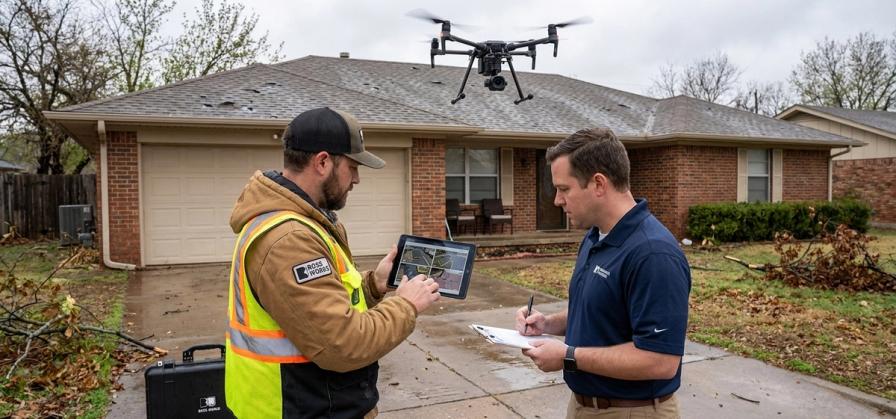
New operators often assume the fastest path to work is pitching large insurance carriers directly, but carriers rarely hire individual drone pilots. The real entry point is independent adjusting firms, the companies carriers contract with to handle claims volume during catastrophe events. These firms maintain rosters of vendors they call on repeatedly, and getting added to that roster is far more achievable than trying to become an approved carrier vendor from a standing start.
Who to Approach
| Target | Why Focus on Them |
|---|---|
| Independent adjusting firms | They manage claims volume during catastrophe events |
| Catastrophe claims managers | They help build and manage vendor rosters |
| Regional adjusting firms | They may need local drone inspection coverage |
| Existing vendor networks | They can provide repeat assignments once you're approved |
The most effective approach is reaching out directly to catastrophe claims managers at regional independent adjusting firms before storm season peaks, since firms are actively building their vendor lists in the weeks leading into spring.
What to Have Ready
- ●Part 107 certificate
- ●Proof of insurance
- ●Sample inspection report
- ●Clear turnaround time
- ●Reporting format
- ●Daily inspection capacity
- ●Coverage area across the Tulsa metro
Showing up with these documents and details gives a claims manager something concrete to evaluate, rather than a vague pitch about drone capabilities. Firms want to know your turnaround time, your reporting format, and whether you can handle multiple jobs in a single day across a metro area, so leading with those specifics in your first conversation tends to get a faster yes.
What Helps You Win Repeat Work
| What Firms Look For | Demonstrate |
|---|---|
| Fast turnaround | Deliver reports quickly |
| Accurate documentation | Provide clear, organized inspection reports |
| Reliability | Show up on time for every assignment |
| Capacity | Handle multiple jobs in a day |
| Local coverage | Be available across the Tulsa metro |
| Professionalism | Communicate clearly with claims managers |
Once you complete a handful of jobs well, referrals inside the adjusting community tend to move quickly, since adjusters talk to each other about which vendors show up on time and deliver clean reports. Building a reputation for fast, accurate documentation during your first storm season is often what turns a single firm relationship into a steady rotation of repeat work the following year.
Starting a drone roof inspection business in Tulsa is less about owning fancy equipment and more about solving a scheduling and safety problem that adjusting firms feel every storm season. Get certified, insure yourself properly, choose equipment and software that produce claims-ready reports, and put yourself in front of the independent adjusting firms who actually control the work.
Do that consistently, and you turn a seasonal spike in hail damage into a business that adjusters call before the next storm even clears.
Read More | Can AI Increase Demand for Tech Services in Raleigh.
Final Thoughts
A drone roof inspection business in Tulsa can be a strong opportunity for operators who prepare before storm season. Get your Part 107 certification, secure the right insurance, invest in claims-ready equipment and software, and build relationships with independent adjusting firms before demand spikes.
The goal is not simply to take aerial photos. It is to help adjusters inspect roofs faster, reduce safety risks, and keep claims moving. With reliable service and quick, accurate reports, one storm-season opportunity can develop into repeat work year after year.
Ready to Get Started?
The demand for drone roof inspections is growing as insurance adjusters, roofing professionals, and property owners look for faster, safer, and more detailed ways to assess roof damage. A drone inspection business can provide high-quality aerial images, document damage, and deliver valuable visual information without relying entirely on traditional roof inspections.
BossWorks helps you plan, manage, and grow your drone roof inspection business with practical strategies for business setup, pricing, marketing, customer acquisition, operations, client management, and long-term growth.
Instead of competing only on price, build a professional inspection service that delivers reliable documentation, faster turnaround times, clear communication, and a better experience for insurance adjusters and roofing professionals.
Frequently Asked Questions
Yes, you need an FAA Part 107 Remote Pilot Certificate to legally fly for hire anywhere in the United States, including Tulsa.
Startup costs typically run from roughly $2,300 to $5,300 covering certification, a drone with a zoom camera, insurance, software, and business registration.
Independent adjusting firms are the better first target since they maintain vendor rosters and hire drone pilots directly, while carriers rarely contract with individuals.
Most firms expect commercial general liability with aviation or drone-specific coverage, and some require being named as an additional insured.
No, flying in controlled airspace near the airport requires advance authorization through the FAA's LAANC system before you take off.