A Milwaukee Hot Sauce Maker Found a New Growth Channel Through One Big Order
One unusually large order can reveal an entire business hiding behind the retail counter you already run.
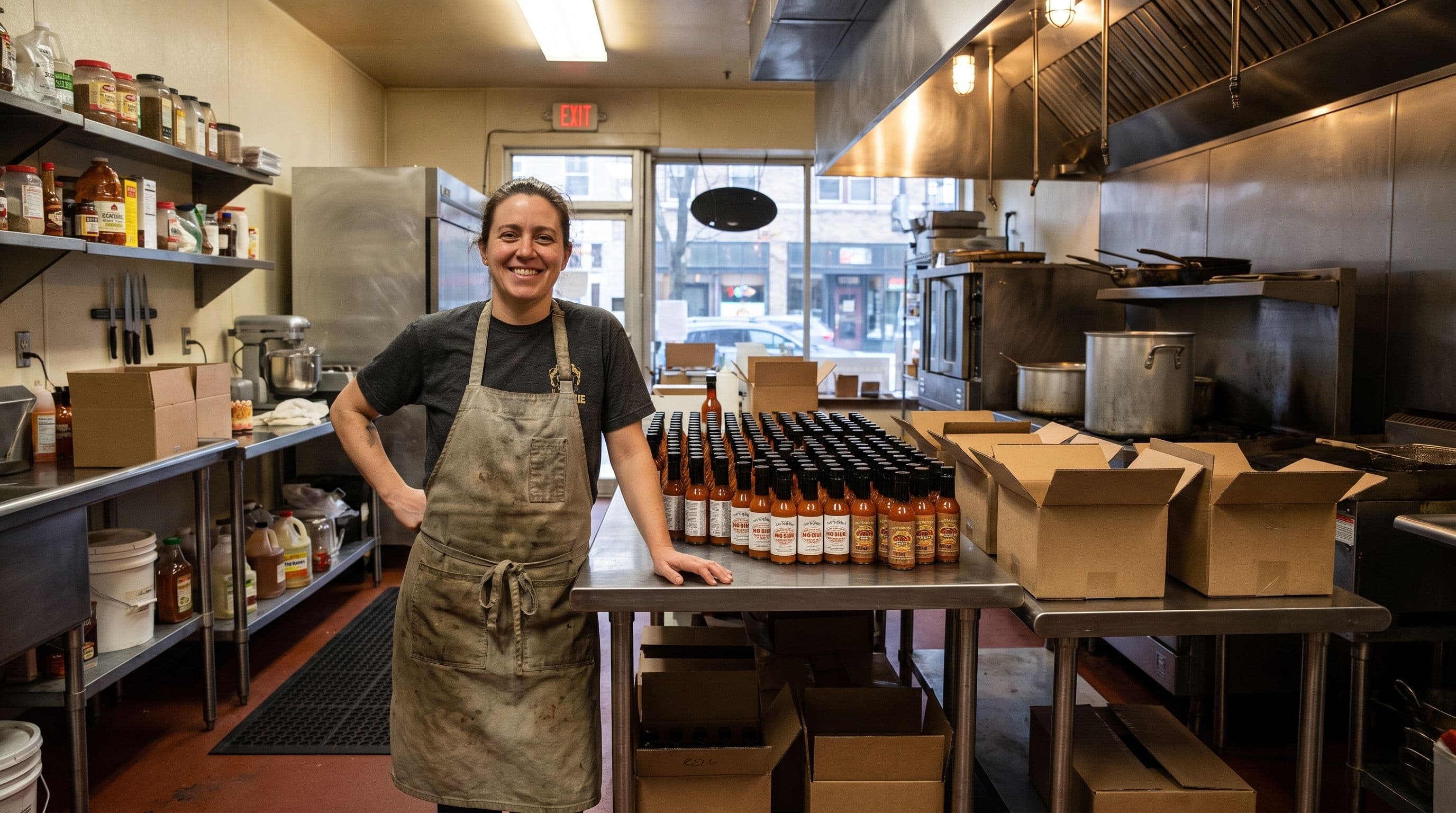
That is roughly what happened to a small-batch hot sauce maker in Milwaukee. For a couple of years, the routine was simple: cook in small runs, bottle by hand, and sell at farmers markets and local food events. Then a restaurant tasted the product and asked for a steady, recurring supply. One request forced a question the founder had never considered: is there a wholesale business worth building here?
This article looks at that shift in plain terms:
- ●Why business customers behave differently from retail shoppers
- ●What needs to change in production and compliance
- ●How the money and cash flow actually work
- ●How to turn a single big order into a repeatable channel
The goal is not to abandon retail, but to understand whether wholesale can become a reliable second channel for the business without putting the whole operation at risk.
The Order That Was Too Big to Ignore
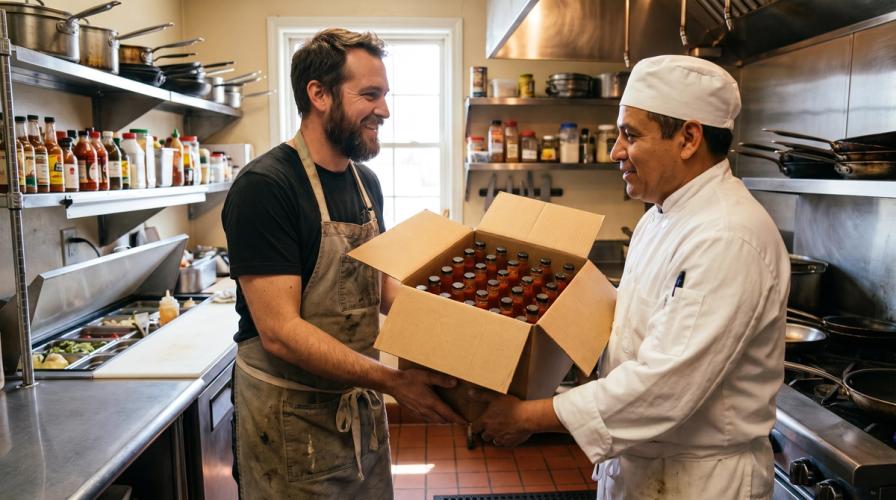
The turning point was a restaurant asking for a larger, recurring order instead of a one-time purchase. The chef wanted a case at a time because the sauce had become part of a menu item guests came back for. That changed the nature of the sale. The restaurant was no longer buying a novelty. It was relying on the product week after week.
The old model was built around individual sales at markets and local events:
- ●One customer at a time
- ●Cash paid at the point of sale
- ●Direct customer feedback
- ●Unpredictable weekly demand
That model has its advantages, but a rainy Saturday, slow festival, or cold snap could quickly reduce sales. The maker had little way to know how many bottles would actually sell.
The large order revealed something more valuable: predictable demand. A restaurant that reorders on a schedule makes production easier to forecast. Instead of hoping enough shoppers show up, the maker can plan around a known quantity moving every few weeks.
That predictability is the real opportunity hiding inside one unusually large order, and it is worth exploring before simply treating it as a one-time sale.
For a deeper breakdown, check out all you need to know about the home service business
Why Restaurants Are a Different Kind of Customer
Restaurants buy the way businesses buy, not the way shoppers buy. A shopper makes an emotional, one-off decision and may never return. A restaurant that builds your sauce into a dish needs it to be there every time it reorders, so it tends to buy on a rhythm. That rhythm is what makes a business customer valuable. Even at a lower price per bottle, a standing order that repeats can be worth far more over a year than a stream of unrelated market sales.
The tradeoff is straightforward: wholesale pricing is lower per unit, but volume is steadier, and the cost of getting each sale is much smaller. At a market, you pay for a booth, a full day of your time, and the effort to win each customer one at a time. With a wholesale account, one relationship produces repeat orders with almost no new selling effort. The question is whether the steadier volume makes up for the thinner margin, and that depends on your costs.
The table below compares the two ways of selling on the dimensions that matter most to a small maker.
| Factor | Individual retail (markets) | Business orders (wholesale) |
|---|---|---|
| Order size | A few bottles | Cases at a time |
| Reorder pattern | Rare and random | Scheduled and repeating |
| Price per bottle | Higher | Lower |
| Selling effort per sale | High, one buyer at a time | Low, one relationship |
| Revenue predictability | Volatile | Steadier |
| Payment | Cash on the spot | Often invoiced later |
There is a broader opportunity here too. One restaurant is rarely the only local food business that would want a distinctive local sauce. Cafes, taco spots, breweries with kitchens, and speciality grocers all reorder regularly. If one chef validated the demand, a whole cluster of nearby businesses could form a recurring wholesale channel, which is a very different growth path than adding one more market each weekend.
Read More | What It Costs to Launch a Grocery Business in Albuquerque.
Repositioning From Market Stall to Wholesale Supplier
Serving business customers changes how the product is made, packaged, and delivered. Batch sizes need to grow, which can mean bigger equipment, more storage, and a faster bottling process.
The main operational changes include:
- ●Larger production batches
- ●More storage and inventory planning
- ●Case-based packaging
- ●Kitchen-friendly bottle sizes or labels
- ●Scheduled deliveries
Pricing is another area where makers can make costly mistakes. Wholesale prices are lower per bottle, but simply discounting the retail price can eliminate your margin. Instead, calculate your true cost per bottle:
- ●Ingredients
- ●Packaging
- ●Labor
- ●Overhead
- ●Wholesale margin
If the restaurant's price does not leave enough room after these costs, the account may not be worth taking, even if the order is large.
Compliance also becomes more important as you move into wholesale. Food licensing, commercial or shared-kitchen requirements, and labelling rules may differ from direct-to-consumer sales. Before accepting a standing order, check your specific requirements with local and state authorities.
Thinking of starting a retail business? Start smart with a proven plan designed for steady sales, repeat customers, and reliable local income.
The Financial Reality: Costs and Cash Flow
Wholesale can increase revenue, but scaling up also means spending more before you get paid. Larger batches may require:
- ●New or larger equipment
- ●More ingredients and packaging
- ●Additional kitchen time or labour
- ●Delivery costs
- ●Higher overhead
That is why knowing your numbers before accepting a large order matters. A bigger order is only valuable if it remains profitable after all costs.
Wholesale also makes financial planning easier when orders are consistent. If a restaurant orders a case every two weeks, you can plan ingredient purchases and production around expected demand rather than guessing how much you might sell at a weekend market.
Track the costs that directly affect profitability:
- ●Ingredients
- ●Packaging
- ●Labor
- ●Equipment
- ●Delivery
- ●Overhead
Cash flow is another issue to plan for. Restaurants may pay by invoice rather than at delivery, so you could deliver the product and wait weeks for payment. Meanwhile, you have already paid for ingredients, packaging, and labour.
Clear payment terms and enough cash reserves can help you manage that gap without putting pressure on the rest of the business.
Turning One Big Order Into a Repeatable Channel
A large order is a signal, not a conclusion. The next step is to see whether the restaurant will keep ordering.
Start by:
- ●Checking that the restaurant is happy with the first delivery
- ●Asking how quickly the product was used
- ●Suggesting a regular reorder schedule
- ●Tracking whether orders continue over time
Consistency is what keeps a wholesale account. Restaurants need the product to taste the same every time and arrive when promised. A reliable account can also lead to referrals because chefs and restaurant owners often recommend suppliers they trust.
The key is to validate demand before making major investments. Instead of immediately buying expensive equipment or expanding kitchen space, serve the first account well, confirm repeat orders, and try to win a second or third customer.
Let proven demand drive your investment rather than spending heavily on demand you only hope will appear.
Lessons for Any Small Batch Maker
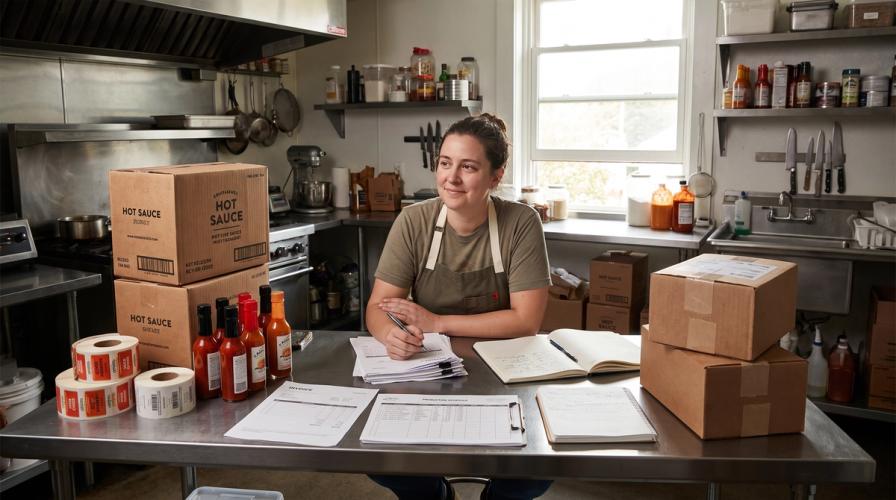
The same pattern applies beyond hot sauce. When you normally sell one unit at a time, and a customer suddenly wants larger, recurring orders, it may signal a new customer segment and a move from business-to-consumer to business-to-business sales.
Some signs that a product may be ready for wholesale include:
- ●Business buyers asking for cases or recurring supply
- ●A product that naturally fits into another business's offerings
- ●Similar wholesale requests coming from multiple businesses
When these signals appear, test the opportunity before making major changes. Check that:
- ●Wholesale pricing covers your real costs
- ●You understand the relevant compliance requirements
- ●You can produce consistently at higher volumes
- ●You can manage the cash-flow gap from invoice payments
A large order should not automatically be treated as a lucky one-off. Treat it as a live experiment. Use it to test pricing, repeat demand, production capacity, compliance, and cash flow.
Handled this way, one big order can become useful market research and potentially the beginning of a more predictable business channel.
Read More | A Rented Kitchen in Portland Turns One Hot Sauce Recipe Into a Wholesale Grocery Line.
Final Thoughts
One large order does not automatically mean a small-batch maker is ready for wholesale. But it can reveal demand worth testing. For makers already selling at markets, a recurring restaurant order can provide a chance to build more predictable revenue without abandoning retail.
The smart approach is to start small, understand the true costs, confirm repeat demand, and make sure production, compliance, and cash flow can handle the change. If those pieces work, one oversized order may become more than a good sales week. It could be the first sign of a stronger and more reliable growth channel.
Ready to Start Your Wholesale Business?
Turning a small-batch product into a wholesale business is absolutely doable. The key is understanding your costs, production capacity, compliance requirements, and customer demand before you scale.
BossWorks helps aspiring business owners plan and launch with clarity, without the guesswork that drains time and money.
✓ Calculate your startup and operating costs based on your product and business model
✓ Understand permits, licenses, and basic requirements before you begin selling
✓ Build realistic revenue projections and identify your break-even point
✓ Plan production, pricing, and cash flow so growth does not create new problems
✓ Identify the right growth opportunities before making major investments
Frequently Asked Questions
It creates predictable repeat demand with less selling effort.
Calculate all costs, then add a margin that keeps the order profitable.
They can, so check the food licensing, kitchen, and labeling requirements that apply to wholesale sales.
Restaurants may pay weeks after delivery, creating a gap between your expenses and incoming revenue.
Not immediately. Confirm repeat orders before making major investments.