A Rented Kitchen in Portland Turns One Hot Sauce Recipe Into a Wholesale Grocery Line
Some of the best business stories start in the smallest places. A garage. A backyard. Or, in this case, a kitchen that wasn't even owned by the person cooking in it.
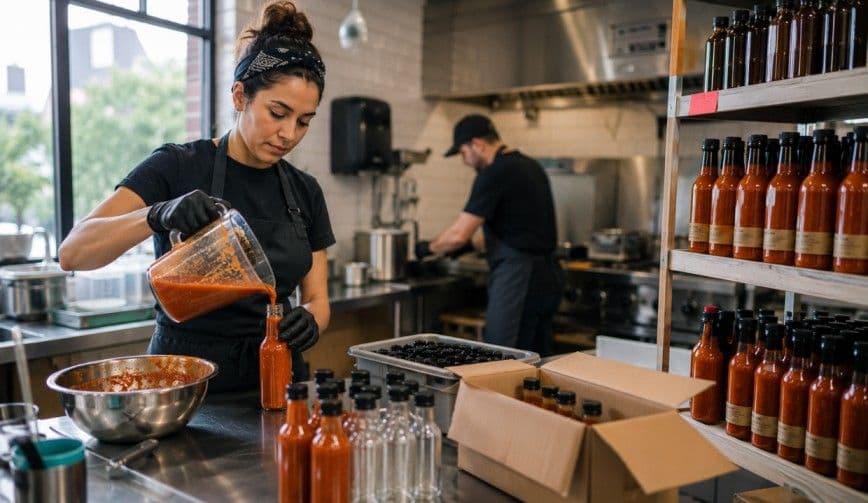
This is the story of a hot sauce that began as a simple homemade recipe and ended up on grocery store shelves across Portland. The twist is that none of it happened in a personal kitchen. It happened in a commercial kitchen rental, a space shared by many small food businesses trying to do the exact same thing this founder was doing. Turn a good idea into a real product.
Let's break down how it all happened, step by step, in plain and simple words.
Portland is known for its food scene. Small food carts, local farmers' markets, and tiny brands that grow into big names all seem to start here. This hot sauce story fits right into that pattern, but it also shows something important. You do not need a lot of money or a fancy setup to start a food business. You just need a good product and a smart way to make it.
How One Hot Sauce Recipe Got Started
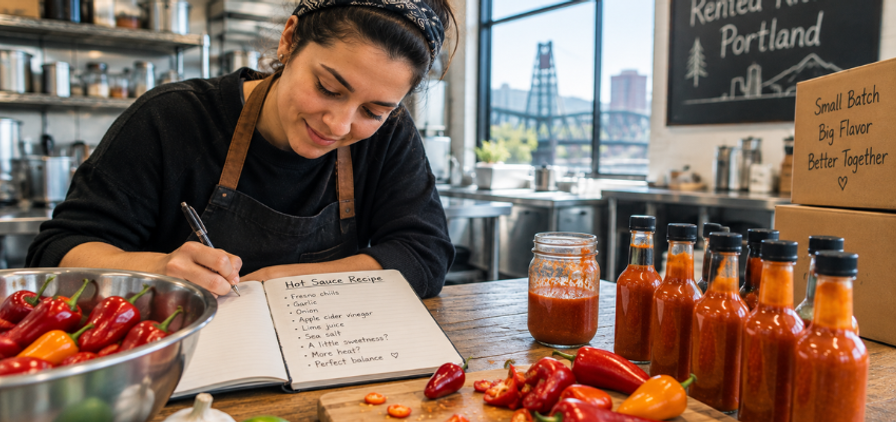
It began the way most good food stories begin. Someone made a hot sauce at home because they liked spicy food and wanted something better than what was sitting on store shelves. Friends tried it. Then friends of friends tried it. Soon people were asking to buy a bottle instead of just borrowing one.
That is a nice problem to have, but it comes with a big legal catch. In most places, you cannot legally sell food made in a home kitchen, especially something bottled and sold in stores. Health departments require food meant for sale to be made in a proper, licensed space. This rule protects customers, but it also means home cooks cannot simply start selling from their stovetop.
So the founder needed a real kitchen. Just not one they had to buy.
Why Renting a Kitchen Made More Sense Than Buying One
Buying or building a full kitchen is expensive. Equipment, rent, plumbing, permits- it adds up fast, and most small food businesses simply do not have that kind of money when they are just starting out.
This is where a commissary kitchen comes in. A commissary kitchen is a licensed commercial kitchen that many different food businesses share. Instead of one business owning the whole space, several businesses book time in it, almost like renting a movie theatre for a few hours instead of building your own cinema.
Here is a simple comparison that shows why this option made sense.
| Option | Upfront Cost | Flexibility | Legal to Sell From |
|---|---|---|---|
| Home kitchen | Low | High | No, in most cases |
| Own commercial kitchen | Very high | Low, fixed space | Yes |
| Shared kitchen space | Low to moderate | High, pay as you go | Yes |
As the table shows, a shared kitchen space gave the founder the best of both worlds. It kept costs low in the beginning while still meeting the food safety rules needed to legally sell the sauce.
From Kitchen Table to Wholesale Orders
Once the sauce was being made in a proper kitchen, the next challenge showed up fast. Making ten bottles for friends is easy. Making enough bottles for a grocery store to stock every week is a completely different task.
This is the part where a lot of small food businesses either grow successfully or quietly give up. For this hot sauce brand, a few changes made the difference.
- ●Recipes had to become exact. No more "a little of this, a little of that." Every batch needed to taste the same.
- ●Labels had to follow the rules. Ingredients, nutrition facts, and expiry dates all had to be printed clearly.
- ●Batches grew slowly. Instead of jumping straight to huge amounts, production increased little by little.
- ●Bookkeeping became serious. Orders, costs, and stock all needed tracking once real wholesale orders started coming in.
This slow and steady growth is often called scaling. It simply means growing a business step by step instead of all at once. The commercial kitchen rental made this easy because the founder could book more hours as the orders grew, instead of being stuck with a huge space that was too big in the beginning and might become too small later.
Think of it like renting a bigger table at a restaurant as more friends show up, instead of buying an entire restaurant just in case you need extra seats someday. That is exactly how flexible kitchen rental works. You pay for what you need, when you need it, and nothing more.
This flexibility also gave the founder room to fix mistakes without losing a lot of money. A batch that turned out too spicy, or a label with a small error, did not turn into a financial disaster. It just meant a quick fix and a better batch next time.
Getting Onto Grocery Store Shelves
Getting into a grocery store is not just about walking in with a few bottles and a friendly smile, although that never hurts. Store buyers want proof that people actually want the product before they agree to stock it.
For this brand, the path looked something like this.
- Sell at local farmers’ markets to build a small but loyal fan base.
- Get into a few independent grocery stores in Portland.
- Use those early sales numbers as proof when approaching bigger stores.
- Slowly expand into wholesale grocery distribution across the region.
This step-by-step approach is common among food entrepreneurs who start small. Grocery buyers are far more likely to say yes when they can see real numbers, not just a good story.
It also helps to remember that grocery buyers are busy people. They see many new products every week, and most of them do not get picked. A brand that already has happy local customers and clear sales numbers stands out from the crowd. It shows the buyer that the product is not just tasty; it is also something people are already willing to pay for again and again.
As the brand grew even bigger, the idea of working with a co-packer came up. A co-packer is a company that makes food products in large amounts on behalf of another brand. Many small food businesses eventually move to a co-packer once their orders become too big for a rented kitchen to handle. For now, though, this hot sauce brand has stayed close to its shared kitchen roots for most of its production.
What Other Food Entrepreneurs Can Learn From This

This story is not just about hot sauce. It is a simple lesson for anyone with a good recipe and a big dream. Here are the main takeaways.
| Lesson | Why It Matters |
|---|---|
| Start small | Reduces risk and cost in the early stages |
| Follow food safety rules | Keeps customers safe and the business legal |
| Use a commercial kitchen rental | Saves money compared to owning a full kitchen |
| Build local support first | Helps prove demand before going wholesale |
| Grow slowly | Makes the business stronger and more stable long term |
A small batch hot sauce made in a rented kitchen shows that big brands do not always start with big money. Sometimes they start with a good recipe, a bit of patience, and a smart use of shared resources.
Final Thoughts
This Portland hot sauce brand proves that you do not need to own a kitchen to build a real food business. A commissary kitchen gave the founder a legal, affordable place to cook, while smart planning and slow growth turned a home recipe into a wholesale grocery distribution success story.
For anyone dreaming of starting their own food brand, the message is simple. You do not need everything figured out on day one. You just need a good recipe, a safe place to make it, and the patience to grow one order at a time.
Ready to Start Your Retail Business?
Starting a retail business is absolutely doable. Thousands open every year. The ones who succeed are not luckier. They simply understand what to expect before they open their doors.
BossWorks helps aspiring retail business owners plan and launch with clarity, without the guesswork that drains time and money.
✓ Map your exact startup costs based on store type, inventory, and local demand
✓ Understand permits and basic requirements in your area, including licenses if needed
✓ Create realistic income projections with clear break-even points and steady cash flow
✓ Identify hidden costs early so they do not disrupt your plans later
Frequently Asked Questions
It is a licensed shared kitchen that different food businesses can rent to legally cook and sell food.
Most areas require food sold to the public to be made in a licensed commercial kitchen for safety reasons.
Yes, renting is usually much cheaper since you only pay for the time and space you actually use.
They usually build local sales first, then use that proof of demand to approach grocery store buyers.
A co-packer is a company that makes food products in bulk for another brand once demand grows too large to handle alone.