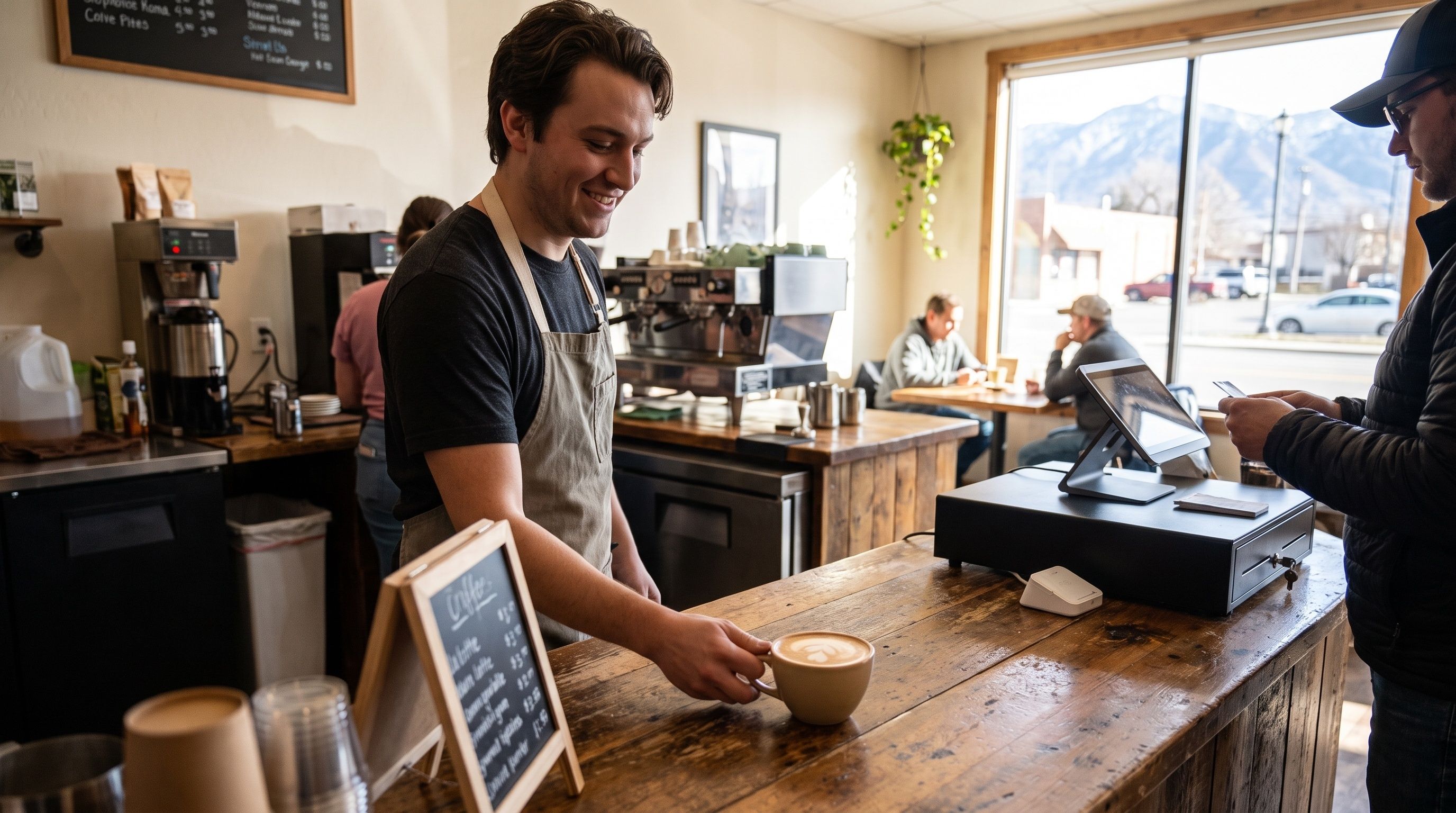
Can a Burlington Cheese Shop Pass Its Loyal Customer Base to the Next Owner?

A local cheese shop can spend decades building something that does not appear neatly on a balance sheet: customer loyalty. Regulars know the staff, trust the recommendations, and return because the experience feels familiar. But when the owner decides to sell, that loyalty raises an important question: will customers stay with the business when someone else takes over?
This is a challenge for many relationship-driven local businesses. Customer loyalty is real value, but it can be fragile during an ownership change. A successful transition requires more than handing over the keys. The seller needs to document what customers value, while the new owner needs to protect those relationships and build trust over time.
This guide explains what customers are actually loyal to, whether that loyalty can transfer, and how sellers and buyers can create a smoother ownership transition.
Why Customer Loyalty Matters When You Sell

For a relationship-driven local business, loyal customers can be one of its most valuable assets. A buyer is not only purchasing the location, equipment, and inventory. They are also buying the potential for repeat customers and established goodwill.
Strong customer loyalty can help a buyer understand the business's earning potential, while poorly documented relationships can make the business harder to value.
Customer loyalty usually comes from a mix of:
- ●Trust: Customers know they will receive consistent service and quality.
- ●Familiarity: Regulars know the staff, products, and routines.
- ●Repeat habits: Customers return regularly instead of shopping around.
- ●Goodwill: The business has a positive reputation within its community.
It also helps to separate what the buyer is acquiring into two parts:
- ●The operating business: Systems, suppliers, lease, inventory, and daily processes.
- ●The goodwill: Customer trust, relationships, habits, and reputation.
The stronger both are, the easier it becomes to plan a smoother ownership transition.
For a deeper breakdown, check out all you need to know about the Bakery busines
What Customers Are Actually Loyal To
Customers are not always loyal to the owner personally. Often, they return because of a combination of things the business consistently provides.
Customers may value:
- ●Consistent quality: They know what to expect every time.
- ●Personal service: Staff remember their preferences and needs.
- ●Product knowledge: They trust the business's recommendations.
- ●Fair pricing: They feel they receive good value.
- ●Familiar atmosphere: The experience feels comfortable and personal.
This distinction matters when selling a business. If customers are loyal only to the owner, that loyalty is harder to transfer. If they are loyal to the overall experience, a new owner can preserve and build on it.
Before selling, owners should identify what keeps their regulars coming back. That can help them prepare the business and plan a smoother transition.
Read More | The Aroma Test: How a Local Coffee Roastery in Boise Is Rewriting the Rulebook.
Can Customer Loyalty Actually Transfer to a New Owner?
Yes, but it does not happen automatically. A new owner needs to earn trust while preserving the parts of the business customers already value.
A successful transfer usually depends on three things:
- ●Seller support: The previous owner helps introduce the buyer and remains involved during the transition.
- ●Business continuity: The new owner keeps important products, services, staff, and routines stable at first.
- ●Clear communication: Customers are told about important changes instead of being surprised by them.
Some customer loss after a sale is normal. The goal is not to keep every customer, but to protect the relationships that matter most to the business.
A smooth, well-planned handoff gives the new owner a strong starting point while allowing them to build their own customer relationships over time.
Want to start a Food business? Plan it with a trending Bakery business plan.
How Sellers Can Prepare the Business for a Handoff
Preparation is the single biggest lever a seller controls. The work starts long before a buyer appears, ideally a year or more out, because you are essentially converting knowledge that lives in your head into assets someone else can use. That means getting the recipes, supplier relationships, seasonal rhythms, and customer preferences out of memory and onto paper or into a system.
A useful early move is to make yourself less essential on purpose. If you are the only person who can order stock, close the register, or soothe a difficult regular, the business cannot run without you, and that lowers its value. Training staff to handle those tasks proves to a buyer that the operation is a system, not a solo act. It also makes your own life easier in the months before the sale.
The most important documents a seller should assemble fall into a few clear buckets. The table below shows what to prepare and why each item protects the loyalty you are trying to sell.
| What to document | Why it matters to the buyer |
|---|---|
| Regular customer preferences and standing orders | Lets the new owner keep serving people the way they expect from day one |
| Supplier contacts, terms, and reorder cycles | Keeps product quality and shelf availability consistent |
| Recipes, processes, and daily open-close routines | Preserves the experience that loyalty is built on |
| Financials, revenue by season, and repeat-purchase patterns | Proves the loyalty is real and supports the valuation |
| Community relationships, events, and partnerships | Transfers the shop's standing in the neighborhood |
How the New Owner Builds Trust
The new owner's first job is not to improve the place. It is to be seen honouring it. Showing up in person, learning names, and admitting openly that they are still learning goes further than any renovation. Regulars are watching to see whether the buyer respects what came before, and small signals of continuity buy a lot of patience.
A visible endorsement from the previous owner accelerates everything. When the departing cheesemonger stands at the counter and personally introduces the new owner to longtime customers, it transfers a piece of that hard-won trust in a single moment. That is why an overlap period is worth negotiating into the deal, even if it costs the seller some extra weeks. It protects the very asset the buyer just paid for.
Just as important is knowing what not to change too quickly. Some elements are load-bearing for loyalty, and touching them early reads as disrespect. The table below separates what a new owner can safely adjust from what should wait.
| Change early (low risk) | Wait or go slow (high risk) |
|---|---|
| Back-office software and bookkeeping | The core product lineup regulars rely on |
| Behind-the-scenes supplier logistics | Pricing on signature items |
| Marketing channels and social media | The shop's name, look, and layout |
| Staff scheduling and internal process | Longtime staff who are the familiar faces |
Structuring the Transition and the First 90 Days
How you legally and practically structure the handoff shapes how much loyalty survives. There is no single correct model, so the right choice depends on how much continuity the business needs and how quickly the seller wants out. The most common structures trade speed for support in different ways.
| Transition structure | Best when | Trade-off |
|---|---|---|
| Clean break | Business runs on systems, not the owner | Fastest exit, highest loyalty risk |
| Transition period (30-90 days) | Relationships need a warm handoff | Seller stays involved short term |
| Earnout or seller financing | Buyer wants proof loyalty transfers | Seller's payout tied to retention |
| Consulting or advisory tail | Deep institutional knowledge to pass on | Ongoing seller time commitment |
The first 90 days set the tone for everything that follows, so it helps to sequence them deliberately rather than improvising. The early weeks are for presence and listening, the middle stretch is for demonstrating consistency, and only the final phase should introduce careful, well-explained changes.
| Phase | Focus for the new owner |
|---|---|
| Days 1-30 | Be present, learn names, keep everything the same |
| Days 31-60 | Prove consistency, make quiet back-office fixes |
| Days 61-90 | Introduce small visible changes, explain the why |
When the Business Is Not Ready, and Other Options

Not every business is ready to sell. Owners may need more preparation if:
- ●The business depends heavily on the owner: Important tasks and customer relationships exist only in the owner's head.
- ●Financial records are unclear: Buyers cannot easily understand revenue, costs, or profitability.
- ●Systems are undocumented: Daily operations are difficult for someone else to take over.
- ●Customer relationships are not organized: Valuable goodwill cannot be clearly demonstrated.
In these situations, spending another year building systems, documenting processes, and reducing owner dependence can make the business easier to sell.
An outright sale is also not the only exit option. Owners can consider:
- ●Family succession: Pass the business to the next generation.
- ●Employee buy-in: Gradually transfer ownership to a trusted employee.
- ●Partner buy-in: Bring in a partner who can eventually take over.
- ●Hiring a manager: Step back from daily operations while retaining ownership.
The best option depends on whether the owner's priority is immediate cash, ongoing income, or a smooth transition.
Read More | A Sourdough Vending Wall Turns a Bread Habit Into a Bakery Business.
Final Thoughts
A loyal customer base can be one of the most valuable assets in a small-business sale, but it cannot simply be transferred with the keys. The seller needs to document what customers value, reduce dependence on the owner's personal relationships, and prepare the business to operate without them.
For the buyer, the goal is not to change everything immediately. It is to protect the trust that already exists, build relationships with regular customers, and introduce improvements gradually.
When both sides treat customer loyalty as something that needs to be managed during the transition, a business sale can become more than an ownership change. It can be a way to preserve what customers already love while giving the business room to grow under new leadership.
Ready to Get Started?
Selling a small business successfully takes more than finding a buyer. You need to understand your business value, document important customer relationships, and plan a smooth ownership transition.
That's where BossWorks comes in. We help you build a practical business plan covering operations, finances, growth, and long-term transition strategies.
Frequently Asked Questions
Yes, if the new owner earns the same trust and the seller provides a warm, visible introduction.
Customer preferences, supplier terms, recipes and routines, financials, and community relationships.
The core products, signature pricing, the shop's name and look, and longtime familiar staff.
Often 30 to 90 days, so relationships get a warm handoff before the seller fully steps away.
Family succession, selling to an employee over time, taking on a partner, or hiring a manager while keeping ownership.