How a Provo Home Stager Can Become the Go-To Choice for Local Agents

Most home stagers can be found on Instagram since their work is visual, and a beautifully staged living room in a Provo neighbourhood captures well in photographs. However, there is an important truth: the people who actually book you again and again are often real estate agents, and many of them spend their working hours on LinkedIn.
The genuine issue isn't "which app has the more attractive design." It's "where do my customers who buy repeatedly make up their minds?" For a home stager in Provo who wants to build a sustainable business rather than just putting together a scrapbook, this changes the entire discussion.
Let's go through the questions you are most likely already asking yourself and answer them simply, one question at a time.
Why Should a Home Stager Concentrate on Real Estate Agents at All?
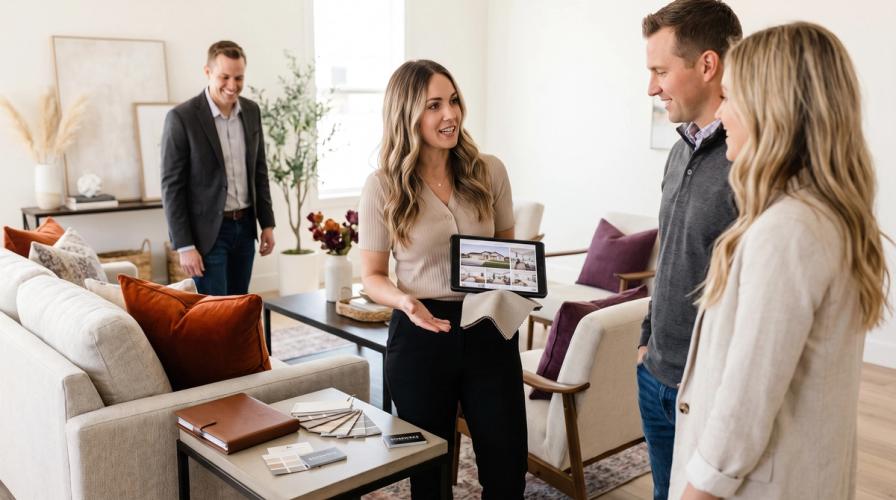
People hire you once. After that, they complete the staging, sell the property, and you might never hear from them again. In contrast, an agent earns a living by selling houses. For example, a single agent in Utah County might list multiple properties each year, and each listing can become an opportunity for you to be contacted.
The distinction is between a one-off sale and a referral system. Once you have an agent's trust, you're not just securing one job. You're building a relationship that can lead to future bookings.
The most successful home stager businesses are not necessarily based on working with a huge number of homeowners. They can also grow by building relationships with a smaller group of agents who know who to call when a property needs staging.
There is also a cumulative effect. Agents communicate with one another. In a connected market like Provo, Orem, and Lehi, a good reputation can spread through brokerage meetings, open houses, referrals, and professional conversations.
If you build relationships with even a few reliable agents, you can start creating a word-of-mouth network without constantly searching for new homeowners.
For a deeper breakdown, check out everything you need to know about Freelancers.
What Exactly Do Local Agents Look for in a Stager?
What agents are looking for isn't necessarily the most attractive portfolio. They want someone who will make their job easier and improve the quality of the listing.
The qualities that matter most include:
- ●Reliability: You arrive when you say you will and finish when promised.
- ●Speed: You can prepare a property quickly when an agent has a tight listing schedule.
- ●Communication: The agent knows what is happening without having to chase you for updates.
- ●Flexibility: You can adapt your approach to different types of properties.
- ●Market awareness: You understand that a starter home and a luxury property may need different styling.
- ●Professional presentation: Your work makes the property look stronger in photographs and showings.
If an agent promises a client that "we'll have it staged by the weekend," they need a stager who can actually deliver.
They also place importance on speed when launching a property. A vacant house can look cold or unfinished in listing photos. By getting it ready quickly and making it photograph well, you're addressing the agent's real problem.
You should talk about that, not just your colour scheme.
In the end, agents are looking for someone who understands different price points. Staging a starter home close to UVU is quite different from staging a luxury property in Alpine. If you can match the staging to the type of buyer the agent is trying to reach, you stop being seen as just another vendor and start becoming a useful business partner.
Read More | Can Digital Marketing Businesses in Boston Survive AI Growth?
How Can a New Stager Get Noticed Without Constantly Selling?
The quickest way to get ignored is to make a direct sales pitch every time you contact someone.
Instead, aim to be helpful and noticeable before you ask for anything.
Pay attention to what an agent posts. Congratulate them on a closing. Leave a brief and genuine comment about a listing. Share something useful about how presentation can affect the way buyers experience a property.
The goal is simple: become someone agents recognize as a person who understands how houses are presented and sold.
You can also demonstrate your value by posting publicly.
For example, you could explain:
- ●Why an empty primary bedroom can feel smaller in listing photos
- ●Why certain rooms need more visual warmth
- ●How furniture placement can improve the flow of a room
- ●Why some properties need minimal staging while others need more
- ●What agents should check before photographing a staged property
This type of content gives agents something useful while quietly establishing your expertise. You don't need to mention your services in every post.
What Should a Home Stager in Provo Post on Instagram and LinkedIn?
This is where many stagers make the mistake of treating both platforms exactly the same.
On Instagram, you demonstrate that you have good taste. On LinkedIn, you show that you have good judgment and understand the business side of selling a property.
Here's a simple way to think about the split:
| Platform | Who Is Watching | What to Post |
|---|---|---|
| Homeowners, sellers, referral browsers | Before-and-after rooms, styling details, finished spaces | |
| Agents, brokers, local professionals | Staging insights, listing presentation, market observations, client results |
On Instagram, focus on the visual experience and let the content speak for itself.
On LinkedIn, explain the thinking behind the work.
An agent isn't necessarily looking for another attractive photograph in their feed. They want to understand how your work can help them present a property more effectively.
It's the same project, just with two different messages.
Want to start a Business? Plan it with a proven and trending business plan.
What's the Difference Between Showing a Beautiful Room and Showing Business Value?
A beautiful room communicates "I have good taste."
A business-focused post communicates "I understand what this property needs and why it matters."
The two messages are different.
Rather than posting:
"Loved styling this bright living room."
You could explain what problem you were solving:
"This vacant Provo listing looked cold on camera, so we used warmer furniture placement and a few simple focal points to make the space feel more inviting."
Now you're no longer talking only about décor. You're talking about presentation, buyer perception, photography, and listing momentum.
The change is small but important. You are still displaying the same attractive room, but you're presenting it using the language of market timing, buyer emotions, and property presentation.
Beauty attracts attention. Business value helps explain why an agent should call you.
How Much Time Should a Single Stager Spend on Networking and Content?
When you're running the entire operation yourself, you won't have hours available for online activity.
The practical solution is to make small, regular efforts instead of trying to do everything at once.
A simple routine could look like this:
- ●15 minutes a day: Comment on relevant posts from local agents.
- ●Once a week: Publish one genuinely useful staging idea.
- ●After every project: Take several good photographs for future content.
- ●During slower periods: Write two or three posts and schedule them.
- ●Once a month: Review which topics and posts received useful engagement.
The key is consistency.
Posting heavily for one week and then disappearing for a month won't help much. Staying visible in small ways makes it easier for agents to remember your name when they need a stager.
Think of relationship-building as part of the job rather than an extra task. Those 15 minutes can be more useful than another hour spent scrolling through design inspiration because they help you stay connected with the people who can repeatedly hire or refer you.
Read More | Build a smarter creator career with strategies that help you grow faster and earn better.
How Does a New Agent Connection Become a First Booking?
People rarely experience one dramatic moment when they decide to hire a new stager. Usually, the relationship develops gradually.
You first get familiar with each other's work through comments, posts, messages, open houses, or local networking. Eventually, a conversation becomes more specific.
A useful next step could be offering something that reduces the agent's risk.
For example:
- ●Offer a quick walkthrough of a difficult-to-stage property.
- ●Give practical staging suggestions before the listing is photographed.
- ●Explain how you would approach one challenging room.
- ●Show how a particular room could photograph differently with staging.
- ●Offer a small trial when appropriate.
The idea isn't to give away your work indefinitely. It's to give the agent a simple way to understand what you can actually do.
When they see the difference your work can make, the first paid booking can become a natural next step.
You didn't simply tell them you were good. You showed them.
And in a business based heavily on visuals, showing can be more convincing than telling.
Why Does an Agent Call the Same Stager Again?

Repeat business comes from being predictable in the right way.
An agent who has already worked with you wants to know that the next project will be just as smooth.
That means:
- ●You meet your deadlines.
- ●You communicate clearly.
- ●You respond within a reasonable time.
- ●You arrive prepared.
- ●You understand their preferences.
- ●You solve problems instead of creating extra ones.
- ●You make the next booking easy.
The second half is learning how that particular agent works.
Remember their preferred style, typical property types, pricing expectations, and common frustrations. When you arrive at the next listing already understanding how they like things done, you save them time.
And busy agents value that.
The home stager who becomes a go-to person in Provo is often the one who is easy to trust, easy to communicate with, and easy to hire again.
Ready to Make It Real? Turn your business idea into a clear plan and take the next step with BossWorks
Final Thoughts
Yes, a home stager in Provo can use LinkedIn as part of a broader strategy, but it doesn't need to replace Instagram or become another place for constant advertising.
Use Instagram to show the visual transformation.
Use LinkedIn to show the thinking and business value behind the transformation.
Most importantly, use both platforms to build relationships with the local agents who can become repeat clients and referral sources.
Start small. Choose one or two local agents this month and focus on being genuinely useful to them. Comment, share helpful ideas, attend local events, and show how you think about staging.
You don't need to become the loudest stager online.
You need to become someone local agents remember when they have a property that needs to look its best.
Before You Spend, Know What It Takes
A good business idea should not depend on guesswork. Check your startup costs, market potential, licenses, funding options, and pricing before you make a major decision. BossWorks gives you practical answers tailored to your business and city, so you can move forward with more clarity and less uncertainty.
Frequently Asked Questions
Yes. Instagram helps you show your work, while LinkedIn helps you connect with real estate agents. You can use both without posting the same content everywhere.
You don't need to post every day. Spend a few minutes engaging with local agents and aim for one useful post a week.
Talk about results, not just pretty rooms. Share staging tips, listing insights, and examples of how staging can help agents present homes better.
Build the relationship first. Be helpful, stay visible, and offer something simple like a quick walkthrough or staging suggestion when the right opportunity comes up.
Homeowners may need you once, but agents can bring you multiple listings. A few strong agent relationships can lead to repeat work and referrals.