How a Struggling Solo Piano Teacher in Provo Became a Booked Out Recital Studio
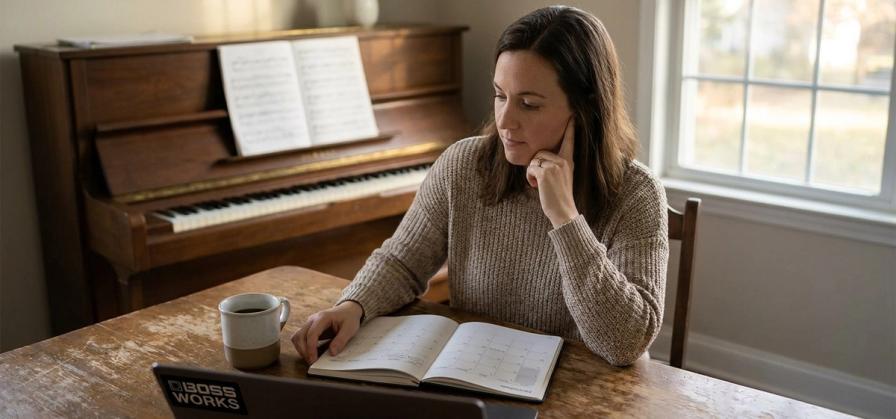
Two years ago, a piano teacher in Provo sat at her kitchen table with a calendar that had more empty boxes than lesson names in it. She was down to three students, a number that barely covered her studio rent, let alone her time. She had spent a decade building a reputation as a patient, skilled teacher, but reputation alone was not paying the bills, and she was seriously weighing whether to fold the business and go back to teaching part time at a school.
What changed her trajectory was not a bigger marketing budget or a lucky referral. It was a decision to stop selling generic piano lessons and start selling something parents could actually picture: a stage, a recital, a moment where their child performs and everyone claps. That single shift in positioning, paired with a few practical systems, turned her studio around within about a year. Her story is a useful case study for any solo music teacher, or really any service-based solopreneur, who is watching enrollment shrink and wondering if the business model itself needs to change.
The Breaking Point
The drop in students did not happen overnight, but it felt that way once she added it up. Family budgets tightened as inflation squeezed household spending, and piano lessons, fair or not, tend to be one of the first line items parents cut when money gets tight. At the same time, a wave of affordable app-based piano tutorials gave families a lower-cost alternative that felt, at least on the surface, like a reasonable substitute for weekly in-person lessons. Several long-time students also aged out or moved on to other after-school activities in the same short window, which compounded the loss.
The reasons her enrollment fell can be summarized this way: parents reducing discretionary spending on extracurriculars during a tighter economic stretch, competition from low-cost or free piano learning apps that made lessons feel replaceable, a cluster of students graduating out of lessons around the same time, and a lack of any consistent referral pipeline to replace the students who left. Each factor on its own might have been manageable, but together they hollowed out her client base faster than she could react.
Meanwhile, the fixed costs of running a small studio did not shrink to match. She still paid rent on a small rehearsal space, still maintained and tuned her piano, still carried basic liability insurance, and still needed to budget for sheet music and recital materials. With only three students paying for individual lessons, those fixed costs consumed nearly all of her incoming revenue some months, leaving her with take-home pay that was lower than what she could have earned working part-time somewhere with a fixed paycheck. That financial squeeze is what finally forced her to rethink the entire offer instead of just trying to hustle harder for the same product.
For a deeper breakdown, check out everything you need to know about Freelancers.
The First Change She Made
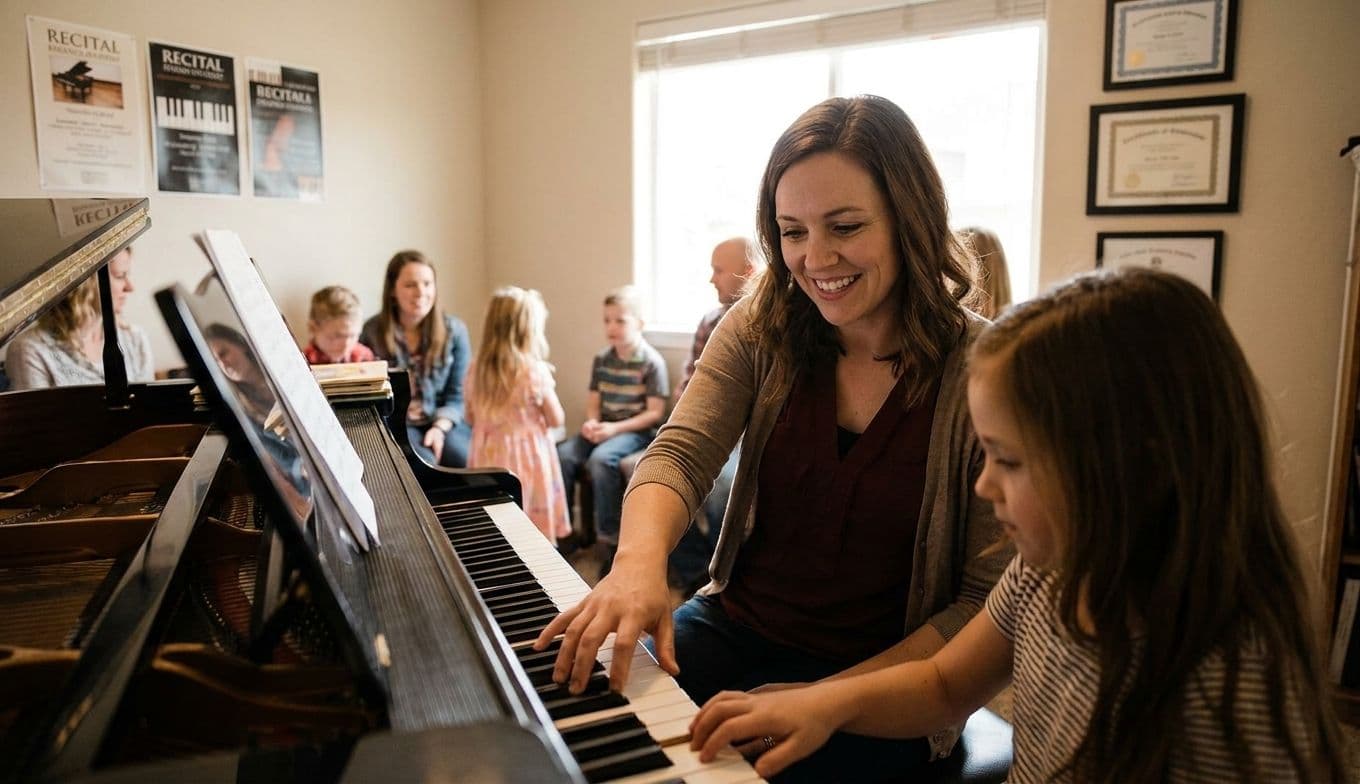
Instead of continuing to advertise "piano lessons," she repositioned the studio around a recital and performance track, explicitly telling parents that every student would work toward two public performances a year in front of family and friends. This mattered because "piano lessons" is a vague, commodity-sounding phrase that every app and every neighbour with a keyboard can claim to offer. A performance program gave parents a concrete outcome to imagine: their child on a small stage, prepared, confident, and visibly improving in a way they could actually witness rather than just take on faith.
The repositioning also let her raise her rates, because she was no longer competing on price against apps or casual tutors. She built the recital preparation, sheet music curation, and stage time directly into the package, and communicated it to parents as a complete program rather than an hourly rate. When she rolled out the new structure, she sent a short letter to current and prospective families explaining the change, framed around the benefit rather than the price increase, and gave existing families a short grace period before the new pricing took effect.
The table below shows roughly how the offer changed on paper, based on her own studio records from before and after the shift.
| Feature | Old Lesson Model | New Recital-Focused Model |
|---|---|---|
| Positioning | General "piano lessons" | Recital and performance program |
| Price per month | $80 | $130 |
| Public performances | None guaranteed | Two per year, included |
| Practice materials | Parent sourced | Curated by teacher, included |
| Parent communication | Ad hoc | Scheduled recital updates |
The new model was not simply a price hike; it bundled things parents were already half-wanting (structure, milestones, visible progress) into something they could describe to their friends in one sentence. That clarity is what made the higher price feel justified rather than arbitrary, according to the teacher's own notes on parent conversations during the transition.
Read More | How One Studio Can Power Hundreds of Creators in Little Rock.
Building a Waitlist
Once the first recital under the new model happened, something shifted that she had not fully anticipated: the recital itself became her best marketing event. Parents sitting in the audience watching other people's children perform started asking who taught the student on stage, and several approached her directly afterwards to ask about openings. She realized the recital night was doing more selling in one evening than months of scattered word of mouth had ever done.
She leaned into that by making it easy for satisfied parents to introduce new families, rather than hoping it would happen organically. She began asking, casually and without pressure, whether parents knew any other families who might enjoy watching a recital, and she started inviting a few "guest" families to attend as spectators before ever committing to lessons. Seeing their own child watch a peer perform turned out to be a stronger sales tool than any brochure could have been.
To keep the referral engine from being random, she created a simple, repeatable process:
- ●Send a short thank-you note to every parent after each recital.
- ●Ask whether they know a family who might want to visit the next event.
- ●Offer a small discount on the following month's tuition for any referral that converts into an enrolled student.
- ●Follow up with new inquiries within 48 hours so momentum does not fade.
She also started using a basic online scheduling tool to manage lesson times and new-student inquiries. This cut down on the back-and-forth texting that used to eat up her evenings and made it easier to slot new families into open lesson blocks without double-booking herself.
Want to start a business? Plan it smarter with a proven and trending business plan.
What the Numbers Look Like Now
The clearest way to see the impact of these changes is to compare her studio's basic numbers before and after the repositioning, using her own studio records as the source. Enrollment, pricing, and monthly revenue all moved in the same direction, though expenses moved up a little too as the studio filled back up.
| Metric | Before | After |
|---|---|---|
| Enrolled students | 3 | 22 |
| Monthly tuition per student | $80 | $130 |
| Approximate monthly revenue | $240 | $2,860 |
| Estimated monthly studio expenses | $300 | $650 |
It is worth being clear that revenue is not the same as profit. Out of that roughly $2,860 in monthly revenue, she still pays for studio rent, piano tuning, insurance, recital venue rental twice a year, sheet music, and basic marketing costs, which together run around $650 a month according to her own expense tracking. That leaves a meaningful improvement in take-home income compared to before, but it is not the kind of runaway windfall that turns a piano studio into a passive income machine overnight. She still teaches every lesson herself, and her income is still capped by how many hours she can personally teach in a week.
Real challenges remain even with a full roster. A waitlist is a nice problem to have, but it also means turning away families who want in, which requires careful communication so nobody feels dismissed. Scheduling around school events, sports seasons, and family vacations gets harder as the student count grows, and maintaining consistent teaching quality across 22 students is a different daily reality than it was across three.
Lessons Other Instructors Can Steal
Her experience points to a few practical lessons that apply well beyond piano teaching, and that other solo music or arts instructors can borrow directly. First, a vague service description invites price comparison, while a specific outcome-based program invites a values comparison instead, which is a much easier position to compete from. Second, a live event, whether a recital, showcase, or open house, does more organic referral work in one evening than weeks of social media posting, so it deserves to be treated as a marketing asset rather than just a nice tradition. Third, a simple, repeatable referral process beats a vague hope that happy clients will eventually mention you to someone, because systems create consistency and memory does not.
What Still Needs Work

Even with the turnaround, the studio is not running itself, and she is candid about what still needs attention on an ongoing basis. Last-minute cancellations from students still cost her income on hours that cannot easily be rebooked. Scheduling conflicts multiply as the roster grows, especially around holidays and school testing weeks. Parent communication requires constant, proactive effort to prevent small misunderstandings from becoming reasons families quit. Student retention past the first year still depends on keeping lessons engaging rather than repetitive. And maintaining consistent lesson quality across a fuller schedule takes more deliberate planning than it did when she only had a handful of students to focus on.
A Simple Repositioning Plan
For any solo teacher or service provider staring at a shrinking client list, her path suggests a workable sequence rather than a single silver-bullet tactic.
| Step | What to Do | Why It Matters |
|---|---|---|
| 1. Identify the real outcome | Identify the vague, commodity version of your service and define the specific outcome your best clients actually want. | Gives your service a clearer purpose and makes it easier to stand out. |
| 2. Redesign the offer | Build your offer around that outcome, including milestones, materials, or events that make the result visible and repeatable. | Turns a basic service into a more valuable, structured package. |
| 3. Set the right pricing | Price the full package instead of charging only for time spent. Communicate the change to existing clients with a clear grace period. | Helps reflect the value of the complete service rather than just hourly work. |
| 4. Create a recurring event | Build one recurring public or private event that naturally puts satisfied clients in front of prospective customers. | Creates a consistent opportunity for referrals and word of mouth. |
| 5. Build a referral process | Create a simple referral system with a small incentive so existing clients know how to introduce new customers. | Makes referrals happen by design instead of relying on chance. |
| 6. Add one simple tool | Use a basic scheduling or communication tool to manage appointments, inquiries, and follow-ups. | Reduces administrative work and gives you more time to focus on serving clients. |
Final Thoughts
The lesson from this Provo piano studio is not that recitals are magic or that every struggling business just needs a clever rebrand. It is that a business stuck at three clients does not always have a marketing problem; sometimes it has a positioning problem, where the offer itself is too vague to compete against cheaper or more convenient alternatives. Repackaging the service around a clear, visible outcome, building referrals into the calendar instead of hoping for them, and adding just enough structure to handle growth without losing quality can be enough to move a business from barely surviving to comfortably full. For a lot of struggling solo instructors and freelancer, that quieter kind of fix, rather than chasing more leads with the same old offer, is the more durable path forward.
Ready to Get Started?
The private teaching industry continues to create opportunities for solo instructors who want to build stronger student relationships, improve retention, and create more predictable enrollment. Teachers who combine quality instruction with clear positioning, structured programs, referrals, and simple business systems can build a more sustainable studio.
BossWorks helps you plan, manage, and grow your teaching business with practical strategies for pricing, customer experience, scheduling, marketing, referrals, student retention, and business growth.
Instead of relying on inconsistent enrollment and word of mouth alone, build smarter systems that improve the student experience, encourage referrals, simplify your daily operations, and help your teaching business grow sustainably.
Frequently Asked Questions
It took roughly a year of consistent effort after she repositioned the studio around recitals, built a referral process, and adopted a scheduling tool to manage inquiries and lesson times.
A few families needed a grace period to adjust, but most stayed once she explained that the new price included recital preparation, curated materials, and two public performances a year rather than just lesson time.
Yes, the underlying idea, packaging lessons around a visible outcome like a performance, showcase, or public milestone, applies to voice, art, dance, and even some academic tutoring businesses.
Revenue is the total tuition collected each month, while profit is what remains after paying studio expenses like rent, insurance, tuning, and recital costs, which run around $650 a month for her studio.
She adopted a basic online scheduling tool to handle lesson bookings and new-student inquiries, which reduced manual texting and made it easier to fit new families into open lesson slots.