The Part of Running a Phoenix Cloud Kitchen Most New Owners Overlook
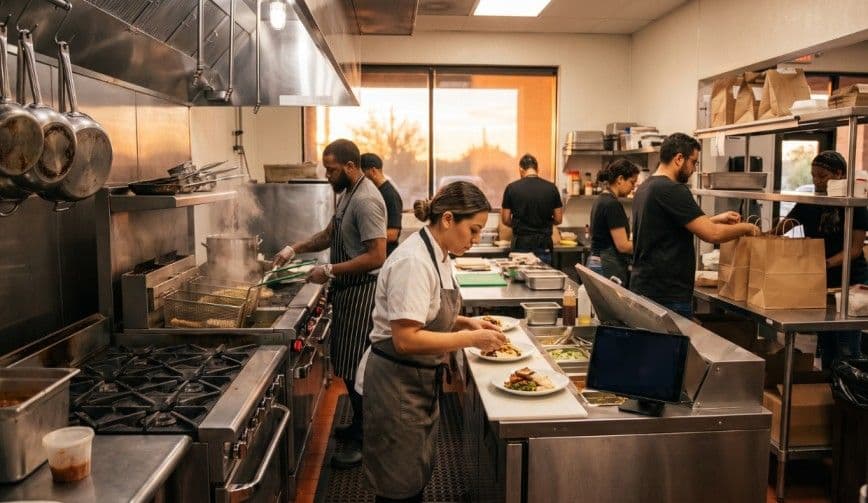
Imagine a new businessperson in Phoenix who has a good recipe, operates on a delivery basis only, and has a small budget. A shared commissary kitchen appears to be the obvious option since she pays for the time she uses rather than taking on a full restaurant lease, buying expensive equipment, or having to pay for a big buildout.
The dinner rush then begins.
The same kind of burners, fryer, oven, and prep area are required by other businesses too. The issue is no longer one of receiving orders but rather having sufficient kitchen space to meet those orders.
It is this aspect that many new owners of cloud kitchens fail to take into account. The lowest rent does not necessarily make a kitchen the most cost-effective option, since capacity, access, and timing can be just as important as the rent itself.
For a deeper breakdown, check out all you need to know about the food truck business.
What Counts as a Shared Commissary Kitchen?
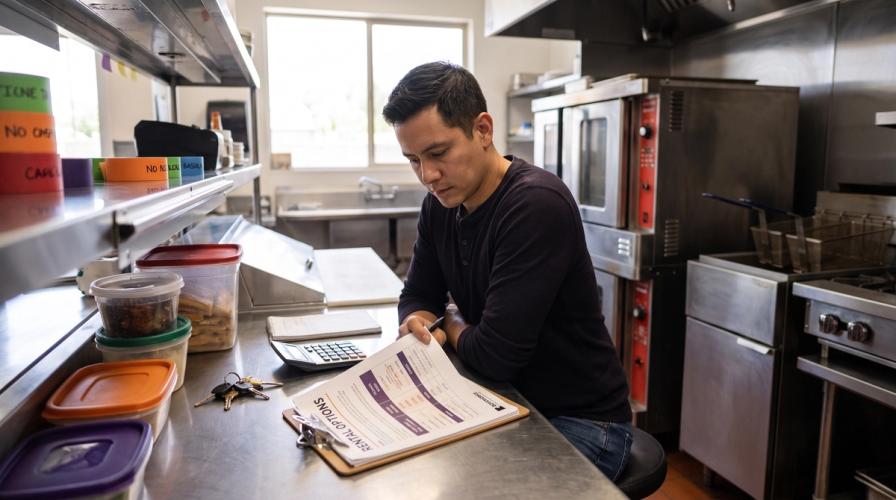
A licensed commercial kitchen that is shared is one that is used by a number of food businesses. For a cloud kitchen in Phoenix, it provides a space in which delivery orders can be prepared without the need to have a full restaurant kitchen.
Common rental models include:
- ●Hourly rental: You only need to pay for the hours that you use.
- ●Dedicated station: You can have a reserved workspace along with some of the equipment.
- ●Monthly rate: You pay a set sum for a certain number of hours or for access to a bigger area.
The real issue is not merely the amount that the kitchen costs.
You should also find out what the price comprises.
Extra charges may be incurred for storage, freezer space, cleaning, specialty equipment, deposits, and access during peak hours. Although the hourly rate is low, the total cost can end up being high when these extra charges are taken into account.
The Scheduling Problem
A major limitation of a shared kitchen is usually the access that occurs at peak times.
For most food businesses, dinner is a busy time, and several tenants might need the same equipment at the same time.
The kitchen seems roomy at 2 p.m. but is crowded by 6:30 p.m.
Your production can then be limited by:
- ●Number of available burners
- ●Oven capacity
- ●Fryer access
- ●Prep-counter space
- ●Packing space
- ●Refrigerator and freezer capacity
This creates a simple business problem:
Just because you receive more orders doesn't mean that your sales will increase if your kitchen isn't able to handle them.
You might have to reduce the number of orders or make the item unavailable if your most popular product requires a fryer that is always in use. Eventually, continual capacity problems can have an adverse effect on the customer experience and restrict growth.
Read More | Cloud Kitchen Business in Fresno Is Winning Big Over Traditional Restaurants.
The Real Cost Goes Beyond Rent
The rate that is advertised for a kitchen makes up only one part of the total cost.
Before comparing facilities, consider:
- ●Kitchen rental
- ●Cold and dry storage
- ●Cleaning fees
- ●Equipment charges
- ●Security deposit
- ●Peak-hour pricing
- ●Required minimum hours
- ●Parking and delivery access
It is particularly important to have access hours. If the kitchen is hard to book during your busiest time, then a low rate isn't very helpful.
The real calculation is:
Monthly kitchen cost ÷ Orders fulfilled = Kitchen cost per order
You get a clearer picture if you look at the cost per order rather than considering the hourly rate by itself.
Want to start a food business? Plan it with a trending food and beverage business plan.
What Ought You to Ask Before Agreeing?
Before you select a Phoenix commissary kitchen, make sure that you understand how the space functions during a busy shift.
Ask:
- ●Can I book equipment during dinner hours?
- ●How many businesses use the kitchen?
- ●How many burners, ovens, and fryers are available?
- ●Is refrigerator and freezer space included?
- ●Is dry storage included?
- ●What will happen if shared equipment breaks?
- ●How much notice is needed to cancel?
- ●What is the arrangement for the security deposit?
- ●Is it easy for delivery drivers to access the building?
What we want to do is find out your actual production capacity, not merely your rental price.
Read More | Food Truck Business in Phoenix: Creating a Brand People Follow Across the City.
When Does a Shared Kitchen Stop Making Sense?
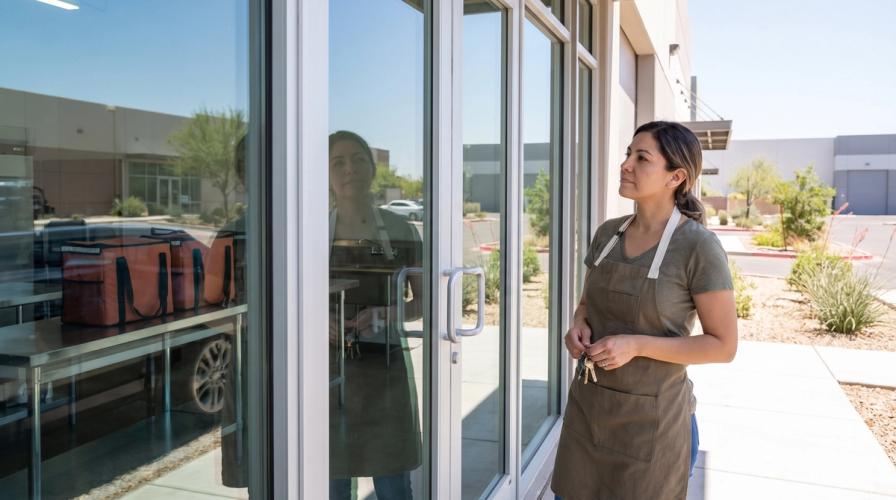
It is useful to have a shared kitchen when you are developing a concept or running at low volume since you avoid the big fixed expenses associated with a conventional restaurant and can extend your operating hours as demand grows.
But the model can become restrictive when:
- ●Peak-hour congestion happens regularly.
- ●You cannot get enough access to equipment.
- ●It stops you from getting ready in advance.
- ●The amount you are charged for your kitchen each month continues to go up.
- ●You often pause or reject orders.
- ●The maximum amount that your kitchen can handle determines the level of sales.
At that stage, you should compare the cost per fulfilled order rather than the monthly rent.
For instance, a kitchen costing $1,200 that is capable of handling 600 orders has kitchen expenses amounting to about $2 per order, while one that costs $2,400 and allows for 1,600 orders has expenses of about $1.50 per order.
These are merely example figures, but they do illustrate the principle that a higher monthly cost can be justified by the fact that it provides you with considerably more production capacity.
Ready to Make It Real? Turn your business idea into a clear plan and take the next step with BossWorks
Final Thoughts
A shared commissary could serve as a practical starting point for a Phoenix cloud kitchen since it lowers the initial costs and enables you to try out the delivery idea without having to carry out a full restaurant build.
You shouldn't judge the kitchen solely on the rent.
Look at:
- ●Access
- ●Equipment
- ●Storage
- ●Peak-hour capacity
- ●Total monthly cost
The kitchen that is suitable is the one that is able to cope with your busiest realistic shift, not merely the one that has the lowest advertised rate.
Before You Spend, Know What It Takes
A good business idea should not depend on guesswork. Check your startup costs, market potential, licenses, funding options, and pricing before you make a major decision. BossWorks gives you practical answers tailored to your business and city, so you can move forward with more clarity and less uncertainty.
Frequently Asked Questions
It is a licensed kitchen shared by multiple food businesses. You rent time or a station, prepare orders, clean up, and leave without needing your own restaurant kitchen.
The common options are hourly rental, dedicated stations, and monthly memberships. Each suits different order volumes and operating schedules.
Extra charges for storage, cleaning, equipment, deposits, and peak-hour access can increase the actual monthly cost.
Multiple businesses may need the same equipment during peak hours. Limited access to burners, ovens, or fryers can restrict how many orders you can complete.
Consider moving when peak-hour congestion, storage limits, rising costs, or missed orders regularly restrict your growth.