Laundry Business in Austin | Finding Recurring Laundry Work Beyond Walk-In Customers

In your laundry business in Austin, Saturday is packed. The machines are running, the folding table is full, and you barely get time to eat lunch.
Then Tuesday comes. The rhythm changes.
Half the machines sit empty. Your rent, utilities, and other costs still run.
If you run a laundry business in Austin, this pattern can become frustrating. Walk-in customers decide when they need laundry, so you may have too much work one day and not enough the next.
The answer is not always finding more walk-in customers. Sometimes, the key is finding customers who need laundry again and again.
For a deeper breakdown, check out everything you need to know about Freelancers.
Why Walk-In Customers Are Not Enough
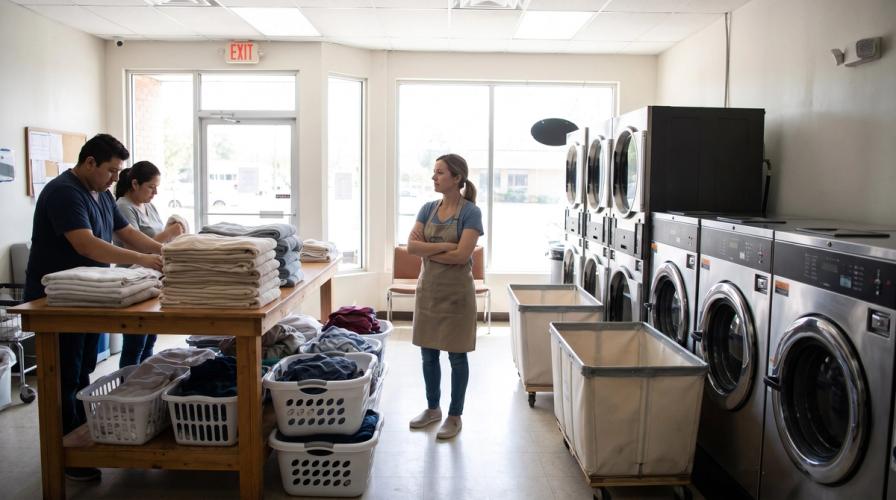
Walk-in customers are important, but they can be unpredictable. Many people do their laundry around their own schedules, which can create busy weekends and quieter weekdays.
That creates two problems.
On a busy day, your machines and staff may be stretched too far. On a slow day, the same resources sit unused.
Recurring laundry work can help balance that pattern. Instead of waiting for a walk-in customer, you have customers who already need laundry handled on a regular schedule.
Read More | Why Do Laundry Businesses in Salt Lake City Feel Recession-Proof?
What Counts as Recurring Laundry Work?
Recurring laundry work means a customer or business needs laundry handled repeatedly rather than just once.
For a laundry business in Austin, potential recurring customers could include:
| Customer | Possible Laundry Needs | Typical Pattern |
|---|---|---|
| Short-term rental hosts | Sheets, towels, linens | After guest turnover |
| Salons and spas | Towels, robes, capes | Several times a week |
| Gyms and studios | Towels, staff clothing | Regularly |
| Small hotels | Towels, sheets, linens | Daily or frequently |
| Barbershops | Towels, gowns, smocks | Several times a week |
The important part is not simply finding businesses that need laundry. It is finding businesses that regularly have more laundry than they want to handle themselves.
Do Not Sell Laundry. Solve a Problem.
A salon owner may not be looking for a “laundry service.” They may be looking for a way to stop washing dozens of towels after a long day.
A short-term rental host may not care about your washing process. They care about having clean sheets ready before the next guest arrives.
That difference matters.
When approaching a potential customer, ask simple questions:
- ●How often do you currently handle your laundry?
- ●What is the most difficult part of the process?
- ●How quickly do you need it returned?
- ●Would pickup and delivery make things easier?
These questions can help you understand whether your service actually fits their problem.
Want to start a Home Services business? Plan it smarter with a proven and trending Home Services business plan.
Pickup and Delivery Can Make Recurring Work Easier
For some businesses, dropping off laundry is almost as inconvenient as washing it.
A salon owner may not have time to carry bags of towels across town. A short-term rental operator may be managing several properties at once.
Pickup and delivery can make a recurring service more convenient. But do the numbers first.
Extra driving means:
- ●Fuel costs
- ●Driver time
- ●Labour
- ●Vehicle expenses
- ●Additional scheduling
The service should make sense for both the customer and your business.
Check the Account Before Saying Yes
A recurring customer sounds great until the workload starts affecting the rest of your business.
Before accepting an account, check:
- ●Volume: How much laundry will actually arrive?
- ●Frequency: Every day, twice a week, or only when needed?
- ●Turnaround: How quickly must it be returned?
- ●Capacity: Can your machines and staff handle it?
- ●Pickup: How much time and driving will it require?
- ●Storage: Where will clean and dirty laundry stay?
- ●Costs: Will the price cover labour, utilities, detergent, transport, and other expenses?
A large account is not automatically a good account.
If one customer takes up most of your capacity during your busiest hours, you could end up turning away other customers or creating delays.
Read More | Build a vintage shop business that attracts loyal customers and stands out from traditional malls.
Start With One Account
You do not need to find 10 customers at once.
Start with one.
A small salon, spa, gym, or short-term rental operator can help you understand what recurring laundry work actually looks like for your business.
After a few weeks, look at what happened:
- ●Did the pickup schedule work?
- ●Was the turnaround realistic?
- ●Did the pricing cover your costs?
- ●Did the account create too much pressure on your regular customers?
- ●Could you comfortably handle another similar account?
Those answers are more useful than guessing how much laundry your business can handle.
How to Find Your First Recurring Customers

Start close to your existing business instead of spending money on advertising right away.
Look around your area for businesses that regularly use towels, linens, robes, or uniforms. Speak to owners or managers and ask how they currently handle their laundry.
You can also:
- ●Ask existing customers if they know a local business with regular laundry needs.
- ●Visit nearby salons, gyms, spas, and rental operators.
- ●Offer a small trial before discussing a large long-term arrangement.
- ●Keep your pricing and turnaround expectations clear from the beginning.
- ●Focus on businesses whose laundry volume fits your current capacity.
The goal is not to convince everyone.
The goal is to find a few customers whose laundry needs fit the way your business already operates.
Ready to Make It Real? Turn your business idea into a clear plan and take the next step with BossWorks
Final Thoughts
A laundry business does not have to depend entirely on people walking through the door.
Recurring customers can give quieter weekdays a purpose and make your workload easier to plan. But the goal should not be collecting as many accounts as possible.
Start small. Understand the customer's problem. Check the numbers. Make sure the work fits your business capacity.
Once you know what kind of recurring laundry work your business can handle well, finding the next account becomes much easier.
Before You Spend, Know What It Takes
A good business idea should not depend on guesswork. Check your startup costs, market potential, licenses, funding options, and pricing before you make a major decision. BossWorks gives you practical answers tailored to your business and city, so you can move forward with more clarity and less uncertainty.
Frequently Asked Questions
A scheduled route works best. Pick up on set days and times that match each account's turnover rhythm, keep pickup areas close to your shop to control drive time, and confirm turnaround expectations in writing before you start.
Talk to nearby businesses in person, ask current customers where they work, and get referrals from happy accounts. Salons, gyms, and short-term rental hosts near your shop respond better to a face and a conversation than to paid ads.
A big account that lands on your busiest day, demands fast turnaround, and pays thin margins can cost more than it earns once you count turned-away walk-ins and overtime. Steady, profitable accounts beat big, chaotic ones.
Get the true volume, the timing, and the turnaround expectations, then test them against your machine capacity, staff hours, transportation, storage, utilities, and detergent costs. Only commit if the account fits your real capacity.
Start small. One salon or one host with a couple of properties lets you test pickup, turnaround, and pricing in the real world. If it runs smoothly, scale up to larger volumes with data you trust.