How a Duluth Frozen Custard Stand Turned a Delivery Setback Into a Wholesale Business
Delivery apps can look like easy growth for a small frozen custard stand, until rising commissions start eating into already-thin margins. For one Duluth stand, the numbers eventually stopped making sense.
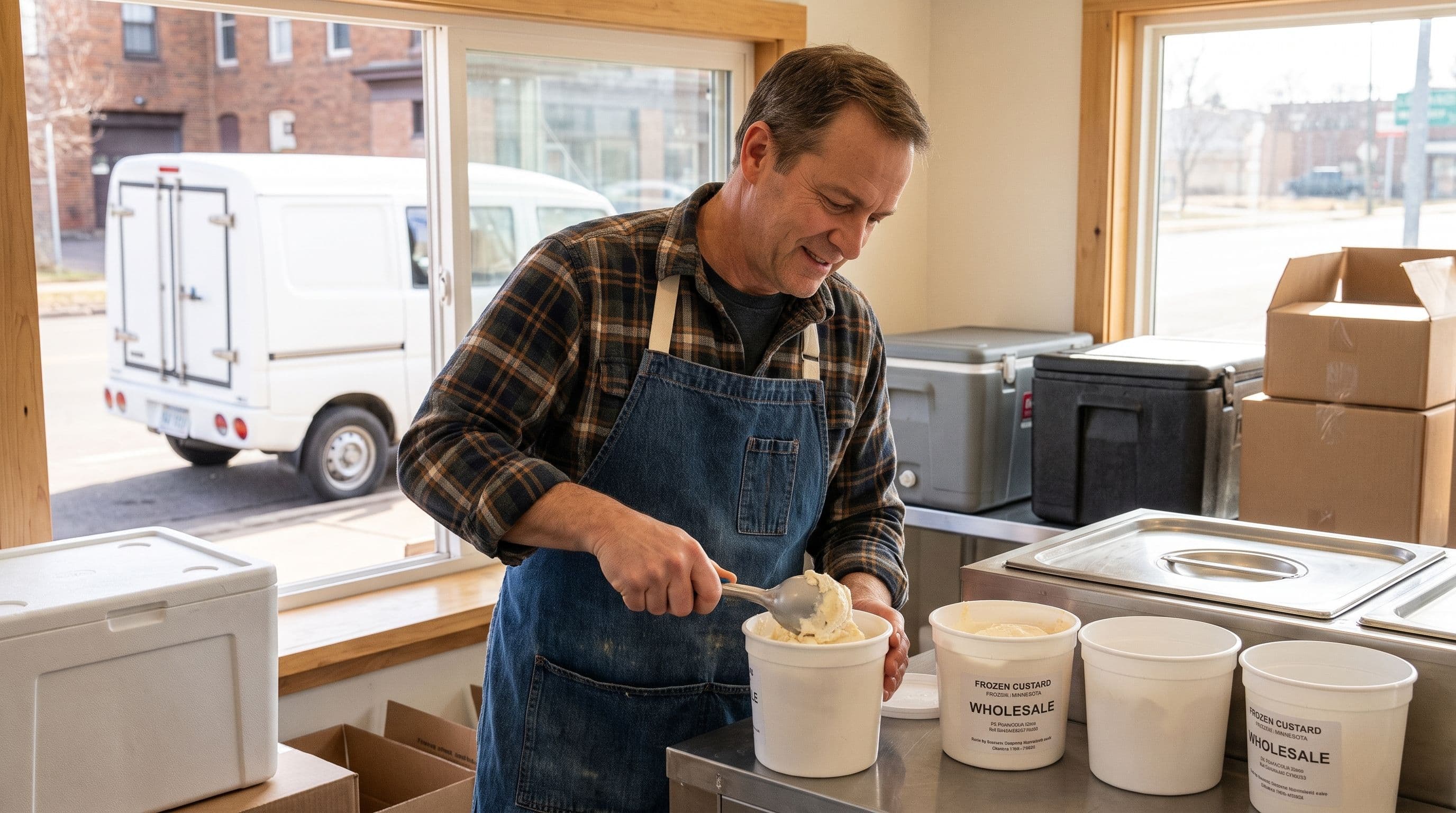
Instead of depending on delivery, the owner looked for customers who wanted larger, repeat orders. That led to cafes, restaurants, and grocers interested in stocking the product.
The shift to wholesale required changes in pricing, licensing, operations, and cash flow, but it also created a more predictable sales channel. The lesson is simple: when one platform becomes too expensive, look at the customers you already have and find a better way to serve them.
The Delivery Trap Small Food Businesses Fall Into
Delivery apps can bring steady orders, but commissions, packaging, marketing fees, and refunds can quickly reduce already-thin margins. A business may sell more while taking home very little.
The bigger risk is dependence on one platform. Fee changes, algorithm updates, or delisting can suddenly reduce access to customers.
For the Duluth stand, the turning point came when higher commissions and lower visibility made a busy weekend barely profitable after labour and packaging.
Key warning signs:
- ●Delivery commissions are eating into margins.
- ●Most new customers come from one platform.
- ●The business has little direct customer data.
- ●Fee or visibility changes can quickly affect sales.
- ●More orders are not translating into more profit.
For a deeper breakdown, check out everything you need to know about Freelancers.
Delivery vs. Direct and Wholesale Sales
Before committing to a pivot, it helps to see the three channels side by side rather than in the fog of daily operations. Each one carries a different cost to serve, a different relationship with the customer, and a different level of predictability. The table below lays out how delivery-app sales, direct sales at the stand, and wholesale accounts actually compare for a small custard maker.
| Factor | Delivery app | Direct at the stand | Wholesale accounts |
|---|---|---|---|
| Fee or margin drag | High commission per order | Lowest, you keep the ticket | Lower per-unit price, but bulk volume |
| Who owns the customer | The platform | You | You, plus the business reselling |
| Order predictability | Volatile, weather and app-driven | Seasonal, foot-traffic driven | Recurring standing orders |
| Payment timing | Delayed payout from platform | Immediate | Often Net 15 or Net 30 |
| Volume per transaction | Small, single servings | Small | Large, cases or tubs |
The point of the comparison is not that delivery is always bad. It moves product and reaches people who would never find the stand. The point is that a healthy food business usually needs more than one channel, and wholesale offers something delivery never will: repeat orders from a buyer who has a business reason to keep stocking your product. That predictability is what makes planning production, staffing, and cash flow possible.
Reading Demand You Already Have
The first step in a wholesale pivot is to look at the demand already around you. The Duluth stand identified nearby cafes, restaurants, and grocers that could benefit from offering frozen custard.
Instead of investing in new equipment immediately, the owner tested demand with small trial orders and tracked which businesses sold through quickly and reordered. The goal was to gather information before increasing production.
Pricing was another important step. Rather than copying retail prices or discounting heavily, the stand calculated its true production cost, added a sustainable margin, and made sure the buyer could still profit from the resale price.
Want to start a Home Services business? Plan it smarter with a proven and trending Home Services business plan.
Building the Wholesale Operation
Selling to businesses brings additional compliance and operational requirements. A Minnesota food business may need a licensed commercial food facility, food-safety and labelling compliance, and appropriate insurance. Requirements can vary, so founders should confirm current rules with the Minnesota Department of Agriculture and their local licensing office.
Once the legal side is clear, the focus shifts to standing orders. Setting fixed quantities and delivery days makes production, ingredient purchasing, staffing, and delivery routes easier to plan.
Wholesale customers also expect more consistency than individual buyers. The business needs reliable product specifications, accurate invoices, dependable delivery, proper cold-chain handling, and clear communication.
Key wholesale operations to prepare:
- ●Production and packaging
- ●Cold storage and transportation
- ●Delivery schedules
- ●Invoicing and payment tracking
- ●Customer communication
- ●Food-safety documentation
Read More | The First 10 Licenses and Permits Most US Small Businesses Forget to Get.
Retail vs. Wholesale Operations
Moving from a counter that serves individuals to a kitchen that supplies businesses changes almost every daily routine. The comparison below shows where the day-to-day work actually shifts, so you can plan for the new demands rather than be surprised by them.
| Operational area | Retail at the stand | Wholesale to businesses |
|---|---|---|
| Batch size | Small, made to order | Large, produced to schedule |
| Packaging | Single servings, cups and cones | Bulk tubs or cases with labels |
| Delivery | Customer comes to you | You run a route on a schedule |
| Paperwork | Minimal, point of sale | Invoices, terms, order records |
| Relationship | One-time or casual repeat | Ongoing account management |
Neither column is harder in some absolute sense; they are simply different disciplines. The retail counter rewards speed, hospitality, and a good location. Wholesale rewards consistency, reliability, and relationship management. A stand that wants both has to accept that it is now running two connected but distinct operations, and staffing and scheduling should reflect that reality.
The Financial Side of the Pivot
The economics of wholesale and delivery are different. Delivery orders may bring quick payments but lose a large share to commissions. Wholesale often means a lower price per unit but larger, recurring orders that are easier to plan around.
Cash flow can become a challenge when business customers use terms such as Net 30, because the business must cover ingredients, labour, and production before receiving payment.
Growth can also require upfront investment. More wholesale orders may mean additional freezers, production equipment, delivery capacity, or staff. Founders should model these costs before expanding.
Key financial factors to track:
- ●Wholesale price and unit margin
- ●Delivery and production costs
- ●Customer payment terms
- ●Monthly cash-flow needs
- ●Equipment costs
- ●Staffing and delivery expenses
- ●Financing requirements
Costs and Cash Flow Before and After the Pivot
To make the tradeoff concrete, it helps to picture the business in two states: leaning on a delivery app, and running a mix of retail and wholesale. The table below sketches the qualitative shape of that change for a small custard maker. The figures are illustrative rather than a promise, since every stand's numbers differ.
| Dimension | Before: delivery-dependent | After: wholesale-anchored |
|---|---|---|
| Revenue mix | One platform, volatile | Several standing accounts plus retail |
| Per-order economics | Small ticket, high commission | Larger volume, workable margin |
| Payment timing | Fast but reduced payout | Slower, Net 30, but larger and reliable |
| Upfront investment | Low, app does the reach | Higher, equipment and capacity |
| Predictability | Weather and algorithm driven | Scheduled and forecastable |
Read across the rows and the pattern is clear. The delivery-dependent version is easy to start and hard to grow, while the wholesale-anchored version asks for more planning and capital upfront but rewards you with revenue you can actually build a business around. The right mix for most stands is not one or the other but a deliberate blend that keeps them from ever being at the mercy of a single channel again.
What Other Food Founders Can Copy

The biggest warning sign is overdependence on one platform. If one app drives most of your orders and a fee increase or delisting could seriously hurt the business, it is time to diversify.
Finding the first three wholesale accounts can start with businesses you already know. Offer small trial orders, deliver reliably, and track which customers reorder before investing heavily in expansion.
The bigger lesson is to test a new revenue channel before committing major money. Track costs, pricing, cash flow, and production capacity so the pivot becomes a series of manageable decisions rather than a gamble.
Signs It May Be Time to Diversify:
- ●One platform drives most of your sales.
- ●Platform fees are reducing your margins.
- ●You have little direct customer information.
- ●A delisting could seriously affect revenue.
- ●You have potential customers outside your current sales channel.
Read More | How a Suburban Trophy Shop in Peoria Became a Custom Awards Supplier.
Final Thoughts
The Duluth frozen custard stand's biggest lesson is not simply that wholesale can be a better option than delivery. It is that small businesses should not let one sales channel control their growth. When commissions rise, or platform rules change, having direct customer relationships and alternative revenue channels gives the business more control.
Wholesale also requires more planning around pricing, compliance, production, delivery, and cash flow. But by testing demand first, starting with a few reliable accounts, and expanding only when the numbers work, a small food business can turn an unexpected setback into a more predictable growth opportunity.
Ready to Get Started?
Turning a delivery setback into a stronger revenue model takes more than finding new customers. It requires smart planning around wholesale pricing, production capacity, compliance, delivery schedules, cash flow, and customer relationships.
BossWorks helps you plan and manage your food business with practical strategies for revenue growth, pricing, operations, customer acquisition, and scaling. Whether you are exploring wholesale or building a second sales channel, having a clear plan can make the transition easier to manage.
Instead of relying too heavily on one platform, build a business with multiple revenue channels, stronger customer relationships, and systems that support sustainable growth.
Frequently Asked Questions
Delivery commissions can commonly range from 15% to 30%, with additional fees potentially reducing margins further.
Requirements vary, but businesses may need a licensed commercial facility and must follow applicable food-safety and labelling rules.
Calculate your full production cost, add a sustainable margin, and leave enough room for the buyer to make a profit.
Net 30 means the customer can pay up to 30 days after receiving the product, which can create a cash-flow gap.
Start with local cafes, restaurants, and grocers, offer small trial orders, and focus on customers who reorder consistently.