Can Ann Arbor Wellness Coaches Build a Waitlist Without Working More Hours?

For two years, plenty of solo wellness coaches in Ann Arbor trade hours for dollars one client at a time, hoping the calendar will somehow fill itself. They are good at the actual work. They are less sure about the business machinery that sits underneath it, the part that decides whether a good week turns into a good year. And lately they have watched fitness studios adopt software that treats a class schedule less like a diary and more like a growth engine.
That shift is worth paying attention to, because the same tools are now within reach of a single practitioner. You do not need a storefront, a front desk, or a team to run programs, automate the busywork, and build genuine demand. What you need is a way of thinking about your practice as a system rather than a string of one-off appointments.
Why Wellness Software Is Changing Solo Coaching
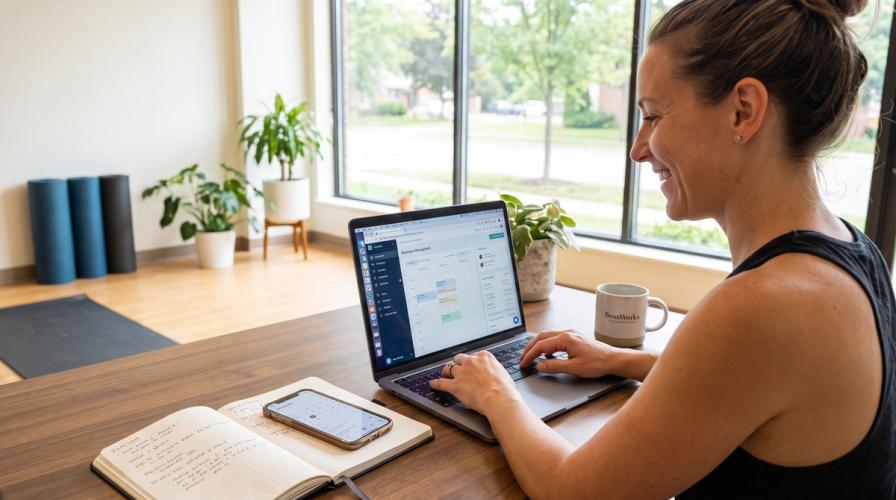
For years, studios had an advantage over solo coaches with scheduling, billing, and reporting tools. Independent coaches often relied on a calendar and payment app. AI-powered fitness and wellness software is narrowing that gap, helping solo coaches manage programs, renewals, payments, and follow-ups without hiring staff.
The investment in this space shows where the industry is heading. Vibefam raised $1 million for its AI fitness operating system, showing growing interest in software that goes beyond simple scheduling.
For a deeper breakdown, check out everything you need to know about starting a Health and Wellness Business.
What This Shift Means for Solo Coaches
- ●More than booking: Manage programs, payments, and renewals in one system.
- ●Less admin work: Automate reminders, follow-ups, and routine tasks.
- ●Better client management: Track client journeys instead of treating every session separately.
- ●Studio-level tools: Solo coaches can access systems once mainly available to larger fitness businesses.
- ●Room to scale: Better systems can support growth without immediately hiring staff.
That is the core point for a solo coach. A basic booking calendar answers one question, which is when someone can see you. A complete business operating system answers the questions that actually grow a practice, like who is due to renew, which clients have gone quiet, and whether you have room for a new cohort. The difference is easy to see when you lay the two side by side.
| Capability | Basic booking calendar | Business operating system |
|---|---|---|
| Scheduling | Yes | Yes |
| Payments and packages | Limited | Built in |
| Automated reminders and follow-ups | Rarely | Yes |
| Client journeys and renewals | No | Yes |
| Waitlists and capacity control | No | Yes |
| Revenue and retention reporting | No | Yes |
Read More | Outdoor Wellness Business in Denver: Why This City Is Perfect for Nature-Based Startups.
Why Solo Wellness Practices Stall
Most solo practices do not stall because the coach is bad at coaching. They stall under the weight of admin work. Every new client brings intake forms, scheduling back-and-forth, invoicing, and reminders, and all of it lands on the same person doing the sessions. When the calendar is full, there is no time to market, and when marketing stops, the calendar empties a month later. That feast-and-famine rhythm is the quiet ceiling on a lot of practices.
The deeper problem is structural. One-off sessions create inconsistent bookings because every client has to decide, again and again, whether to come back. Follow-ups get missed because there is no system nudging anyone to return. Without a structured client journey, there is no obvious next step after a first session, so momentum leaks away. The coach ends up starting from zero each week instead of building on the week before.
The contrast between a manual practice and a systemized one is stark once you name it. A manual practice depends on the coach remembering everything and repeating everything. A systemized practice lets the software carry the routine so the coach carries the relationships.
| Element | Manual practice | Systemized practice |
|---|---|---|
| Booking | Texts and phone tag | Self-serve scheduling |
| Payment | Chased after the session | Collected up front |
| Rebooking | Hoped for | Built into the program |
| Follow-up | Forgotten when busy | Automated |
| Revenue | Unpredictable | Recurring and forecastable |
Turning Sessions Into Programs
The single biggest lever a solo coach can pull is to stop selling sessions and start selling outcomes. A package bundles several sessions toward a goal, which raises the average value of each client and removes the weekly rebooking decision. A membership turns your practice into recurring revenue, so you begin each month with a known base instead of an empty ledger. Group programs let you serve several people in the time one session used to take, which changes the math of your day entirely.
Behind all of these is the idea of a client journey. Someone arrives, completes an assessment or first session, moves into a package or program, and then renews or steps into the next offer. When that path is designed on purpose, renewals stop feeling like a sales pitch and start feeling like the natural next chapter. Predictable revenue is simply what happens when enough clients are moving along a well-built path at the same time.
Here is how the common formats compare so you can see which ones create stability rather than just activity.
| Format | Revenue pattern | Coach time per client | Best for |
|---|---|---|---|
| One-off session | Unpredictable | High | First-time trials |
| Package | Upfront, lumpy | Medium | Goal-based clients |
| Membership | Recurring, steady | Medium | Ongoing support |
| Group program | Recurring, leveraged | Low per person | Scale and community |
Building a Waitlist Without More Hours
A waitlist sounds like a luxury reserved for the famous, but it is really just a capacity decision. Every solo coach has a hard limit on hours, and the honest move is to name that limit before it names itself through burnout. Once you set a fixed number of client slots or appointment windows, anyone who wants in beyond that number joins a waitlist. That single change reframes your practice from always available to genuinely in demand.
The trick is to create demand rather than simply adding appointments. Cohorts, where a group starts together on a set date, concentrate interest into a moment instead of spreading it thin across the week. Fixed appointment windows make your time feel finite, which it is. When the next opening is three weeks out, and there is a list of people ahead of them, prospective clients treat their spot as valuable and show up for it.
Capacity strategy is really a choice about how you want to grow, and each option carries a different workload. Laying them out helps you pick deliberately instead of defaulting to whatever the calendar allows.
| Strategy | Effect on workload | Effect on growth |
|---|---|---|
| Open calendar, no cap | High and erratic | Flat, prone to burnout |
| Fixed slots with waitlist | Steady and controlled | Builds demand and pricing power |
| Cohort intakes | Batched, efficient | Scales in predictable waves |
| Group programs | Lower per client | Grows revenue without more hours |
Want to start a Health and Wellness Business? Plan it with a proven and trending wellness business model.
Compliance and Money Basics
Growth is not only about demand. It also rests on getting the boring parts right, and in Michigan that starts with scope of practice. Wellness coaching is not the same as licensed clinical care, and it is worth confirming which services you can offer without a specific license and where the line sits with regulated professions like dietetics or mental health. When in doubt, check current Michigan licensing guidance or consult a professional, because staying inside your scope protects both your clients and your business.
The money side is equally practical. Clear invoicing, deposits that reduce no-shows, and a written cancellation policy protect your time and your income. Separating business and personal finances is not just tidy bookkeeping. It clarifies whether the practice is actually profitable, simplifies taxes, and makes you look like the professional operation you are trying to become.
The table below sums up the basics worth establishing early, before volume makes the gaps expensive.
| Business area | What to establish | Why it matters |
|---|---|---|
| Scope of practice | Confirm Michigan licensing limits | Keeps services legal and safe |
| Invoicing | Clear, consistent billing | Steadies cash flow |
| Deposits and cancellations | Written policy up front | Cuts no-shows and lost hours |
| Finances | Separate business account | Shows true profit, eases taxes |
What to Automate First
You do not need to automate everything at once. Start with the tasks that consume the most time.
- ●Scheduling: Let clients book themselves and reduce back-and-forth.
- ●Reminders: Automate appointment reminders to reduce no-shows.
- ●Intake forms: Collect client information before the first session.
- ●Payments: Take payments upfront for packages and memberships.
- ●Follow-ups: Automatically remind clients to rebook or continue their program.
- ●Package tracking: Know when clients are approaching the end of a package and may need to renew.
- ●Waitlist management: Notify the next client when a slot becomes available.
The best approach is to automate routine tasks first, giving you more time to focus on clients, marketing, and business growth.
Read More | How to Start a Mobile Sauna or Cold Plunge Rental Business in Bozeman, MT: Permits and Costs.
When to Raise Rates or Add Capacity
Every coach eventually hits a point where the current setup stops fitting, and the skill is reading which signal you are seeing. If you are fully booked and turning people away, that is a pricing signal, not necessarily a hiring one. If clients love the work but your days are exhausting, that points to systems and automation before anything else. Confusing these signals leads to hiring too early or discounting when you should be raising rates.
The right move depends on the specific bottleneck, and it helps to match the sign to the decision plainly. Steady demand at your current price usually means you have room to raise rates. A waitlist that keeps growing suggests a group program could serve more people at once. Only when demand consistently outstrips everything you can personally deliver does adding another coach start to make sense.
| Sign you are seeing | Growth decision that fits |
|---|---|
| Booked out, turning people away | Raise rates |
| Great results, exhausting weeks | Improve systems and automate |
| Long, growing waitlist | Launch a group program |
| Demand far beyond your capacity | Add another coach |
A Simple Waitlist Growth Framework

Building a waitlist becomes easier when you follow a repeatable system:
- Define your positioning: Clearly explain who you help and the outcome you provide.
- Create structured offers: Use packages, memberships, or programs instead of relying only on single sessions.
- Set your capacity: Decide how many clients you can realistically handle each week.
- Automate routine tasks: Use systems for scheduling, payments, reminders, and follow-ups.
- Encourage referrals: Ask satisfied clients for referrals at the right stage of their journey.
- Manage the waitlist: Keep prospects updated and contact them when openings become available.
- Track performance: Monitor renewals, retention, referrals, and demand to identify what is working.
Repeat the process, review the results, and adjust your approach as the business grows.
Common Mistakes to Avoid
Growing a wellness coaching practice can create new problems if the business is not structured properly. Avoid these common mistakes:
- ●Overbooking: Taking on too many clients can lead to burnout and lower service quality.
- ●Relying on one-off sessions: This keeps bookings and revenue unpredictable.
- ●Underpricing: Low rates can force you to work more hours without improving profitability.
- ●Doing everything manually: Too much admin work leaves less time for clients and growth.
- ●Ignoring the waitlist: A waitlist only works when prospects are contacted and updated regularly.
The goal is not simply to stay busy. It is to build a practice that manages demand, capacity, and client relationships efficiently.
Final Thoughts
The real question is not whether a solo wellness coach can fill a waitlist the way fitness studios now do. The tools that made that possible for studios are already available to individuals. The question is whether you will build a system where demand, pricing, capacity, and client experience reinforce each other, instead of chasing more clients and more hours until you run out of both.
Ready to Get Started?
Building a successful Wellness Coaching Business is achievable with the right systems, clear offers, and a practical growth plan. The coaches who grow sustainably focus on attracting the right clients while protecting their time and capacity.
That is where BossWorks comes in. We help you create a clear business plan based on your niche, budget, services, and growth goals. From pricing and packages to marketing and operations, everything is organized into practical steps.
Instead of managing everything manually, you get a structured approach that helps you save time, manage demand, and grow your wellness business with confidence.
Frequently Asked Questions
Yes, affordable AI-powered software now lets solo coaches manage programs, payments, reminders, and waitlists without hiring staff.
Start with scheduling and reminders, then automate intake forms, payments, follow-ups, package tracking, and waitlist management.
A waitlist lets coaches control capacity, capture excess demand, and fill openings without adding more appointment hours.
Coaches should verify Michigan licensing and scope-of-practice requirements, especially when services overlap with regulated fields.
Consistent demand and a growing waitlist can signal that raising rates may be more appropriate than taking on more clients.