A Portland Barbershop Used AI Chat to Turn Walk Ins Into a Six Month Waitlist
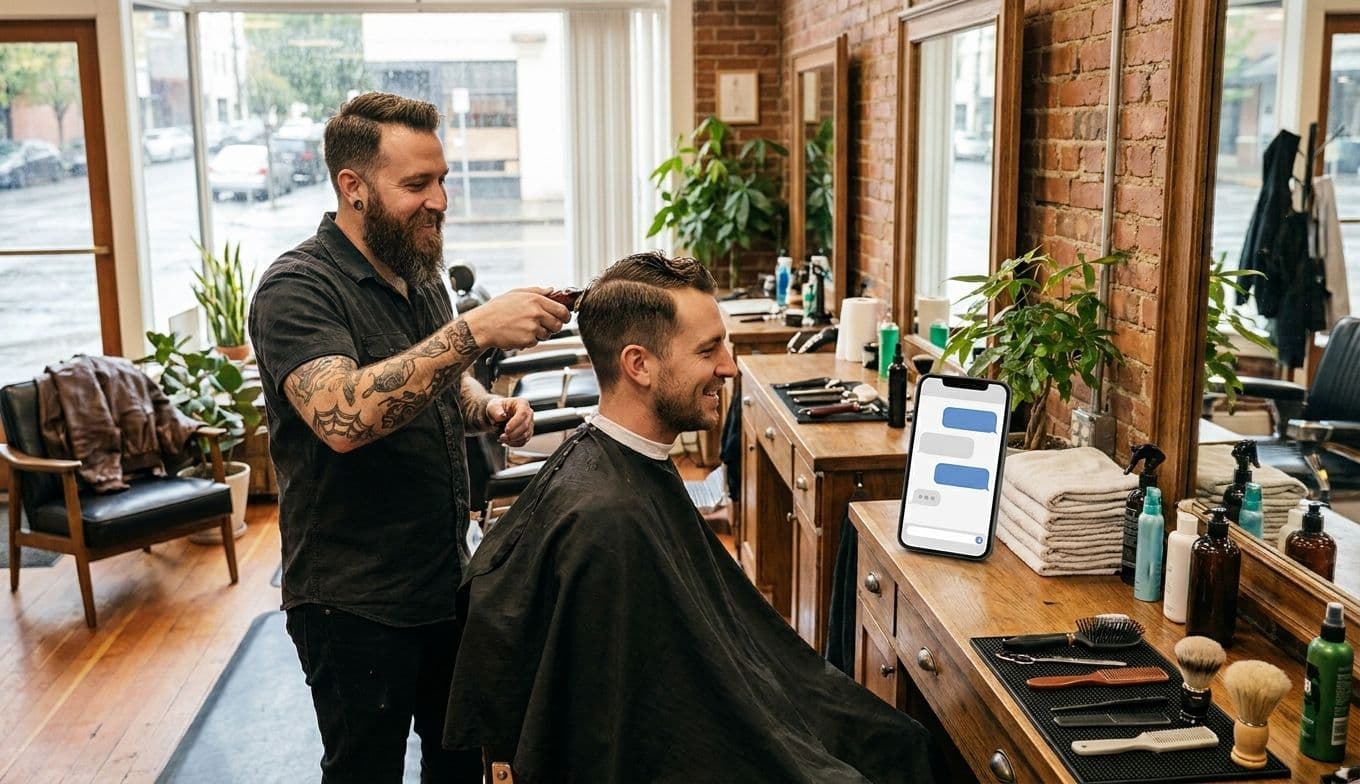
Every barber in Portland has lived the same moment. Clippers are running, a client is mid-fade, and the shop phone rings for the third time that hour. Nobody can answer it without stopping the cut, so the call goes to voicemail, or it just rings out. Multiply that by a full Saturday of walk-ins, texts, and Instagram DMs asking about prices and availability, and a shop that looks busy on the outside can quietly be leaking business all day long.
That was the exact situation at a small barbershop in Portland's Hawthorne district a year ago. Two barbers, one shop phone, and a waitlist that existed only in someone's head. The owner did not add a receptionist or a bigger location. Instead, the shop started using an AI chat assistant to answer questions and manage booking requests around the clock. Within six months, the shop was not just staying busy; it had a genuine six-month waitlist for new clients, built almost entirely from conversations the owner never personally had to type.
This is not a story about replacing barbers with robots. It is a story about what happens when a small business finally stops losing customers to something as simple as an unanswered message, and what other local businesses, from salons to auto shops, can take from it.
The Problem With Missed Calls
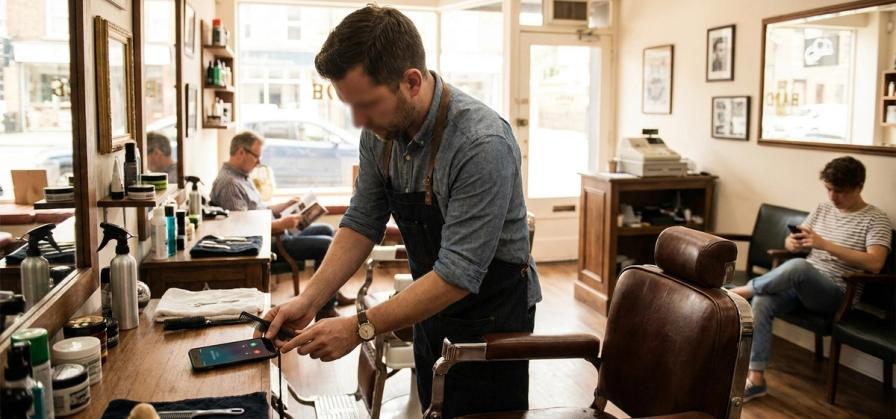
Barbers are paid to cut hair, not to run back and forth between a client's chair and a ringing phone. Every time a barber stops mid-service to answer a question about pricing or hours, the client in the chair waits, and the service takes longer than it should. Over a full day, those small interruptions add up to real lost time, and they also create an awkward experience for the paying customer who is already in the shop.
- ●Interruptions during appointments
- ●Customers waiting while calls are answered
- ●Lost time throughout the day
The higher cost, though, is what happens to the person on the other end of that unanswered call. Most people looking for a new barber are comparing two or three shops at once, and they tend to book with whoever responds first. If a shop takes hours to call back, or never calls back at all, that potential client has usually already booked somewhere else by the time anyone gets to the voicemail. A missed call does not just delay a booking; it often erases it entirely.
- ●Customers comparing multiple barbershops
- ●Slow callbacks leading to lost bookings
- ●Missed calls becoming missed customers
Underneath all of this sits a pattern that repeats at almost every small service business: the same handful of questions get asked over and over. How much for a fade. Do you take walk-ins. What time do you close on Saturday. Is there parking nearby. None of these questions are complicated, but answering them dozens of times a week, in real time, while also cutting hair, is genuinely hard to sustain. Left unmanaged, this constant low-level interruption quietly turns into a pipeline of lost bookings that never shows up on a spreadsheet, because a shop only sees the customers who did show up, never the ones who gave up and went elsewhere.
- ●Pricing and service questions
- ●Walk-in availability
- ●Business hours
- ●Parking and location questions
For a deeper breakdown, check out all you need to know about Salon Business
Introducing AI Chat
An AI chat assistant, in plain terms, is a program that lives on a business's website, texting number, or social media page and can carry on a real conversation with a customer without a human typing every reply. It is trained on the specific business, so it knows the services offered, the price list, the hours, and the general tone the shop wants to use. When a customer asks a question, the AI answers instantly, using information the business owner set up ahead of time, rather than a generic script.
- ●Answers customer questions instantly
- ●Provides business-specific information
- ●Shares services, pricing, and hours
- ●Works across websites, texting, or social media
For the Portland shop, this meant a customer texting at 9pm asking about a beard trim price got an answer immediately, instead of waiting until the next morning. The AI could explain the difference between a basic cut and a full service appointment, quote current pricing, and list which barber had upcoming availability. It did not need a lunch break, and it did not get flustered during a Saturday rush, because it was handling the conversation entirely separately from whatever was happening on the shop floor.
Just as importantly, the AI chat tool did not stop at answering questions. It could walk a customer through requesting an appointment, collecting their preferred day, time, and barber, and then either booking it directly into the shop's calendar or flagging it for quick human confirmation. That single capability, turning a casual question into an actual booking request without a staff member lifting a finger, is what started shifting the shop's schedule from scattered walk-ins toward a steady, predictable calendar.
- ●Collects preferred day, time, and barber
- ●Books directly into the calendar or requests human confirmation
- ●Turns customer questions into booking requests
AI Chat Features
| AI Chat Feature | What It Handles |
|---|---|
| Customer questions | Answers questions about services, prices, and hours |
| Business information | Provides information set up by the business |
| Service details | Explains basic cuts and full-service appointments |
| Availability | Shows upcoming barber availability |
| Appointment requests | Collects the customer's preferred day, time, and barber |
| Booking | Books directly into the calendar or sends the request for human confirmation |
| After-hours support | Responds to customers even when the shop is closed |
Making Booking Easier
The shift from the old process to the new one is easier to see side by side. Before AI chat, a customer with a question had to call during business hours, hope someone picked up, and often left a voicemail that took a while to get returned. After adding AI chat, that same customer got an answer in seconds, at any hour, with a clear next step toward booking.
| Booking Step | Traditional Method | AI-Assisted Method |
|---|---|---|
| Initial question about price or hours | Call during business hours, wait on hold or leave voicemail | Instant text or chat reply, any time of day |
| Checking barber availability | Barber checks manually between clients | AI checks the calendar and responds immediately |
| Requesting an appointment | Customer calls back later or walks in | Customer books directly through the chat |
| Confirmation | Verbal or manual follow-up call | Automatic confirmation message |
| After-hours inquiries | Goes to voicemail, answered next business day | Answered immediately, booking held for review |
The practical effect of closing that gap is that fewer people give up while waiting for a response. A faster reply does not guarantee a booking, but it removes the single biggest reason a curious customer drifts to a competitor instead. For the barbers themselves, the benefit showed up as fewer interruptions during the day, since the AI was handling the repetitive front-line questions that used to pull them away from the chair. Customers, meanwhile, found it easier to book on their own schedule, texting a question during a lunch break or a late night instead of trying to catch the shop open.
Read More | AB5 Contractor Law in LA: The Real Cost of Misclassifying Workers.
Why AI Chat Works for Local Businesses
The core reason AI chat has taken off with small service businesses is speed. Customers today expect a near-instant response to a simple question, and a business that cannot deliver that starts to feel harder to work with than it needs to be. AI chat closes that gap without requiring a business to hire another employee just to sit by the phone.
- ●Faster responses to customer questions
- ●Less waiting for callbacks
- ●Fewer missed opportunities
- ●No need for someone to constantly monitor the phone
Around-the-clock availability matters just as much. A barbershop is closed at night and on certain days, but customer curiosity is not on that schedule. Someone deciding to finally get a haircut before a big event might do that thinking at 10pm on a Tuesday, and if the shop can respond right then, it has a real shot at winning that booking before the person moves on to searching for another option nearby.
- ●24/7 customer availability
- ●Responses outside business hours
- ●Capturing after-hours inquiries
- ●Helping customers when they are ready to book
Handling repetitive questions automatically also frees up real time and mental energy for the people actually running the business. Fewer interruptions during the workday means less administrative back and forth, and a calmer pace for the staff. Customers notice that difference too, since a quick, clear answer to a simple question tends to leave a better impression than a delayed callback, even if the eventual answer is the same.
- ●Fewer repetitive tasks for staff
- ●Less interruption during appointments
- ●More time to focus on customers
- ●Faster and clearer customer communication
Want to start a beauty business? Plan it with a trending beauty and personal care business plan.
Benefits of AI Chat for Local Businesses
| Benefit | How It Helps |
|---|---|
| Faster responses | Customers get answers without waiting for a callback |
| 24/7 availability | Businesses can respond even when they are closed |
| Fewer missed inquiries | Potential customers are less likely to be lost because of slow responses |
| Less repetitive work | Staff spend less time answering the same basic questions |
| Fewer interruptions | Employees can focus on customers already in the business |
| Better communication | Customers receive quick and clear information |
| More booking opportunities | Customers can move from questions to appointment requests more easily |
From Customer Inquiries to a Fuller Schedule
It helps to think about what actually happens to an inquiry that never gets answered. A person searching for a barber sends a message, hears nothing back for a day, and books with a different shop instead. That single missed conversation is a lost customer, and often a lost referral chain too, since a first-time client who never became a client will never recommend the shop to a friend. Multiply that pattern across weeks and months, and a shop can be far busier than it needs to be while still under-booked relative to its actual demand.
AI chat interrupts that pattern by capturing the inquiry the moment it happens, when interest is highest. The table below shows how that shift can play out over time as more inquiries convert into actual bookings instead of leaking away.
| Stage | Without AI Chat | With AI Chat |
|---|---|---|
| Inquiry received | Often delayed response | Immediate response |
| Customer decision | Frequently books elsewhere while waiting | Books directly through the chat |
| Weekly bookings | Limited by staff availability to respond | Increases as more inquiries convert |
| Long-term effect | Schedule stays inconsistent | Waitlist builds as demand grows |
The connection between response speed and conversion is straightforward: the faster a business answers, the more of its existing interest turns into paying appointments, without spending an extra dollar on marketing. Once that consistent conversion starts compounding week over week, a shop can move from filling gaps in the schedule to genuinely having more demand than it can serve, which is exactly the position the Portland shop found itself in after building out a real waitlist.
What Other Small Businesses Can Learn
None of what happened in that Portland barbershop is specific to haircuts. Salons deal with the identical wave of pricing and availability questions, often multiplied across several stylists with different specialities and schedules. Dentists field a steady stream of insurance and appointment questions that eat into front-desk time, and a quick automated answer can be the difference between a new patient booking and one who calls the next office on the list.
Dog groomers and auto repair shops both face customers who want a fast quote before committing, and a slow response in either industry tends to send that customer straight to a competitor's website. Fitness studios juggle class schedules and membership questions that repeat constantly throughout the week, tutors get asked the same handful of questions about rates and subjects before every new student signs up, and cleaning businesses spend enormous amounts of phone time quoting jobs that an AI chat tool could pre-qualify in seconds. Across every one of these businesses, the underlying lesson is the same: whoever answers first, clearly and helpfully, tends to win the booking.
Where Humans Still Matter
None of this means a business can hand every interaction over to software and walk away. AI chat is genuinely good at answering known questions with known answers, but it is not the right tool for a customer with a complaint, a refund request, or a situation that requires real judgment. Those moments call for a person who can listen, empathise, and make a decision that fits the specific circumstances, something automated chat is not built to do well.
Unusual requests fall into the same category. A customer asking for a highly specific style, a sensitive scalp condition, or an unusual scheduling accommodation needs a barber's actual expertise, not a scripted answer. Personalised recommendations, the kind a longtime barber gives a regular client based on their hair type and history, also depend on a relationship that software cannot fake. The businesses that get the most out of AI chat are the ones that set clear rules for when the assistant should step aside and hand the conversation to a real person, rather than trying to force every situation through automation.
Read More | Restaurant Business in Chicago: Winning Customers with Experience, Not Just Food.
How Small Businesses Can Start Using AI Chat
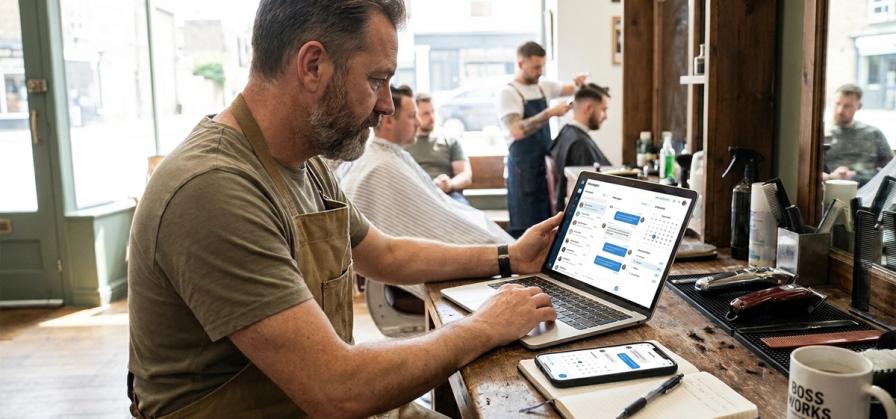
Getting started with AI chat does not have to be complicated. Start by finding the questions customers ask most often. These are the easiest tasks to automate.
- ●List common customer questions
- ●Choose an AI chat tool that fits the business
- ●Connect it to the booking system
- ●Decide when a human should take over
Once the chatbot is running, check whether it is helping customers book appointments. Look at what questions people ask and improve the chatbot when needed.
- ●Track inquiries and bookings
- ●Add answers to new questions
- ●Fix unclear responses
- ●Update information when services or prices change
The Portland barbershop example shows how removing one simple problem, slow replies, can help a business capture more customers. Small businesses that regularly miss calls or messages can use AI chat to respond faster and make booking easier.
Final Thoughts
AI chat is not about replacing barbers or removing the personal side of a local business. It is about making sure potential customers do not disappear simply because nobody was available to answer a call or message. For small businesses, faster replies can mean fewer missed opportunities and a smoother booking experience.
The bigger lesson is simple. Businesses do not need to automate everything. They just need to find the repetitive tasks that take up time and make it easier for customers to get the help they need. AI chat can handle those simple interactions while the people behind the business focus on delivering the service that customers actually came for.
Ready to Open Your Salon?
Starting a salon is exciting, but turning the idea into a profitable business takes careful planning. Before you sign a lease or buy equipment, it helps to know exactly what you are getting into.
BossWorks helps aspiring salon owners plan and launch with practical guidance, realistic numbers, and less guesswork.
✓ Estimate startup costs based on your salon concept and services
✓ Plan permits, licenses, inspections, and other local requirements
✓ Build financial projections to understand break-even and cash flow
✓ Spot hidden expenses before they become expensive surprises
Frequently Asked Questions
It is a program installed on a website, texting line, or social page that answers customer questions and handles booking requests automatically, using information the business owner sets up about services, pricing, and hours. It responds instantly instead of making customers wait for a callback.
By answering customer questions and booking requests instantly instead of letting them go to voicemail or unread texts. Faster responses converted more curious inquiries into actual appointments, and that steady booking pattern eventually built into demand that outpaced the shop's available chairs.
Not for every situation. AI chat handles repetitive questions and standard booking requests well, but complaints, unusual requests, and sensitive situations still need a real person to step in and make a judgment call.
It applies broadly. Salons, dentists, dog groomers, auto repair shops, fitness studios, tutors, and cleaning businesses all deal with the same repetitive pricing and availability questions that AI chat can answer instantly.
Start by listing the questions customers ask most often, since those are exactly what the AI should be set up to answer first. From there, connect the tool to your existing booking process and set rules for when a human should take over.