How the AB5 Contractor Law Actually Affects a First-Time Cleaning Business Owner in Los Angeles
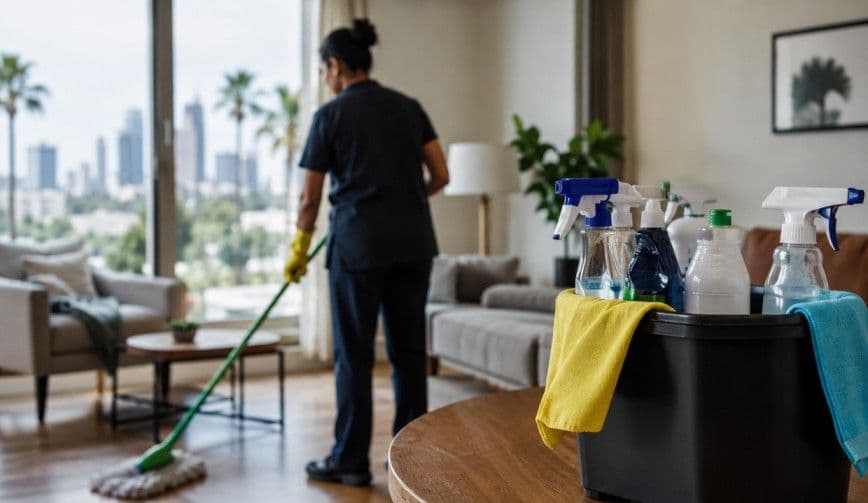
So you started a cleaning business in Los Angeles. Congratulations, you now own a mop, a calendar full of client addresses, and a brand new headache called AB5.
If you have been Googling this law at midnight wondering if you accidentally broke it, take a breath. This article explains this independent contractor law California business owners keep talking about, using simple words that anyone, even a school kid, could follow.
What Is AB5, In Simple Words

AB5 is a California law that decides who counts as an employee and who counts as an independent contractor. This matters a lot because employees cost more to hire the "official" way. You pay payroll taxes, buy workers' compensation insurance, and follow rules about overtime and breaks. Contractors are supposed to run their own separate business and handle their own taxes, so hiring them used to feel cheaper.
Before AB5, many businesses in California, including cleaning companies, hired workers as "1099 contractors" to save money. This is often called the 1099 vs. W-2 question. AB5 made it much harder to legally call someone a contractor, and if you get it wrong, the state can make you pay back wages, taxes, and penalties.
The ABC Test, Explained Without the Legal Jargon
AB5 uses something called the ABC test California business owners must pass before calling anyone a contractor. To legally treat a worker as a contractor, your business must prove all three points below are true. If even one point fails, the worker is legally an employee, full stop.
| Letter | What It Means | Simple Example |
|---|---|---|
| A | The worker controls how they do the job | You cannot tell them exact hours or exact cleaning steps |
| B | The work is outside your normal business | This is the hard one for cleaners, explained below |
| C | The worker runs their own independent business | They have other clients, their own license, their own tools |
Let us break these down quickly, in plain words.
A. The worker controls how they do their job. You cannot tell them what time to show up or how to scrub a bathroom step by step. If you manage their schedule and exact methods, that looks like an employee, not a contractor.
B. The work is outside your normal business. This is the part that trips up almost every cleaning business owner in Los Angeles. If your company cleans homes for a living, and you hire someone to clean homes for you, that work is not "outside" your usual business. It is literally your business. This single point is why most cleaners cannot legally be treated as independent contractors under a cleaning company. Lawyers call this the hardest part of worker classification to satisfy, and cleaning companies almost always fail it.
C. The worker has their own independent business. This means the person already runs their own established cleaning business, with other clients, their own license, their own insurance, and their own way of finding customers. If they only work for you and depend on you for all their income, this point fails too.
Here is the honest truth. Most cleaners who work under one cleaning company in Los Angeles do not pass this test. That means, under California law, they are likely employees, even if both of you agreed to call them a contractor and even if the worker prefers that title. You cannot get around it with a signed paper, because the law looks at the real working relationship, not just the words on a page.
Why This Matters So Much For a New Business Owner
When you are just starting out, hiring contractors feels like the cheaper and simpler choice. No payroll software, no payroll taxes in California to calculate, no workers' compensation insurance to buy. It feels like a shortcut around a mountain of forms.
The problem is that misclassifying a worker, calling someone a contractor when the law says they should be an employee, can cost you far more later than doing it right from day one. Common misclassification penalties include:
- ●Back wages and unpaid overtime pay
- ●Missed meal break and rest break payments
- ●Unpaid payroll taxes plus interest
- ●Civil penalties that can reach thousands of dollars per violation
- ●Workers' compensation violations, which can even carry criminal risk in serious cases
These costs can stack up over several years, not just a few months. In short, the price of getting caught almost always costs more than the price of doing it correctly the first time.
Are There Any Exemptions For Cleaning Businesses
Some jobs got special exemptions under AB5, mostly professions like doctors, lawyers, real estate agents, and certain freelance writers. Cleaning is not on that list. There is something called a business-to-business exemption that can apply if you hire another separately established cleaning company, instead of one individual person directly. But this exemption has strict rules of its own, and simply calling someone a "vendor" on paper does not automatically make it true.
If you were hoping for a clever loophole that lets you keep hiring solo cleaners as contractors, it is safest to assume that loophole does not exist for you, and to plan your business around that reality instead.
What This Means Practically For Your LA Cleaning Business
Here is the simple version of your choices as a small business owner.
Option one: hire employees. Put people on payroll, pay employer taxes, carry workers' compensation insurance, and follow California wage and hour rules. It costs more upfront, but it keeps you compliant and protects you from painful surprise audits later.
Option two: contract with independent, established cleaning businesses. Work with other small cleaning companies or genuinely independent operators who already have their own clients, equipment, business license, and liability insurance. This looks like a real business-to-business deal instead of an employer-to-worker one.
Option three: do the cleaning yourself while you are small. Many first-time owners in Los Angeles start out as solo operators. You are the business and the worker at once, so classification questions do not apply to you yet.
Most successful cleaning businesses eventually choose option one as they grow, since it gives more control over quality and service, which is what most small business compliance Los Angeles experts recommend for long-term stability.
A Quick Word on Los Angeles Specifically
Los Angeles does not have its own separate version of AB5, but local labour enforcement in the city and county tends to stay active, and competition among cleaning services here is strong. Customers searching for a cleaner in LA often look for business licensing Los Angeles companies follow, meaning a properly licensed and insured cleaning business. Having correctly classified employees can actually become a selling point, since it signals your business is stable and trustworthy. Good cleaning business insurance matters too, both for protecting your workers and for reassuring clients before letting strangers into their homes.
Simple Steps to Stay on the Right Side of AB5
- Decide early whether you want a team of employees or a network of independent cleaning businesses you subcontract with.
- If hiring employees, set up basic payroll, buy workers' compensation insurance, and learn California's meal and rest break rules.
- If working with other cleaning companies, make sure they act as truly independent businesses, not one person who only works for you.
- Keep clear records of how the working relationship actually functions, since real-life practice matters more than contract wording.
- Talk to an employment lawyer who understands wage and hour laws in California before you scale up. A short chat now is cheaper than a labour audit later.
Final Thoughts
AB5 was not written with small cleaning businesses in mind, but it applies to them anyway, and quite strictly. The main thing to remember is that cleaning work almost never passes the second part of the ABC test, since cleaning is exactly what a cleaning business does every day. That means most people who clean for your company will legally be your employees, whether you planned for that or not.
It might feel like extra cost and paperwork at the start, but treating your cleaners as employees the right way protects you from bigger financial trouble later. It also helps you build a business that can grow without fear of a surprise audit knocking on your door, or on your very clean windows.
Ready to Start Your Cleaning Business?
Starting a cleaning business is absolutely doable. Thousands begin every year. The ones who succeed are not luckier. They simply understand what to expect before they take the first step.
BossWorks helps aspiring home service entrepreneurs plan and launch with clarity, without the guesswork that drains time and money.
✓ Map your exact startup costs based on your service type, tools, and local demand
✓ Understand permits and basic requirements in your area, including licenses if needed
✓ Create realistic income projections with clear break-even points and steady cash flow
✓ Identify hidden costs early so they do not disrupt your plans later
Frequently Asked Questions
No, because California looks at how the work actually happens, not just what the paper says.
You could owe back wages, unpaid taxes, missed break pay, and extra penalties that add up fast.
Only if they truly run their own separate business with other clients, their own license, and their own insurance.
Yes, since AB5 has no small business exception based on team size or hours worked.
Yes, a short consultation now usually costs far less than fixing a misclassification problem later.