How Much Does It Cost to Start a Cleaning Business in Chicago? (2026 Budget Breakdown)
So how much does it really cost to start a cleaning business in Chicago? The honest answer depends on the size of the operation you want to build. A solo cleaner with a car and a mop bucket can get moving for around $2,000. A small team with a van and a few employees usually needs $10,000 to $15,000. A commercial cleaning company that bids on offices and warehouses can run $15,000 to $25,000 before the first invoice goes out.
This guide breaks down every major cost category so you are not guessing. We will walk through licenses, insurance, supplies, marketing, and the ongoing monthly bills that come after launch. By the end, you will have a clear picture of what your version of this business actually costs and where to find funding if you need help getting there.
Startup Cost Overview: Low Budget vs. Team-Based Model
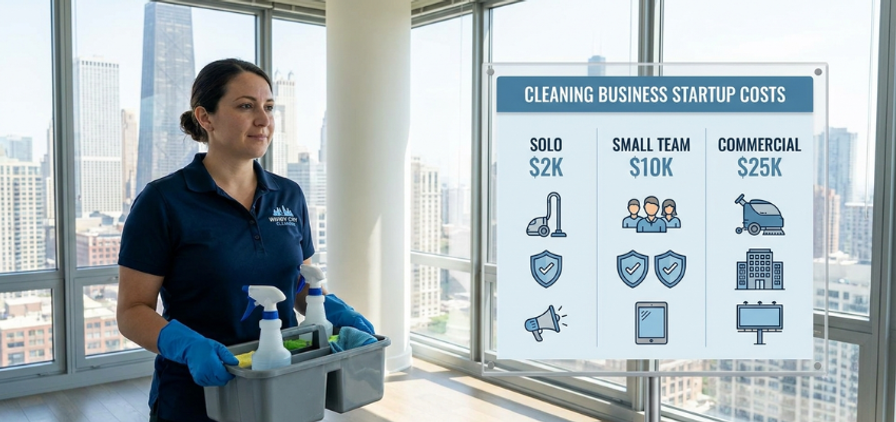
The solo operator model is the cheapest way in. For $2,000 to $5,000, you can cover basic supplies, a simple general liability insurance policy, your LLC filing fee, and a small marketing budget to get your first few clients. Most people in this tier clean residential homes and apartments, work out of their own car, and handle bookings themselves through a phone or a basic scheduling app. This is the path most first-time owners choose because it lets you test the market before spending real money.
Once you are ready to hire your first employee or two, the budget jumps. A small team model typically costs $10,000 to $15,000 because you now need commercial-grade equipment, payroll software, and often a used van or truck to move people and gear between jobs. Insurance costs also rise slightly since you are covering more people and more liability exposure. This tier is where most cleaning businesses in Chicago start to feel like a real company instead of a side gig.
The commercial cleaning model sits at the top, usually between $15,000 and $25,000. Office buildings, medical facilities, and industrial clients expect bonded and insured crews, specialized floor and window equipment, and a marketing budget big enough to win competitive bids. You will also need more working capital up front because commercial clients often pay on 30-day terms instead of paying per visit like residential customers do. This model has the highest ceiling for revenue, but it also asks for the most cash before you see a dollar back.
Licenses, Permits, and Insurance in Chicago
Every cleaning business operating in Chicago needs a general business license from the City Clerk's office, which covers most small service businesses at a modest annual fee. If you plan to operate under a name other than your own legal name, you will also need to file an assumed business name, sometimes called a DBA, with the county. These steps are quick, but skipping them can lead to fines later, so build the small cost into your startup budget from day one.
If you will be selling any products alongside your cleaning services, or if your business structure requires it, you may also need to register for an Illinois sales tax number through the state. Hiring employees adds another layer: you will need an Employer Identification Number from the IRS, state unemployment insurance registration, and payroll tax withholding set up before anyone's first paycheck. None of this is difficult, but it does take a few weeks, so start the paperwork before you start booking jobs.
Insurance is where new owners often underestimate the cost. General liability insurance, which protects you if you damage a client's property or someone gets hurt, typically runs $500 to $1,500 per year for a small cleaning operation. If you hire employees, most states, including Illinois, require workers' compensation insurance, and commercial clients frequently require you to carry a surety bond before they will sign a contract. Building these costs into your plan early keeps you from scrambling when a good client asks for proof of coverage.
Equipment and Supply Costs
For residential cleaning, your starting supply list is short and affordable. A good vacuum, mop, bucket, microfiber cloths, and basic cleaning chemicals will run $300 to $800, depending on quality and brand. Many solo cleaners start with consumer-grade products and upgrade once they have a steady income, which is a smart way to keep initial costs low without cutting corners on quality.
Commercial cleaning is a different story. Office and industrial clients expect equipment like commercial vacuums, floor buffers, carpet extractors, and sometimes pressure washers, which together can cost $2,000 to $5,000. This equipment lasts for years if maintained properly, so think of it as an investment rather than a recurring cost. Buying used equipment from restaurant or hotel liquidations is a common way Chicago cleaning businesses save money on this line item.
If your business grows beyond what you can carry in your own car, a vehicle becomes necessary. A used cargo van or small truck for hauling equipment and team members between job sites can range widely in price, and many owners choose to lease rather than buy to keep monthly cash flow predictable. Branding the vehicle with your company name and phone number also doubles as free advertising every time it is parked outside a job.
Marketing and Customer Acquisition Budget
Your first marketing dollars should go toward a Google Business Profile, which is free to set up and is often how Chicago residents find local cleaners searching nearby. Pairing that with a simple, mobile-friendly website costs very little today and helps you look credible when a potential client checks you out before booking. Together, these basics can cost anywhere from free to about $500, depending on whether you build the site yourself or hire help.
Paid advertising speeds things up. Running ads on Google, Facebook, or Nextdoor for your first month typically costs $300 to $1,000, and Nextdoor in particular works well for cleaning businesses because neighbours trust recommendations from other neighbours. Referral programs, where you offer an existing client a discount for sending a friend your way, cost almost nothing and often bring in your most loyal customers. Flyers left at coffee shops, community boards, and apartment buildings round out a low-cost neighbourhood outreach strategy that still works well in many Chicago neighbourhoods.
A realistic budget for landing your first 10 customers is somewhere between $500 and $1,500, combining a small ad spend with free tools like your Google profile and word of mouth. Once you have real client reviews and a track record, your cost to acquire each new customer usually drops because referrals start doing more of the work. Track where each client comes from from day one, even with a simple spreadsheet, so you know which marketing dollars are actually paying off.
Ongoing Monthly Costs After Launch
Once you are up and running, your monthly costs settle into a predictable rhythm. You will need to replenish cleaning supplies regularly, keep your insurance policy active, and likely pay for a few small software subscriptions covering scheduling, invoicing, and payment processing. These recurring costs are usually modest, often a few hundred dollars a month for a solo operator, but they add up and should be part of your pricing math from the start.
If you have grown to a small team, payroll or contractor payments become your biggest monthly line item by far. This is also where cash flow discipline matters most, since payroll is due on a schedule regardless of how many jobs you booked that week. Setting aside a cash buffer, even a small one, helps you avoid the stress of a slow week turning into a missed paycheck.
Marketing should never fully stop once you launch. Even a modest ongoing budget of $100 to $300 a month keeps your pipeline full and prevents the feast-or-famine cycle that hurts a lot of new service businesses. Reinvesting a small percentage of revenue into marketing every month, even when you are busy, keeps growth steady instead of leaving you scrambling when a few clients cancel.
Funding Your Cleaning Business

Many Chicago cleaning businesses start with bootstrapped savings, and for the solo model, that is often enough. If you need more capital to buy a vehicle, hire staff, or cover a slow first quarter, small business loans through local banks or credit unions are worth exploring, especially those backed by the Small Business Administration. These loans usually come with lower interest rates than credit cards, though they do require some paperwork and a basic business plan.
Microloans are a strong option for newer businesses that may not qualify for a traditional bank loan yet. Chicago has several community lenders and nonprofit organizations focused specifically on helping small service businesses get started, often with more flexible requirements than a big bank. These lenders also tend to offer mentorship alongside the money, which can be valuable if this is your first time running a business.
This is exactly where BossWorks fits in. We build you a customized financial model based on the specific version of this business you want to run, whether that is solo, small team, or commercial, and we connect you to local Chicago funding options that match your situation. Instead of guessing at numbers from a generic template, you get a plan built around your actual budget and goals.
Starting a cleaning business in Chicago does not have to mean guessing your way through licenses, insurance, and cash flow. With the numbers in this guide, you can decide which model fits your budget and build a plan that avoids costly surprises.
Ready to see your exact numbers? BossWorks gives you a customized budget, a compliance checklist, and step-by-step tasks so you do not waste money or miss a permit. Start your free plan today and get moving.
Ready to Start Your Home Service Business?
Starting a home service business is absolutely doable. Thousands begin every year. The ones who succeed are not luckier. They simply understand what to expect before they take the first step.
BossWorks helps aspiring home service entrepreneurs plan and launch with clarity, without the guesswork that drains time and money.
✓ Map your exact startup costs based on your service type, tools, and local demand
✓ Understand permits and basic requirements in your area, including licenses if needed
✓ Create realistic income projections with clear break-even points and steady cash flow
✓ Identify hidden costs early so they do not disrupt your plans later
Frequently Asked Questions
The cheapest path is the solo operator model, which typically costs $2,000 to $5,000. This covers basic supplies, a general liability insurance policy, your LLC filing fee, and a small marketing budget to land your first few clients while you clean using your own car and equipment.
Yes, most cleaning businesses need a general business license from the City of Chicago, and if you use a business name different from your own, you also need to file an assumed name with the county. If you hire employees, you will need additional registrations for payroll taxes and unemployment insurance.
General liability insurance for a small cleaning business usually costs $500 to $1,500 per year. If you hire employees or work with commercial clients, you may also need workers' compensation insurance and a surety bond, which add to the annual cost.
A realistic first-month marketing budget is $500 to $1,500, which covers setting up a free Google Business Profile, running a small ad campaign on Google, Facebook, or Nextdoor, and printing flyers for local outreach. This is usually enough to land your first 10 customers.
Yes, options include small business loans through local banks or credit unions, SBA-backed loans, and microloans from Chicago-based community lenders and nonprofits. BossWorks can also build you a financial model and connect you to local funding sources that fit your specific business plan.