How Can a Graphic Design Business in Omaha Build a Pricing Model That Works?

If you ask 10 owners of graphic design firms in Omaha how they charge for their services, you'll hear 10 different responses. Some charge on an hourly basis, while others employ project fees, monthly retainers, or fixed packages.
That doesn't mean you're necessarily incorrect, but the way you set your prices will have an effect on the kind of clients you attract, the amount of work you can take on, and how far your revenue can grow.
Price involves more than just the figure included in a proposal; it affects the way your studio operates and determines how predictable your income is.
Let's then consider the main pricing questions that Omaha designers have to deal with and explain them in simple language.
What Price Should a Graphic Design Business Actually Ask For?
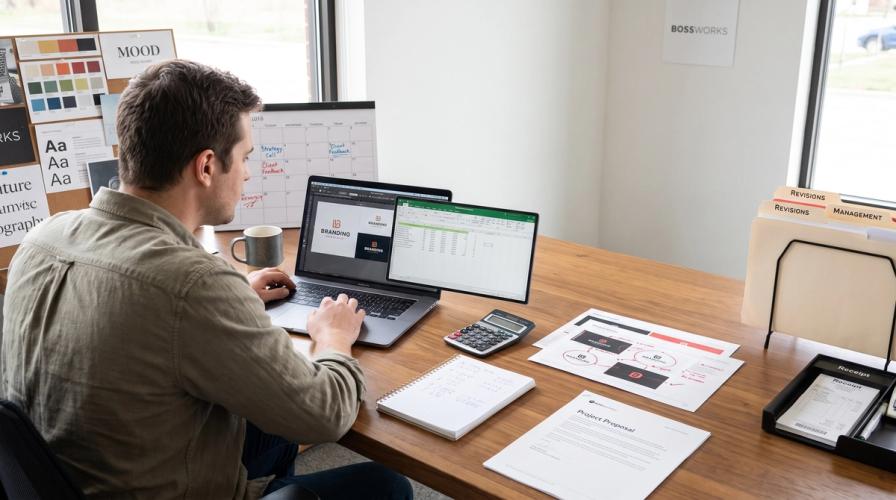
You shouldn't charge merely on the basis of design time, since an experienced designer can complete a logo in three hours whereas a beginner will take 30. The fact that work is done more quickly doesn't imply that it has less value.
Your price should cover the full work involved:
- ●Design: The actual creative work
- ●Strategy: Research, planning, and client calls
- ●Revisions: Feedback and changes
- ●Management: Emails, meetings, and project coordination
- ●Business costs: Software, equipment, marketing, taxes, and admin
Do not copy the prices of another designer since their costs, level of experience, and profit objectives could be quite different from yours.
For a deeper breakdown, check out everything you need to know about Freelancers.
What Pricing Model Is the Most Sensible?
The kind of pricing model you should use will depend on the kind of work you're doing. For clearly defined jobs, use project pricing. For uncertain work, use hourly pricing. For continuous requirements, use retainers, while for services that are repeatable, use packages.
| Pricing Model | Best For | Main Risk |
|---|---|---|
| Per project | Clearly defined jobs | Scope creep |
| Hourly | Open-ended work | Income depends on hours |
| Monthly retainer | Ongoing design needs | Scope can slowly expand |
| Packages | Repeatable services | Less flexibility |
For a great many design studios, the best approach is to combine two or more models. This allows them to charge project fees for big jobs, hourly rates for additional work, and retainers for clients who require continuous support.
Which Type of Clients Does Each Pricing Model Draw In?
The way you price things determines which clients end up coming to you.
Offering low project prices will attract customers who are focused on price and are more likely to compare prices and negotiate.
With packages, you can attract customers who want a clear service offering, a fixed price, and a straightforward buying decision.
With recurring pricing, you can attract companies that need design on a regular basis and would like to have a long-term design partner.
The way prices are set also affects the relationship. One-off pricing usually leads to one-off transactions, while recurring pricing can lead to longer-term partnerships and more steady income.
Want to start a Business? Plan it with a proven and trending business plan.
When Does a Graphic Design Business Lose Money?
Most design businesses lose money in a few common places:
- ●Too many revisions: A project that was originally intended to have two rounds can end up requiring six, quickly reducing profit.
- ●Small extra requests: Minor changes can add up to hours of unpaid work.
- ●Underestimating time: A project that should take eight hours might end up taking 20, reducing or eliminating your profit.
- ●Unclear scope: If the scope is not clearly defined, it becomes difficult to bill for additional work.
Before you fix a price, you should know the actual cost of providing the service, including the time you spend and your overhead expenses. This will help you determine whether the project is really going to be profitable.
Can a Graphic Design Business Use More Than One Pricing Model?
Yes, using multiple pricing models can help a design studio secure new clients and establish ongoing revenue.
A common approach is:
- ●Project pricing: Use it for the initial branding or design work.
- ●Monthly retainer: Use it for ongoing design support.
Keep the options simple. Clients should be able to quickly understand what is included in each offer. Having too many packages or overlapping tiers can make the decision more difficult.
Also, don't reject one service simply to promote another. Each pricing model should be profitable on its own.
Read More | Freelance Graphic Designer in Tempe Becomes a Retainer-Based Brand Studio.
What Should a Graphic Design Business in Omaha Charge Initially?
Begin with the costs associated with your own business rather than looking at the rates other designers charge.
Include:
- ●Software and equipment
- ●Marketing and insurance
- ●Taxes
- ●Your salary
- ●Admin and other overhead
Now make an estimate of your realistic billable hours, since not all the time you spend at work brings in money. Some of it goes toward sales, administration, marketing, and revisions.
Set a minimum project price so that even smaller jobs are worthwhile for the time involved.
In the end, you should review your prices regularly. As your skills, demand, and range of services increase, your prices should increase too.
What Makes a Graphic Design Business More Scalable?
Since you have to look for new work each month, one-off projects can make growth more difficult. Repeat clients and regular revenue make growth more predictable.
Focus on:
- ●Retainers: Convert finished projects into continuous design support.
- ●Existing clients: It is generally easier to sell more to customers you already have than to find new ones.
- ●Repeatable services: Establish clear processes that are easier to carry out, assign to others, and price.
- ●Recurring revenue: More predictable income gives you more room for planning, hiring, and growing.
If demand remains steady and you're regularly turning work away, it may be time to start offering recurring services and reduce how much the business depends on you personally completing every task.
Read More | Why Are Freelancers Choosing Coworking Spaces Over Offices?
What Pricing Model Would Suit Your Graphic Design Business Right Now?
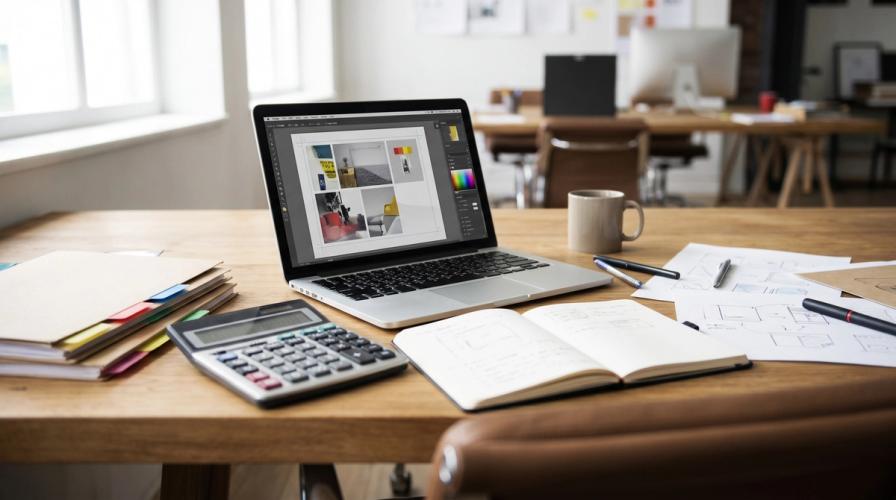
There isn't a single solution that fits every business. You should select one based on your experience, client needs, and growth goals.
| Your Situation | Best Fit |
|---|---|
| New or still learning project timelines | Project or hourly pricing |
| Steady clients with regular needs | Retainers or packages |
| Growing with a mix of clients | Project + monthly retainer |
Stick to simple and profitable pricing. The ideal model is one that you can easily explain, manage profitably, and adjust as your studio grows.
Ready to Make It Real? Turn your business idea into a clear plan and take the next step with BossWorks
Final Thoughts
Pricing is not just about picking a number. It affects the clients you attract, how you manage your workload, and how your graphic design business grows.
Begin with a pricing model that suits the work you are doing today, make sure your scope is clear, and review your prices as your experience and demand grow.
You don't need the perfect pricing model on day one. You need one that is clear, profitable, and easy to manage.
Before You Spend, Know What It Takes
A good business idea should not depend on guesswork. Check your startup costs, market potential, licenses, funding options, and pricing before you make a major decision. BossWorks gives you practical answers tailored to your business and city, so you can move forward with more clarity and less uncertainty.
Frequently Asked Questions
You can charge per project or by the hour. This gives you flexibility while you learn how long different types of work take and build a track record with real clients.
In your proposal, specify the exact number of revision rounds included. Any additional revisions should either be charged separately or clearly included in a higher-priced package.
Don't simply copy another designer's rates. You don't know their costs, experience, workload, or profit margins. Base your prices on your own business costs and realistic billable hours.
Yes. Many studios use project pricing for the initial work and then move clients to a monthly retainer for ongoing support. Just keep your options clear and easy to understand.
Move beyond individual projects by turning completed work into ongoing support, building long-term client relationships, and standardising services that you can deliver consistently.