Is It Better for a Photography Business in Columbus to Edit In-House or Outsource?
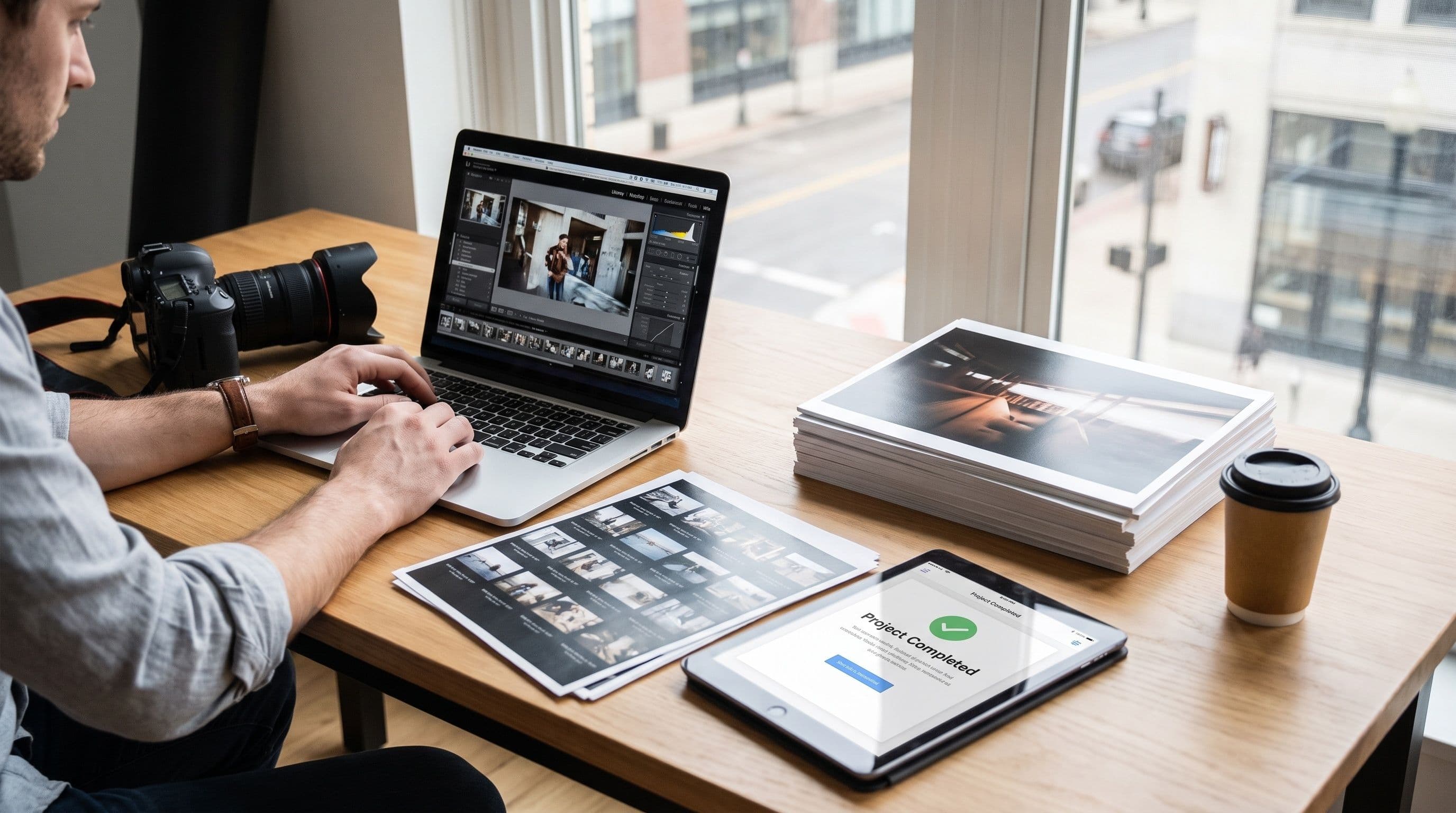
Editing is where many Columbus photographers quietly lose their weekends and margin. You finish a Saturday shoot, then spend hours culling and editing instead of resting or working on the next booking.
The real question is not whether editing takes too long. It is whether your time is worth more than the cost of outsourcing it. This article breaks down the costs, risks, and simple math to help you decide which option makes more sense.
Why Editing Is a Business Decision, Not a Chore
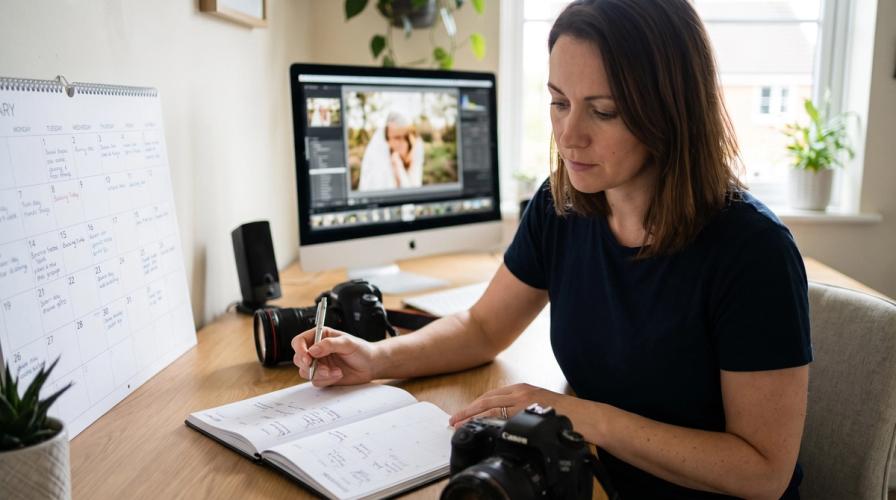
Editing hours can easily disappear into evenings and weekends. But when you add them up across a month, the time becomes significant.
For example, if a wedding takes 12 hours to edit and a portrait session takes two hours, one wedding plus six sessions means around 24 hours of editing a month. That is roughly three full working days spent behind a screen instead of working with clients.
The impact goes beyond lost time:
- ●Slower delivery: Long editing backlogs can push galleries from one week to four or five weeks.
- ●Fewer opportunities: Editing time could instead be used for new shoots, inquiries, or marketing.
- ●Less personal time: Weekend and evening editing can quickly become part of the normal routine.
- ●Slower referrals: Faster delivery can help keep the client experience moving, including reviews and referrals.
The real question is not how quickly you can edit. It is whether editing is the best use of your time as the business owner.
| If your editing time is spent on | You could be using that time for |
|---|---|
| Culling and colour correction | New bookings |
| Fixing repetitive edits | Client communication |
| Finishing backlogged galleries | Marketing |
| Late-night editing | Rest or planning |
That makes editing a business decision, not just a creative task.
For a deeper breakdown, check out everything you need to know about content creators.
The True Cost of Editing In-House
The first step is to put a value on your editing time. Many photographers overlook this because no money directly leaves their account.
A simple way to estimate it is to compare editing time with what you earn from shooting or sales. For example, if a two-hour session brings in $400, your working time is already worth a significant amount. Spending several more hours editing means that time has a real business cost.
The hidden costs can include:
- ●Fewer bookings: Editing takes time away from inquiries and sales.
- ●Slower delivery: Backlogs can affect the client experience.
- ●Less marketing: There is less time for your portfolio, website, or social media.
- ●Less personal time: Evening and weekend editing can quickly become routine.
So while "doing it yourself" may feel free, your time is not free.
When Does In-House Editing Still Make Sense?
Keeping editing in-house can be the better choice when:
- ●Your editing style is a major part of your brand.
- ●Your workload is still relatively small.
- ●You need frequent creative adjustments.
- ●You genuinely enjoy editing.
- ●Outsourcing would cost more than the value of the time saved.
The right choice depends on your workload, editing hours, and the value of your time, not on a one-size-fits-all rule.
Want to start a Photography business? Plan it smarter with a proven and trending Photography business plan.
The Outsourced Editing Model
Outsourcing usually comes in three common forms:
- ●Freelance editors: Hire someone per shoot or project.
- ●Editing services: Use a team for regular or high-volume work.
- ●Retainer-based editors: Pay for dedicated editing capacity each week or month.
The right option depends on your workload, budget, and how consistent your editing needs are.
You are not just paying for colour correction. You are paying for:
- ●Faster client delivery
- ●More predictable turnaround
- ●Less weekend editing
- ●More capacity for new shoots
As a rough planning example, basic culling and colour work may cost around $1-$2 per image, while a full session edit could range from $30-$75, depending on volume and complexity. These are only starting points, so compare them with actual quotes.
What Can Go Wrong?
Outsourcing also comes with risks:
- ●Inconsistent edits: The results may not always match your style.
- ●Revisions: Fixing mistakes can create extra communication.
- ●Style dilution: Without clear references, your signature look can get lost.
These problems are manageable with a good process. A clear style guide, test batch, and final quality check can help you save time without giving up control.
Read More | Can AI Increase Demand for Tech Services in Raleigh?
Running the Break-Even Math
The math is simpler than it sounds. Compare the value of your editing time with the cost of outsourcing it.
For example, if a wedding takes 10 hours to edit and your time is worth $75 an hour, those 10 hours represent $750 of your time. If an editor charges $150 for the same work, you are spending $150 to get 10 hours back.
Outsourcing makes financial sense when the value of those recovered hours is higher than the outsourcing fee, and you can use that time productively.
In-House vs Outsourced Editing
| Factor | Edit In-House | Outsource Editing |
|---|---|---|
| Cost | No direct fee, but high time cost | Pay per image or shoot |
| Control | Full control | Requires clear guidelines |
| Speed | Depends on your free time | Often faster |
| Workload | Adds to your week | Frees up your time |
| Scalability | Limited by your capacity | Easier to handle more volume |
You do not need a complicated spreadsheet to make the decision. Start with last month's editing hours, the value of your time, and one real outsourcing quote. That is enough to see whether the numbers make sense.
How to Outsource Without Losing Your Look
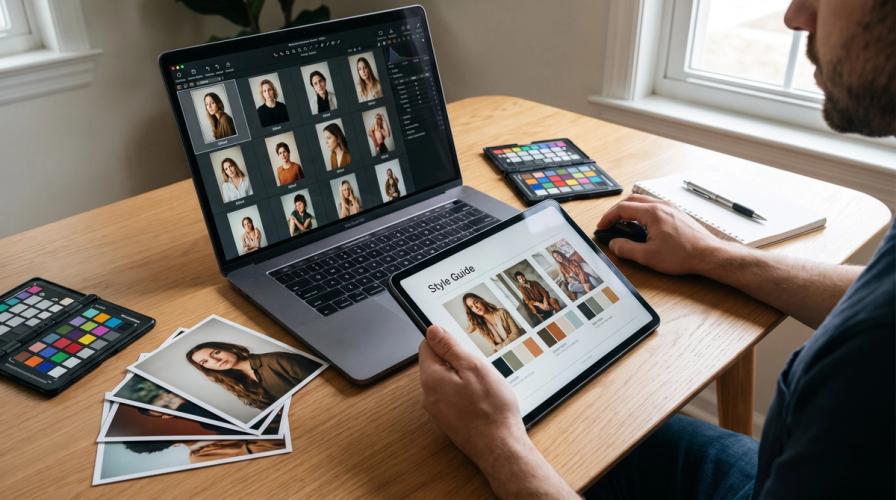
Outsourcing does not mean giving up control of your editing style. A simple process can help keep the results consistent.
Start with a basic editing style guide that includes:
- ●Your preferred colours, exposure, and overall look.
- ●A few before-and-after examples.
- ●Things you always want edited.
- ●Things you never want changed.
Keep it simple. Clear examples are often more useful than a long document.
Read More | Photography Businesses in Fargo Are Growing Fast With Social Media Magic.
Start With a Test Batch
Before handing over an entire shoot:
- Send 20-30 images you have already edited.
- Compare the editor's results with your own.
- Note what needs to change.
- Update your guidelines before sending more work.
This gives you a low-risk way to see whether the editor can match your style.
Keep the Final Check
Even with a reliable editor, do a quick quality check before delivering the gallery. It helps catch mistakes and keeps the final result under your control.
The goal is simple: remove the editing hours, not your standards.
Make the Decision With Real Numbers
Add up your editing hours from last month and calculate what that time is worth. Then compare it with a real outsourcing quote.
If those recovered hours could help you book more work, market your business, or simply get your evenings back, outsourcing may be worth it. If the numbers do not work, keeping editing in-house is still a sensible choice.
Ready to Make It Real? Turn your business idea into a clear plan and take the next step with BossWorks
Final Thoughts
There is no universal answer to whether a photography business in Columbus should edit in-house or outsource. The better choice depends on what your editing hours are actually costing you.
Add up your editing time, put a realistic value on those hours, and compare it with a real outsourcing quote. If outsourcing gives you enough time to take on more work, improve your workflow, or simply step away from the computer, it may be worth the cost.
If not, keep editing in-house. The important thing is to make the decision based on time, cost, and capacity, not just habit.
Before You Spend, Know What It Takes
A good business idea should not depend on guesswork. Check your startup costs, market potential, licenses, funding options, and pricing before you make a major decision. BossWorks gives you practical answers tailored to your business and city, so you can move forward with more clarity and less uncertainty.
Frequently Asked Questions
Yes, if the value of the hours you reclaim is higher than the fee and you can fill those hours with shooting, sales, or rest. If your volume is low, in-house often still wins.
Use what an hour of your shooting or sales time earns. If a session pays about $400 for two hours, your time is worth well over $100 an hour, so editing at that rate is costly.
As a rough planning figure, expect roughly a dollar or two per image, or about $30 to $75 for a full session edit. Always confirm with a real quote.
Write a one-page style guide with reference images, run a small test batch first, and keep a final quality-control pass yourself before galleries go out.
When your editing is a signature clients book you for, when your workload is low, or when you genuinely enjoy the edit as part of your craft.