How a Failing Suburban Video Editing Freelancer in Aurora Became a Local Real Estate Media Studio
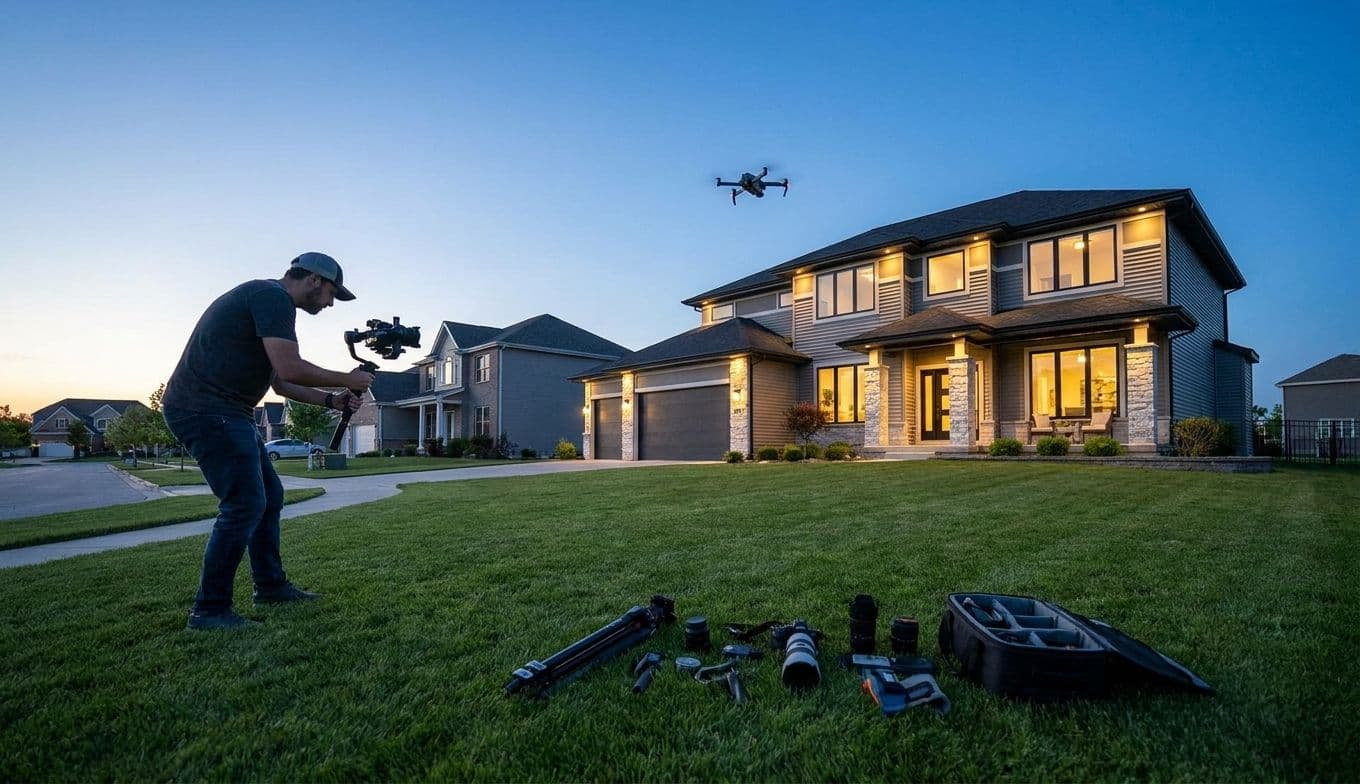
14 months into freelancing, a video editor in Aurora sat with a laptop full of unfinished projects and a bank balance that never seemed to grow. The work was there in bursts, a wedding highlight reel one week, a corporate training video the next, but the gaps between paychecks kept getting longer. He had built a decent reel of client work, yet nothing about the business felt like a business. It felt like waiting for the next notification from a marketplace and hoping it paid enough to cover rent.
That breaking point is where most freelance stories either end quietly or turn into something else entirely. For this editor, the turn came from a single listing video for a local real estate agent, a job he almost passed on because it paid less than his usual rate. What happened over the following year is a fairly clear playbook for anyone stuck in the same cycle of unpredictable gigs, and it shows exactly how a one-person editing operation became a studio with recurring brokerage clients and a scheduling system built around a 48-hour turnaround.
Walking through how he got there, step by step, matters more than the highlight reel of the outcome. The equipment changes, the pricing tiers, the subcontracting decisions, and the marketing pivot all happened in a specific order, and skipping steps is usually why other freelancers stall out trying to copy the result.
For a deeper breakdown, check out everything you need to know about Freelancers.
The Breaking Point

Before real estate entered the picture, his business was general video editing sourced almost entirely from freelance marketplaces. Clients found him through posted gigs, sent raw footage, and he cut it into finished product with no involvement in the shoot itself. This is a common starting point for editors because it requires no camera gear, no travel, and no client-facing shoot skills, just editing software and a fast turnaround. The problem was never the quality of his work. The problem was that every project was a one-off transaction with no reason for the client to come back on any predictable schedule.
That unpredictability showed up directly in his cash flow. Some months brought in four or five projects, others brought in one, and there was no way to plan expenses around a calendar that looked different every 30 days. A simple month-by-month comparison from his first year of freelancing makes the pattern obvious.
| Month | Projects Booked | Revenue | Fixed Expenses |
|---|---|---|---|
| January | 1 | $450 | $1,200 |
| February | 4 | $2,100 | $1,200 |
| March | 2 | $900 | $1,200 |
| April | 0 | $0 | $1,200 |
| May | 3 | $1,650 | $1,200 |
Looking at that table, the issue is not average revenue; it is variance. A single zero-project month like April meant he had to dip into savings or delay paying a software subscription, and that kind of gap repeated often enough that he started applying for part-time hourly work just to stabilize things. He was good at editing. He was bad at running a business that depended entirely on other people's random project timing.
The First Real Estate Client
The listing video job came from a marketplace post that paid less than his standard rate, but the agent needed it fast, and he needed the work. He delivered a clean, well-paced edit within two days, and the agent used it across social media and the MLS listing. That single video sold faster than the agent's other listings that month, and she mentioned it to two colleagues at her brokerage without him even asking for a referral.
Within six weeks, three more agents from that same office reached out directly, skipping the marketplace entirely. That referral chain is the moment the business model actually changed, because agents were not just hiring an editor anymore; they were hiring someone they trusted to make their listings look competitive. He noticed that most of these new inquiries actually needed footage shot, not just edited, since most agents were filming walkthroughs on their phones and the quality showed. That gap is what pushed him from being an editor who accepted footage to being a provider who could shoot and edit a finished package from start to finish.
Making that shift meant learning to run a shoot on a schedule, communicate with agents about staging and lighting before he arrived, and price a full production day instead of a per-video edit fee. It was a bigger jump than it sounds like, because a shoot day involves client coordination, property access, and weather contingencies that editing alone never touched. But it also meant each client relationship became worth far more than a single transaction, since agents list multiple properties per year and need consistent content for each one.
Want to start a Business? Plan it with a proven and trending business plan.
Building a Repeatable Service Package
Once the shoot-and-edit model proved out, pricing everything ad hoc stopped working. Agents wanted to know exactly what they would get for what price before they committed, so he built three tiered packages that matched the way real estate listings actually break down. A standard single-listing package covered a walkthrough video and photo stills for an average home. A luxury package added drone footage, twilight exterior shots, and a longer cinematic cut for higher-priced listings where agents wanted something that stood out. A branding package, aimed at the agent rather than a specific property, produced short vertical reels for social media meant to build the agent's personal following over time.
| Package | Includes | Typical Price |
|---|---|---|
| Standard Listing | Walkthrough video, photo stills, 48-hour delivery | $350 |
| Luxury Listing | Drone footage, twilight shots, cinematic edit | $750 |
| Agent Branding Reel | Short vertical clips, personal brand story, monthly cadence | $500 per month |
Building those tiers required real equipment upgrades, since a laptop and editing software were never going to shoot anything. He bought a mirrorless camera with a wide lens suited to interior spaces, a gimbal for smooth walkthroughs, and eventually a drone once luxury listings became a steady part of the mix. Lighting kits came next, since natural light rarely cooperates on a tight shoot schedule. Each purchase was funded by revenue from the tier it supported, so the branding reel package paid for a second camera body before he ever took on debt for equipment.
Read More | Why Are Freelancers Choosing Coworking Spaces Over Offices?
Operations and Turnaround Time
Agents work on tight timelines because listings need to go live the moment a property is ready, so speed became the studio's real competitive advantage. He built a scheduling system that guaranteed delivery within 48 hours of the shoot, blocking specific editing windows immediately after each booking so nothing sat in a queue. That guarantee alone became the thing agents mentioned most often when referring him to colleagues, more than the visual quality of the final video.
Meeting that guarantee during peak listing season, typically spring and early summer, meant he could not shoot every job himself. He started subcontracting drone pilots for luxury listings and hiring second shooters to cover overlapping bookings on the same day. Managing subcontractors added a layer of coordination he hadn't planned for, but it let him say yes to more bookings without breaking the delivery promise.
| Role | When Used | Payment Structure |
|---|---|---|
| Lead Shooter | Every booking | Owner, included in package price |
| Drone Pilot | Luxury listings, peak season | Flat fee per shoot |
| Second Shooter | Overlapping bookings | Day rate |
Marketing to the Aurora Real Estate Market
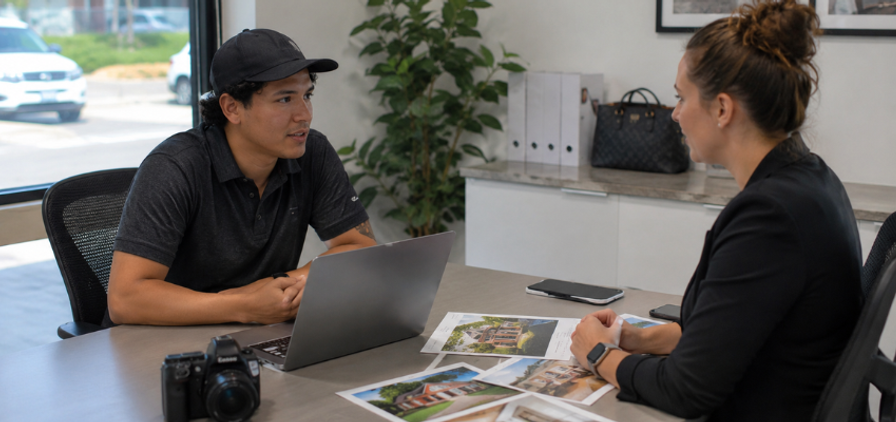
Chasing individual agents one at a time is slow, so once the referral pattern was clear, he shifted his outreach toward brokerages instead. Presenting the package tiers directly to a brokerage's office manager meant one conversation could open the door to a dozen agents at once, rather than pitching each agent separately and hoping for a reply. Brokerages also cared about consistency across their agents' listings, which made the tiered package structure an easy sell since every agent would look equally professional.
Referral incentives ended up replacing paid advertising almost entirely. Instead of running social ads, he offered agents a discount on their next branding reel for every new agent they referred who booked a shoot. That structure cost him far less than an ad budget would have, and it kept the client base concentrated within brokerages that already trusted his delivery guarantee. Word spread through office meetings and shared listing photos faster than any ad campaign could have managed on its own.
Read More | Build a smarter creator career with strategies that help you grow faster and earn better.
Final Thoughts
Looking back, the shift from marketplace editor to real estate media studio did not happen because of one big idea. It happened because a single client relationship exposed a gap between what agents actually needed and what a general editing gig could offer, and he was willing to rebuild his pricing, equipment, and schedule around that gap. Anyone stuck in the same unpredictable freelance cycle can look for the same signal: a client asking for something slightly outside your usual scope that, if you said yes to it properly, could become a repeatable service rather than a one-off job.
The lesson that carries furthest is that a repeatable package, a firm turnaround promise, and a referral system built into pricing will outperform chasing more one-off gigs every time. It took roughly a year to go from one lucky listing video to a studio with brokerage relationships and subcontractors covering peak season, and none of it required a large upfront investment, just a willingness to reinvest revenue into the equipment and systems the next tier of clients actually needed.
Ready to Get Started?
Video editing freelancers can continue growing when they combine niche focus, strong referral networks, and consistent, professional delivery. The freelancers who adapt faster are the ones building stronger industry relationships, better client experiences, and long-term studio growth.
A focused media studio helps you plan, manage, and grow your freelance business with practical strategies for branding, client acquisition, referral systems, and business expansion.
Instead of worrying about inconsistent bookings, build smarter systems that improve turnaround time, attract more repeat clients, and help your studio stay competitive in a crowded market.
Frequently Asked Questions
One agent's referral led to three more bookings from the same brokerage within six weeks, which showed there was steady demand for full shoot-and-edit packages rather than editing alone.
A mirrorless camera with a wide interior lens, a gimbal for smooth walkthroughs, a basic lighting kit, and eventually a drone for luxury listings cover most agent requests.
Agents need listings live quickly, so a firm 48-hour turnaround became the main reason agents referred the studio to colleagues, even more than the video quality itself.
It pitched brokerages directly instead of individual agents and offered referral discounts on branding reels, which spread client bookings through office relationships instead of ad spend.
A standard single-listing package, a luxury package with drone and twilight shots, and a monthly agent branding reel package cover most of the demand from local agents.